Market fundamentals are strong in the aluminum sector, but industry analyst Jim Southwood of Commodity Metals Management Co. also sees a danger of over-investing by fund managers that could be leading to “price exaggeration” that is not sustainable.
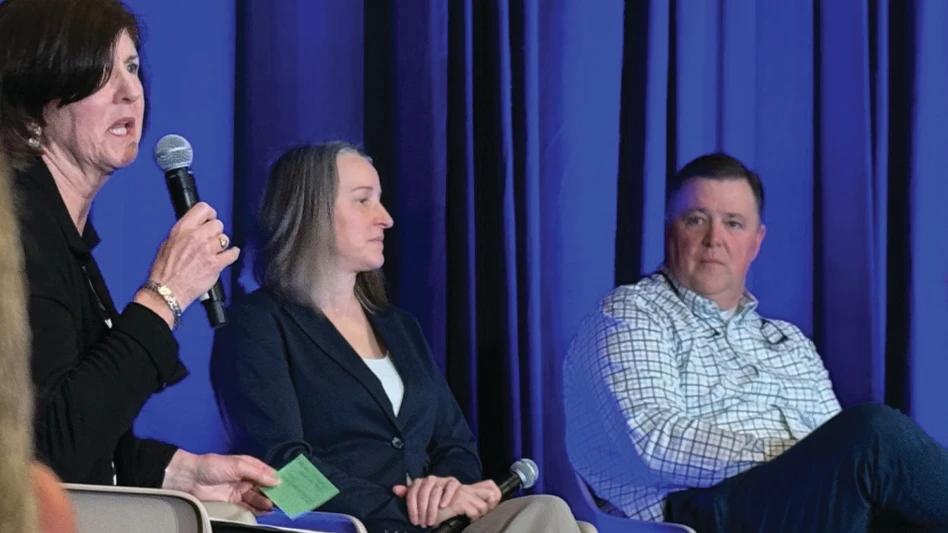
Speaking at the Nonferrous Metals Division meeting at the Spring 2006 Bureau of International Recycling (BIR) Convention, Southwood described a “vicious cycle” of price exaggeration that “will all end in tears.” He noted that fund managers may have invested as much as $60 billion in aluminum—a figure that is worth “150 percent of all the alumimum produced every year,” according to Southwood.
Despite this concern, Southwood characterized aluminum as enjoying strong fundamentals in the midst of its longest “bull market” since the 1987-1991 cycle, and “this bull market is set to exceed that one.”
Demand for aluminum is “outstanding” following a period earlier this decade when a great deal of smelting capacity in the
Aluminum scrap dealers will benefit from active purchasing from Chinese buyers for several more years, said Southwood, who is forecasting that the nation’s secondary aluminum producers will not be able to close its scrap loop until 2013 at the soonest, and perhaps not until 2025.
Southwood claimed that a long-term scrap shortage trend has been masked by the flood of materials from the former Soviet Union in the previous decade and by a series of natural disasters this decade (the tsunami and the Gulf of Mexico hurricanes) that have created “mountains of scrap that we’re all living off of.”
As those piles are cleaned up, only now will higher prices for aluminum scrap be needed to draw out more material.
Michael Oppenheimer of U.K.-based Mountstar Metal Corp. presented market reports from throughout the world, with a common theme being that red metals producers were paying record high prices for their scrap.
Oppenheimer reported that East Asian brass mills are regretting buying on a just-in-time spot basis, as prices for both copper and zinc scrap continue to rise.
European dealers report strong demand coupled with tight supply in some countries. In
On behalf of
BIR Non-Ferrous Division Marc Natan of
The BIR Spring 2006 Convention was held at the China World Hotel in
Latest from Recycling Today
- Charter Next Generation joins US Flexible Film Initiative
- Vecoplan to present modular solutions at IFAT 2026
- Terex Ecotec appoints Bradley Equipment as Texas distributor
- Greenwave raises revenue but loses money in Q2 2025
- Recycled steel prices hold steady
- EY says India’s need for scrap imports will continue
- Coming full circle
- Amcor, DCM introduce fertilizer packaging with 35 percent recycled content