Axion Polymers
Axion Polymers, United Kingdom, calls the U.K. government’s proposal for an “all-in” deposit return scheme (DRS) “a positive move to encourage people to recycle more and associate a value with plastic and other materials.”
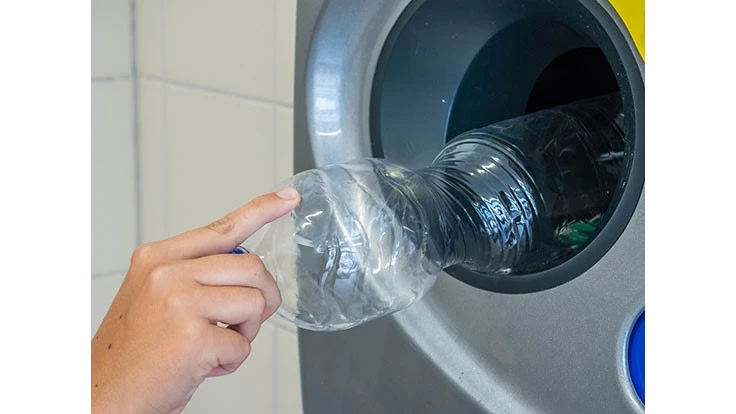
The scheme, which would include polyethylene terephthalate (PET) bottles, aluminum and steel cans and glass, would “help to increase capture of recycling on-the-go materials,” the company says in a news release.
Axion’s Head of Consulting Richard McKinlay says the “all-in” approach removes the incentive for brands to offer discounted alternatives not included in the DRS and “may be more environmentally impactful.”
Known to increase recycling rates and reduce contamination, DRS’s have been established in countries, including Denmark, Sweden and Germany and pilot programs have been rolled out in European cities, including Rome. Governments introduce an 8 to 22 pence deposit fee to consumers for all beverage containers, which is reimbursed once the containers are returned. The Department for Environment, Food and Rural Affairs (DEFRA) introduced schemes in England, Wales and Northern Ireland in 2019 with plans to roll out a DRS throughout the U.K. in 2023. Environment Secretary Michael Gove also recently publicly backed an “all-in” DRS.
“I think a deposit return scheme is needed, especially from a quality point of view to ensure we’ve got a high-quality food grade PET stream that allows recycling back into the highest quality applications,” McKinlay says.
He adds, “More and more brands and retailers are facing targets of including higher recycled content in packaging, yet currently we haven’t got the quantity or quality of the material to achieve that.”
Concerns have been raised that implementing a DRS will impact existing curbside recycling programs with fewer PET bottles in household collections; however, McKinlay argues a DRS will deliver better quality bottles for recycling.
“It will be possible to recycle more bottles into bottles and potentially, trays into trays, increasing the amount of food grade rPET on the market,” he says. “However, investment in the processing infrastructure will be necessary for that to work.”
Highlighting the need for wider reform, McKinlay remarks, “This initiative shouldn’t be seen as removing value from local authorities. Although there may be some impact, the bigger picture is that more material overall will be recycled back into high-quality products. DRS should be implemented as part of a broader reform of how we manage and recycle packaging, which should include extended producer responsibility to remove the cost burden from local authorities.”
Axion works with government agencies, local authorities and companies on the practical development of new processing and collection methods.
“We should not be afraid to move away from the existing waste management infrastructure, which is inherently unable to deliver on the circular economy,” McKinlay says.
Latest from Recycling Today
- Charter Next Generation joins US Flexible Film Initiative
- Vecoplan to present modular solutions at IFAT 2026
- Terex Ecotec appoints Bradley Equipment as Texas distributor
- Greenwave raises revenue but loses money in Q2 2025
- Recycled steel prices hold steady
- EY says India’s need for scrap imports will continue
- Coming full circle
- Amcor, DCM introduce fertilizer packaging with 35 percent recycled content