Argonne National Laboratory, the American Plastics Council and the Vehicle Recycling Partnership signed a five-year cooperative research agreement to build on recycling technology developed by Argonne to create a cost-effective process to create a cost-effective process for recycling end-of-life vehicles.
"This project brings together the American Plastics Council's knowledge of polymers and recycling processes, Argonne's research expertise and USCAR's understanding of the marketplace," said Harvey Drucker, Argonne's associate laboratory director. "Together as a team, we can lead the development of viable solutions to the vehicle recycling challenges of today and the future."
Much of the non-metallic materials in end-of-life vehicles cannot now be recycled due to the difficulty of separating and sorting the materials as well as a lack of existing markets and applications for recycled non-metallics.
"Vehicle recycling can be a self-sustaining process that pays for itself in the U.S.," said Mike Fisher, director of technology for the American Plastics Council. "The headway we make in boosting vehicle recyclability will be a boon to the American recycling industry and the American Plastics Council is pleased to be actively involved in the search for optimal, sustainable solutions to the management of end-of-life vehicles."
A new pilot recycling facility already operating at Argonne will serve as a focal point for the broader research that will be conducted by the partners.
Argonne's pilot facility incorporates a two-stage separation process that begins with bulk separation of all shredder residues into four categories: fines (iron oxides, other oxides, glass and dirt), polyurethane foams, polymers (polypropylene, polyethylene, ABS, nylon, PVC, polyester, and other materials), and ferrous and non-ferrous metals.
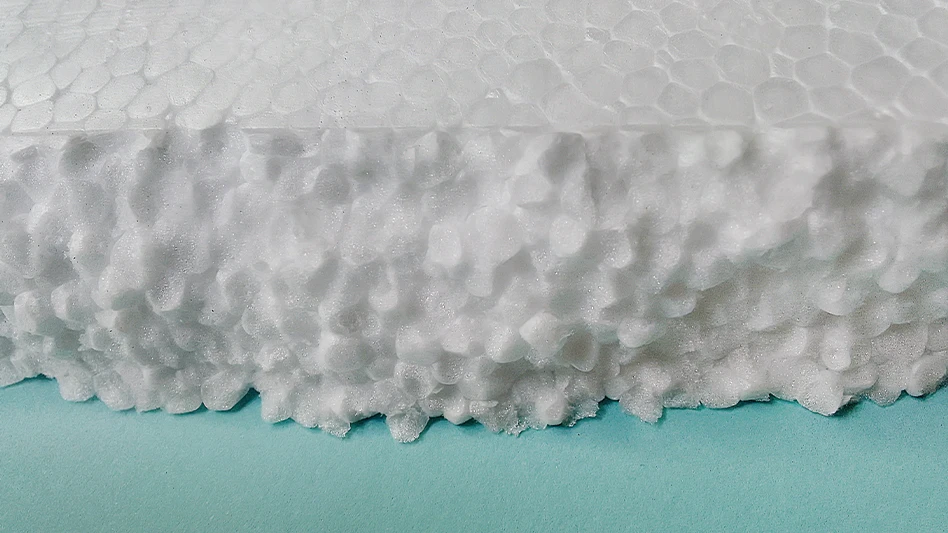
With the new technology, the auto shredder residue is separated into three different streams, says Bassam Jody, one of the Argonne engineers who developed the process. Plastic-rich streams, iron oxides and polyurethane foam can each separately be recycled to other uses. Tests show that the resulting polyurethane foam meets performance criteria for new-material carpet padding and for reuse in automotive applications. The process is fully continuous, minimizing materials handling and labor costs.
"The agreement allows Argonne, the American Plastics Council and USCAR to leverage significant technical resources," said Pat Flaherty, executive director of USCAR. "Together, we have the potential to make a substantial positive impact in the recycling of materials from end-of-life vehicles in the United States."
USCAR is the umbrella organization of DaimlerChrysler, Ford and General Motors, which was formed in 1992 to further strengthen the technology base of the domestic auto industry through cooperative, pre-competitive research.Latest from Recycling Today
- Des Moines project utilizes recycled wind turbine blades
- Charter Next Generation joins US Flexible Film Initiative
- Vecoplan to present modular solutions at IFAT 2026
- Terex Ecotec appoints Bradley Equipment as Texas distributor
- Greenwave raises revenue but loses money in Q2 2025
- Recycled steel prices hold steady
- EY says India’s need for scrap imports will continue
- Coming full circle