Image courtesy of American Battery Technology Co.
American Battery Technology Co. (ABTC), an integrated critical battery minerals developer and recycler based in Reno, Nevada, has released financial results for the first quarter of fiscal year 2026 and reports a “substantial increase” in cash balance, the elimination of all outstanding debt and convertible notes and “major commercial wins” that position it for continued growth.
Among financial highlights for the quarter, ABTC says it increased cash and restricted cash to $30.9 million as of Sept. 30, compared to $12.5 million in the prior quarter. The company’s cash balance increased to $55.6 million as of Nov. 5.
RELATED: EPA taps ABTC for large-scale battery recycling project | DOE terminates grant for ABTC’s lithium hydroxide refinery
During the first quarter, the company says all of its outstanding convertible notes were converted and extinguished, and it currently has zero long-term debt.
In October, ABTC published the S-K 1300 technical report and prefeasibility study (PFS) for its Tonopah Flats lithium project, which indicates its commercial-scale critical mineral mine and refinery has a projected after-tax net present value (NPV) of $2.57 billion at an 8 percent discount rate, 21.8 percent internal rate of return (IRR) and 7.5-year payback from initial investment.
On Nov. 6, the company announced it had been awarded a contract and already had started receiving material from a grid-scale battery energy storage system (BESS) near Monterey, California, as part of what it claims is the largest lithium-ion battery cleanup operation in U.S. Environmental Protection Agency (EPA) history. ABTC says the project’s BESS has up to 100,000 damaged battery modules, and at current market prices, if ABTC were to process all of the battery materials from the site, the value of recycled products generated from the materials is estimated at approximately $30 million.
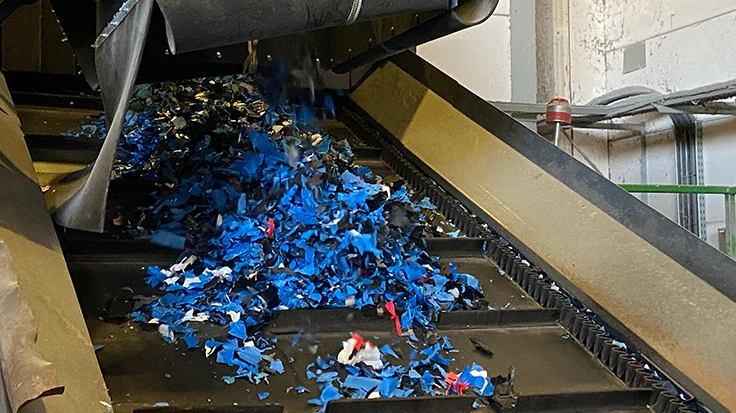
ABTC implemented several weeks of facility enhancements within the first quarter to be able to successfully meet the requirements of the contract and to be able to process the variety of types of damaged battery materials within the project. Along with the facility improvements, recycled products were manufactured to generate revenue of $900,000 within the three months ending Sept. 30, compared to $200,000 in the previous quarter.
ABTC says the total cost of goods sold was $4.5 million in the quarter, up from $2.5 million recorded in the prior quarter.
Scaling to meet battery recycling demand
In the spring, ABTC says it underwent an audit and review process and successfully received formal approval from the EPA for its battery recycling facility in Nevada to receive waste material under the Comprehensive Environmental Response, Compensation and Liability Act (CERCLA). The company now is approved as one of the only battery recyclers in the Western U.S. capable of receiving batteries that have been damaged or classified as CERCLA waste, such as battery materials that have been involved in large-scale BESS thermal events and fires.
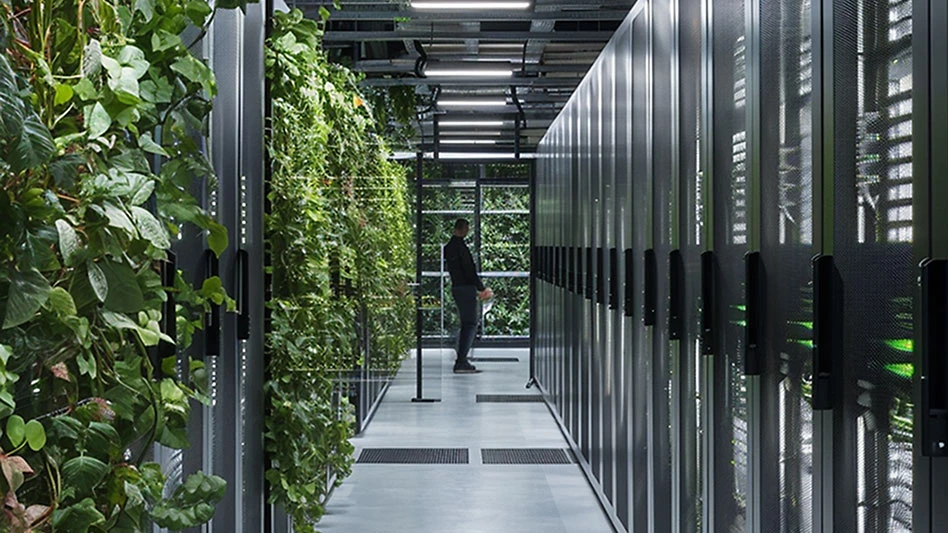
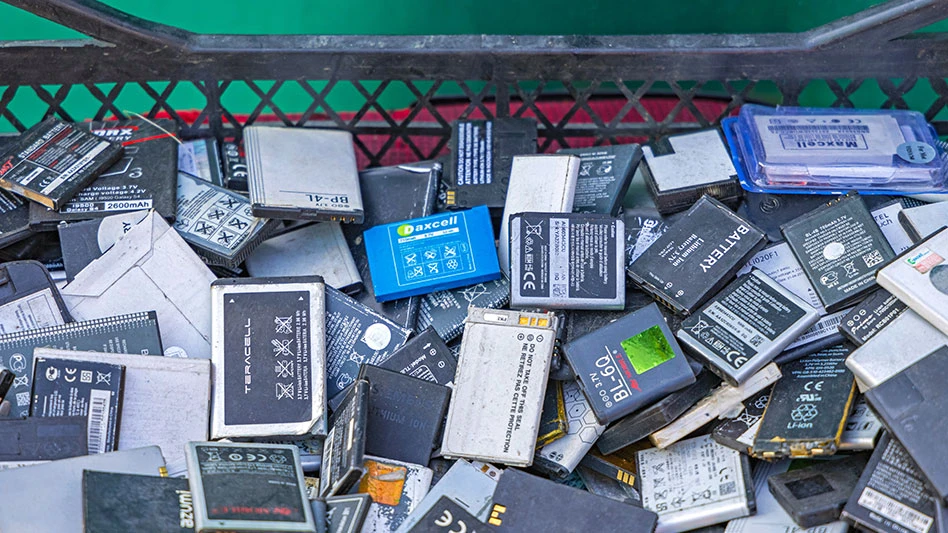
In support of the rapid buildout of datacenters for artificial intelligence, machine learning and cybersecurity applications, ABTC says its recycling facility now is receiving substantial quantities of feed material for recycling from BESS, in addition to feed material from end-of-life electric vehicles and consumer electronics.
On July 15, the company announced its selection for a competitively awarded $1 million agreement by the U.S. Department of Energy’s (DOE’s) Argonne National Laboratory ReCell Center to support the commercialization of its internally developed technology for domestic manufacturing of critical mineral lithium hydroxide.
In September, the company announced a strategic partnership with Atlanta-based battery stewardship and collection program Call2Recycle to advanced lithium-ion battery recycling for consumers across the country. ABTC says this partnership expands its business model from primarily business-to-business operations to include a direct-to-consumer recycling channel, “creating a more robust circular economy for essential battery metals.”
Primary lithium manufacturing
Among quarterly highlights for ABTC was the June selection of its Tonopah Flats lithium project by the FAST-41 Permitting Council and the National Energy Dominance Council (NEDC) as a Transparency Priority Project in accordance with President Donald Trump’s March 20 executive order, “Immediate Measures to Increase American Mineral Production,” in order to “identify priority projects that can be immediately approved or for which permits can be immediately issued, and take all necessary or appropriate actions within the agency’s authority to expedite and issue the relevant permits or approvals.”
In August, ABTC’s project, which involves extracting raw lithium from Nevada claystone deposits, was upgraded to a fully covered project by the FAST-41 Permitting Council, resulting in more resources being assigned toward the streamlining of federal permitting efforts.
The company reports it has completed and submitted all required baseline studies to the U.S. Bureau of Land Management, representing more than two years of work across 21 studies spanning biological, ecological, hydrological, geological, cultural and socioeconomic areas, conducted with more than 40 regulatory agencies and stakeholders.
During the quarter, the company published its prefeasibility study for the project, detailing the technical and financial roadmap for commercialization of the lithium mine and refinery. The company says its study supports the project’s “robust economic potential and potential strategic importance as a cornerstone of the domestic critical mineral lithium supply chain.”
Notably, ABTC says its refinery will be capable of producing 30,000 tons per year of lithium hydroxide monohydrate, with project economics calculated for a 45-year life-of-mine. The company says its assessment of total lithium resources increased 11 percent compared to an initial assessment report to 21.3 million tons of lithium hydroxide monohydrate, establishing 2.73 million tons of proven (980,000 tons) and probable (1.75 million tons) reserves.
The company will host its annual shareholders’ meeting Nov. 13.
Latest from Recycling Today
- Collective Waste Solutions acquires Alcop Resource Recycling transfer station
- Volatility continues in nonferrous metals
- Neste chemical recycling plant is ready to scale up
- Indonesia’s nickel pig iron spigot reopens
- Ecore says study backs crumb rubber use on sports surfaces
- Fleetio launches AI capability to accelerate fleet maintenance approvals
- The Metals Agency receives approval for export credit insurance
- Recycle Ann Arbor extends drop-off station operating hours