Recycling Today archives
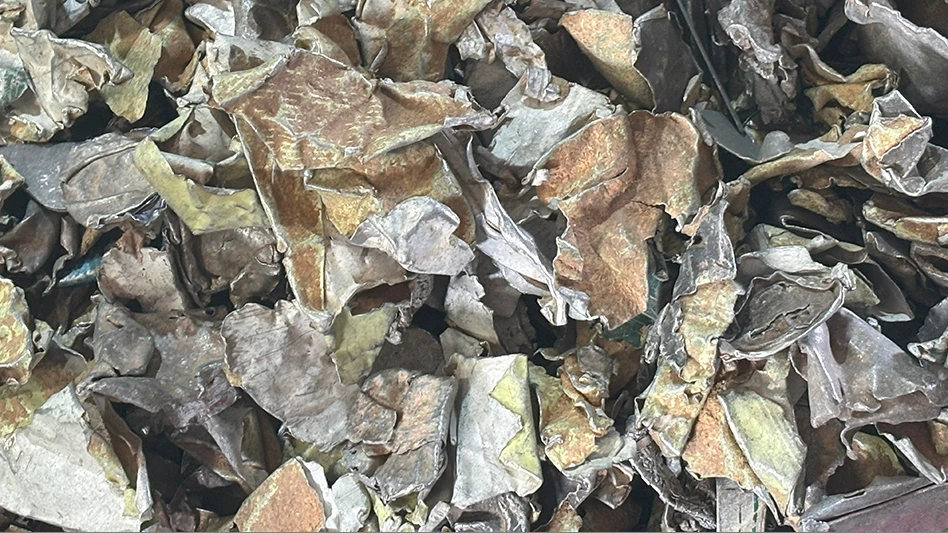
Consulting firm McKinsey & Co. has posted a chart to its website focusing on the nature of how aluminum scrap is collected globally, taking a position that more of it should be collected separately by alloy or type.
“A large portion of aluminum scrap comes from postconsumer sources, but much of it ends up in mixed scrap pools,” writes McKinsey and Germany-based staff member Peter Spiller in text accompanying the chart.
Some of this mixed alloys scrap, continues McKinsey is prone to be “downcycled,” meaning “high-value alloys are left unrecovered.”
The newly released chart ties into a report McKinsey released in July as part of its Materials Circularity series.
That report, titled “Cleaning up mixed scrap: Decarbonizing aluminum through circularity,” recommended the increased deployment of X-ray fluorescence (XRF), X-ray transmission (XRT) and laser-induced breakdown spectroscopy (LIBS) technology as methods for producing twitch from zorba as a way to reduce “downcycling” practices.
In its September chart, McKinsey depicts a calculation made by the consulting firm that 68 percent of aluminum scrap generated can be classified as postconsumer and 51 percent of the overall total generated is collected in a mixed format.
States the consulting firm, “Expanding secondary aluminum production is crucial to achieving net zero emissions goals, given that recycling aluminum uses significantly less energy than primary production. explain and colleagues. To tap the recycled aluminum market, addressing collection and sorting bottlenecks could help to recover more high-value alloys and boost recycling rates.”
Latest from Recycling Today
- Fleetio launches AI capability to accelerate fleet maintenance approvals
- The Metals Agency receives approval for export credit insurance
- Recycle Ann Arbor extends drop-off station operating hours
- Sybilion seeks to help manufacturers confidently address volatility
- Rio Tinto, Prysmian partner on low-carbon aluminum solutions for data centers
- Unilever criticized for plastics approach
- USTR to study additional steel, aluminum tariffs
- Electrified Materials adds processing capacity