Recycling Today archives
Oil and natural gas are not the only commodities whose supply routes are affected by the conflict between Israel and the United States against Iran, says a commodities strategist with Netherlands-based bank ING.
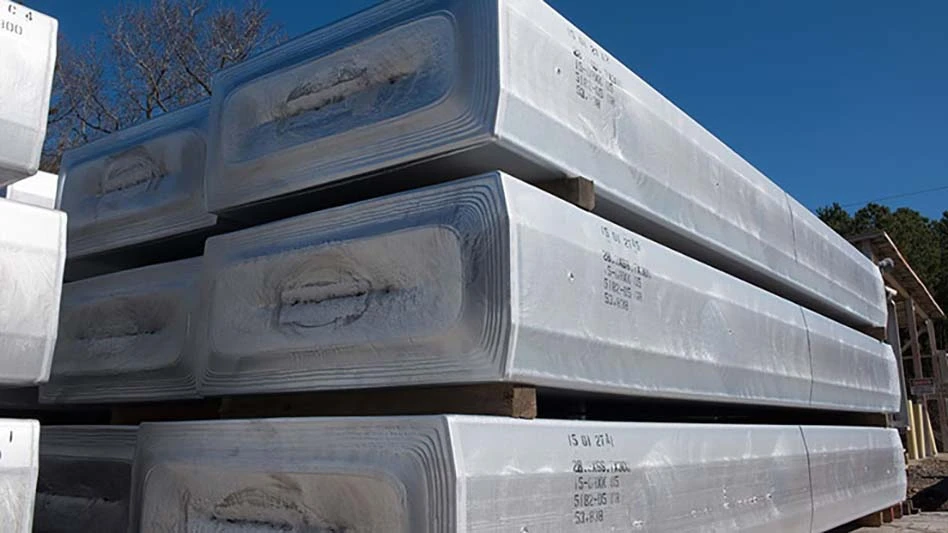
In a March 6 analysis, Ewa Manthey, who is based in London for ING, writes that the interruption of shipping routes through the Strait of Hormuz leaves the global trade in aluminum “particularly exposed given the concentration of export-oriented smelting capacity” in the Persian Gulf region.
Manthey describes aluminum as “already expected to remain in deficit this year,” adding an interruption in Persian Gulf exports has prompted ING to revise its aluminum price forecasts higher.
” In a severe disruption scenario, aluminum prices could briefly move above $4,000 per metric ton [$1.81 per pound], although demand destruction would likely limit further upside,” she writes.
As of the start of trading on Monday, March 9, the London Metal Exchange (LME) three-month price for primary aluminum was $3,446 per metric ton, or $1.56 per pound.
On the supply side, Manthey cites as factors already contributing to tightness being an announced capacity cap in the People’s Republic of China’s capacity cap and the shutdown of a large smelter in Mozambique.
The commodities analyst says the Persian Gulf region accounts for nearly 10 percent of global aluminum production “and an even larger share of internationally traded metal.”
A chart accompanying her analysis lists the output of EGA in the United Arab Emirates (UAE), Alba in Bahrain, Qatalum in Qatar and Ma’aden Aluminium in Saudi Arabia as likely to have difficulty reaching end markets.
On the buy side, Manthey points to Europe as “particularly exposed,” with the Middle East accounting for around 30 percent of its aluminum imports, predominantly from EGA of the the UAE. “Europe’s exposure has increased further since the sharp reduction in Russian aluminum flows to Western markets after the invasion of Ukraine,” she adds.
Manthey describes the United States as “also exposed, with the [Middle East] region supplying over 20 percent” of primary aluminum imports. She adds, though, that “tariff‑inflated Midwest premiums” could limit an immediate price spike.
The analyst says any lasting price spike in the light metal will result from a conflict that lingers between the warring parties and that has Iran restricting commercial traffic through the Strait of Hormuz as an ongoing tactic.
Latest from Recycling Today
- 2026 Plastics Recycling Conference: Diving into SB 54
- Commentary: Plastic recycling isn’t working; what are we going to do about that?
- Environmental groups urge Indonesia to return e-scrap shipments
- Foodservice Packaging Institute opens applications for 2026 foam recycling grant program
- Worn Again Technologies unveils Accelerator plant to advance polycotton recycling
- Nashville Waste Services launches new digital route system
- Arconic expands in Iowa
- Cascades invests $6.9M in recycled boxboard plant