Recycling Today archives
A metals trader and chair of the Bureau of International Recycling (BIR) Latin America Committee says the Mexican government is poised to place its own tariff on imported primary aluminum, mimicking the behavior of the United States.
In a report submitted to the Brussels-based BIR, Alejandro Jaramillo of Mexico-based Glorem SC says a bill proposed in the Mexican legislature would place a 10 percent tariff on primary aluminum imports.
Jaramillo calls the rationale behind the bill “questionable."
“Mexico does not produce primary aluminum and has only very limited capacity in flat-rolled products," Jaramillo says. "The proposed measure is unlikely to protect domestic industry and instead risks raising costs for downstream manufacturers.
“With protectionism rising on both sides [of the U.S.-Mexico border], industry players are grappling with volatile supply chains and costs. Uncertainty is weighing on investment in both Mexico and the U.S. The latest U.S. manufacturing purchasing managers’ index (PMI) reading has stayed below 50, signaling continued contraction and underscoring how policy turbulence is dampening factory activity.”
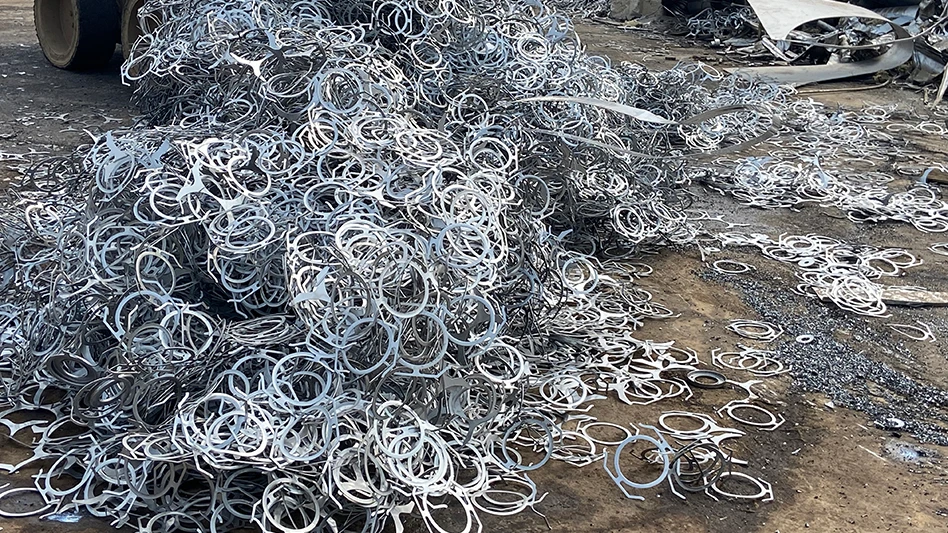
Mexico’s aluminum scrap market also is adjusting to the changes.
“Demand for clean mill-grade scrap is balanced mainly because domestic cast houses have cut output and turned to cheaper imported billet and slab instead of melting scrap," Jaramillo says. "At the same time, a strong U.S. appetite is pulling much of Mexico’s mill-grade scrap north. These exports are effectively offsetting reduced local usage, keeping the market in equilibrium for now.
“The tight scrap situation is fueling talk of export restrictions in Mexico. No official limits exist yet, but pressure is mounting—especially if the U.S. does not agree to a framework ensuring fair conditions for Mexican industry. Measures from export taxes to quotas are being floated to retain more material at home if needed.”
Fellow BIR Latin America Committee member Roger Amarante of Brazilian national recycling association INESFA says delegates are meeting with government representatives to lobby for a tax credit for those manufacturers benefitting from the use of recycled inputs.
Fellow committee member Nicolas Fernandez of the Asociación Nacional de la Industria del Reciclaje in Chile says an extended producer responsibility (EPR) system was implemented there for used beverage cans “without considering a recycling industry that had already existed for decades.”
The EPR system outside of those existing loops, Fernandez says, is still sufficiently attractive to encourage participation, with the vast majority of the population still not knowing how and where to recycle.
Nicolas Werba of Werba SA in Uruguay says nonferrous scrap in that nation has been moving at a good pace, adding the sale of material is supported by strong London Metal Exchange pricing, notably in the case of copper, which exceeded $10,000 per metric ton in the second week of September.
Latest from Recycling Today
- Fleetio launches AI capability to accelerate fleet maintenance approvals
- The Metals Agency receives approval for export credit insurance
- Recycle Ann Arbor extends drop-off station operating hours
- Sybilion seeks to help manufacturers confidently address volatility
- Rio Tinto, Prysmian partner on low-carbon aluminum solutions for data centers
- Unilever criticized for plastics approach
- USTR to study additional steel, aluminum tariffs
- Electrified Materials adds processing capacity