Photo courtesu of Alcoa
Integrated aluminum producer Alcoa Corp. has announced a new 10-year energy contract with New York Power Authority (NYPA) and a capital investment of approximately $60 million in its Massena, New York, facility’s anode baking furnace, a key component of the aluminum smelting process.
According to the Pittsburgh-based company, the 10-year energy contract, effective April 1, 2026, provides its Massena Operations with 240 megawatts of competitively priced renewable energy. An extension for two additional five-year terms is possible under the contract.
Additionally, Alcoa is investing approximately $60 million through 2028 to rebuild and modernize the smelter’s anode baking furnace, which supplies the smelting process with anodes. This investment is made possible by the new energy contract and a grant of approximately $6 million from Empire State Development (ESD), according to the company.
“We are proud to make aluminum in New York and the United States,” says Alcoa President and CEO William F. Oplinger. “Long-term, competitively priced energy enables Alcoa to proceed with this important investment that will help us meet the demands of today while planning for tomorrow. We are extremely pleased to have worked with NYPA and ESD to achieve this outcome for our Massena Operations, which will continue to bring economic benefits to the region and sustain American manufacturing.”
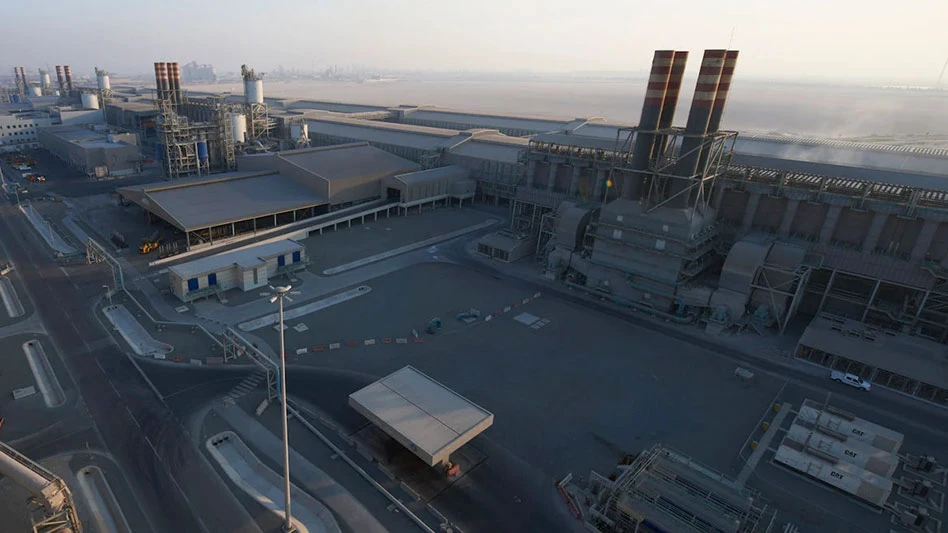
Alcoa’s Massena Operations has an annual nameplate capacity of 130,000 metric tons and is the world’s longest continuously operating smelter, with aluminum production beginning in 1902, the company says. Its operations include a smelting and casthouse facility with potrooms containing 198 prebake cells. The company says it manufactures the green and baked anodes used in the aluminum reduction cells on-site and produces aluminum sow, rod and billet to supply the automotive, aerospace, military, construction, electronics and packaging industries.
The site is one of the four remaining smelters in the United States and employs approximately 550 workers (including contractors) and contributes more than $66 million in direct salaries, wages and benefits, and $90 million in contracts with 1,800 U.S. suppliers in 2024.
Latest from Recycling Today
- Fleetio launches AI capability to accelerate fleet maintenance approvals
- The Metals Agency receives approval for export credit insurance
- Recycle Ann Arbor extends drop-off station operating hours
- Sybilion seeks to help manufacturers confidently address volatility
- Rio Tinto, Prysmian partner on low-carbon aluminum solutions for data centers
- Unilever criticized for plastics approach
- USTR to study additional steel, aluminum tariffs
- Electrified Materials adds processing capacity