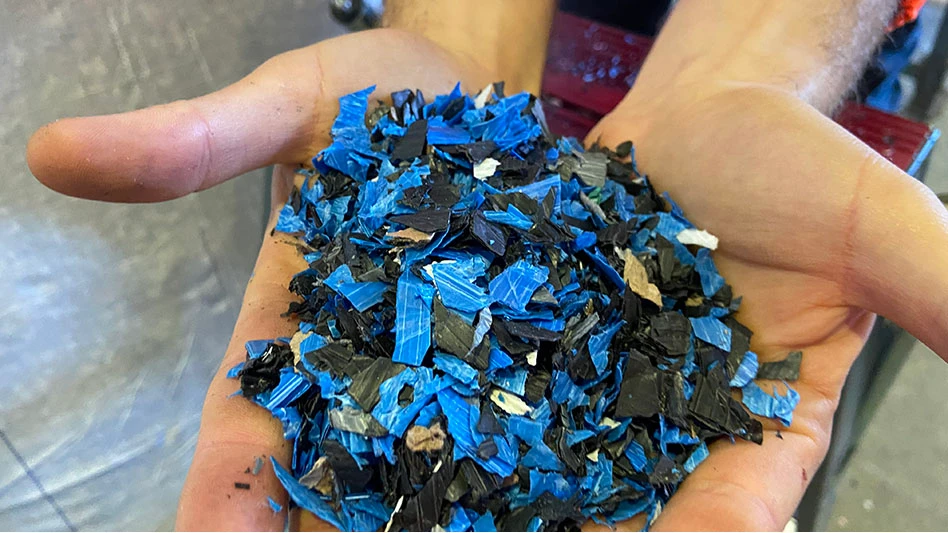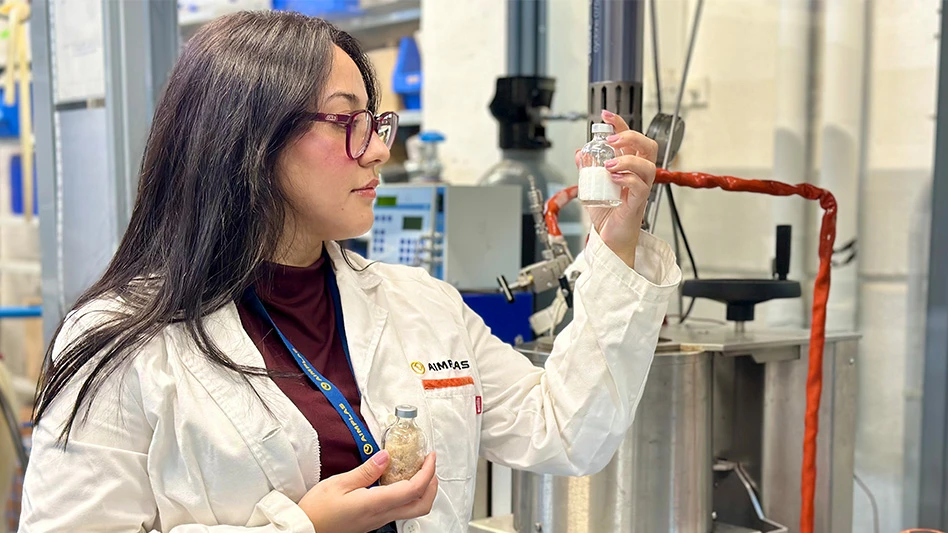
Image courtesy of Aimplas.
Aimplas, a Spain-based technological center that provides solutions to the plastics industry, has announced the Redes4Value project, which works to recover and recycle fishing nets and transform them into sustainable, high-value products.
These products include recycled nylon, films for packaging and agricultural covers, automotive components and large-format parts produced by additive manufacturing. Aimplas says these developments are achieved through innovative mechanical and chemical recycling processes combined with reactive extrusion technologies.
This initiative is funded by the Valencian Institute of Competitiveness and Innovation (IVACE+i) and ERDF funds, bringing together a consortium formed by Aimplas, Ube, Ziknes and the University of Valencia. The organizations' shared objective is to close the life cycle of polyamides and reduce marine pollution through innovative, industry-ready solutions.
Although many nets are made of polyethylene (PE) or polypropylene (PP), the project focuses on polyamide nets, a material with potential for chemical recycling. Aimplas says its molecular structure allows the recovery of monomers such as caprolactam, enabling the production of new polyamides with properties virtually identical to those of virgin materials
“We are achieving optimized conditions for depolymerizing fishing nets and recovering monomers with purities above 95 percent in some laboratory-scale streams, and over 80 percent at pilot scale. This will allow us to repolymerize and obtain new polyamides with quality equivalent to virgin material,” says Nairim Torrealba, Aimplas chemical recycling researcher.
Redes4Value is advancing in processes such as hydrothermal depolymerization, ionic liquid-assisted solvolysis and reactive extrusion, as well as comprehensive life cycle and feasibility assessments. Aimplas says one of the main challenges is treating nets with a high presence of impurities, but the results look promising.
The organization says collaboration with the Sea2See brand has ensured access to fishing nets, which have been recovered in Ghana since 2019, and has been key to structuring the project’s circular value chain from the waste source.
Latest from Recycling Today
- Unilever criticized for plastics approach
- USTR to study additional steel, aluminum tariffs
- Electrified Materials adds processing capacity
- ERI files suit alleging theft of trade secrets
- Stretch film recycling program launches in California
- Baltimore trash collection expected to slow as WTE facility closes for maintenance
- FCC Environmental Services awarded collection contract in Florida
- Qatalum opts to scale down production