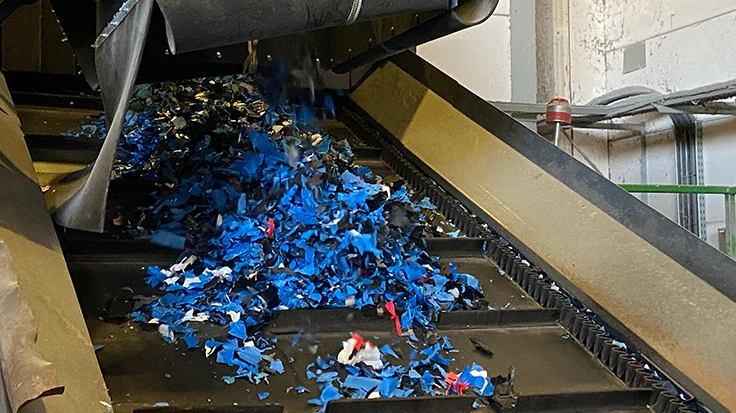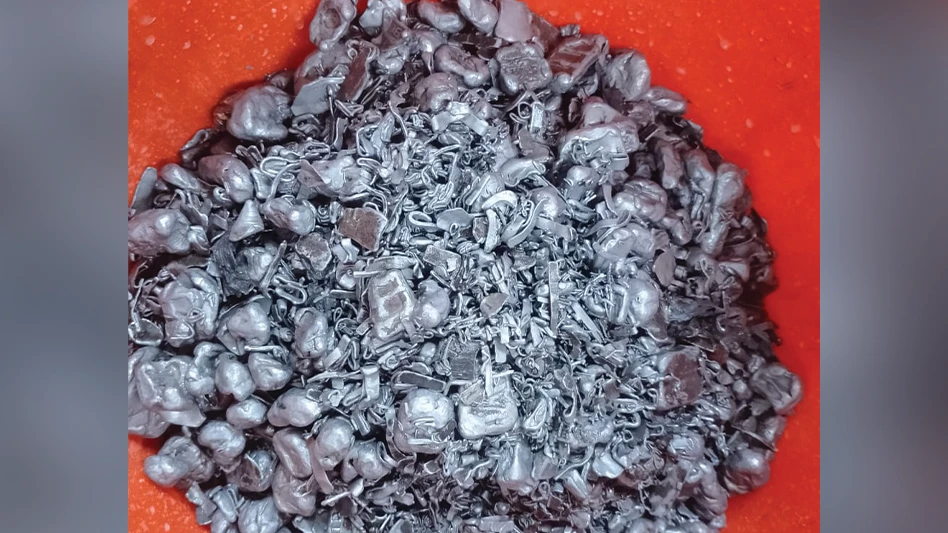
Photo courtesy of Ace Green Recycling Inc.
Battery recycling technology company Ace Green Recycling Inc., Houston, has unveiled its proprietary Grid Metallics Processing System (GMPS), which operates at room temperature and offers a new solution for lead battery recyclers.
Ace Green says its new GMPS system allows lead battery processors to recover clean alloy metal directly from their battery breaking systems, bypassing the need for a smelting furnace. The company claims this process not only produces high-quality lead alloys more efficiently but also helps recyclers debottleneck their operations, enabling them to process more lead battery scrap without increasing their existing smelting capacity.
RELATED: Ace Green Recycling expands to Australian market | Ace Green Recycling, Acme expand lead recycling partnership
Ace Green says one of GMPS’ key advantages is its ability to preserve valuable metals like antimony and tin, some of which often are lost during traditional smelting. The company says the system now only maximizes recovery rates but also ensures that valuable resources are not wasted.
“With the antimony supply shortage intensifying following export controls implemented by China, the largest producer of the material, the company expects that its GMPS will help alleviate upward pricing pressure for current and prospective customers,” Ace Green says.
The new product is part of Ace Green’s overall global recycling technology platform and currently is being deployed in markets that include Armenia (Mel Metals), Taiwan (Acme Metal Enterprises), India (Raj Metal Industries) and Thailand (IPP Lead and Metals).
The company says the GMPS leverages its combination of advanced physical separation and room-temperature chemical washing and expects the system can enable lead battery recyclers to increase their throughput by up to 25 percent by freeing up smelting capacity.
“Our new metallics cleaning system directly solves two major problems in lead recycling,” Ace Green co-founder and Chief Technology Officer Vipin Tyagi says. “First, it makes smelting capacity more efficient by processing grid metallics separately. Second, it prevents the loss of valuable alloying elements that are typically burned off during high-temperature smelting. We are seeing significant commercial interest in our GMPS from emerging markets because it provides so much value, and we look forward to bringing this innovation to more markets soon.”
Latest from Recycling Today
- Nth Cycle signs offtake agreement with Trafigura
- WeSort.AI recovers critical raw materials from recycling plants
- ReMA provides economic impact report, industry update
- Collective Waste Solutions acquires Alcop Resource Recycling transfer station
- Volatility continues in nonferrous metals
- Neste chemical recycling plant is ready to scale up
- Indonesia’s nickel pig iron spigot reopens
- Ecore says study backs crumb rubber use on sports surfaces