Mariusz | stock.adobe.com
The American Association of Port Authorities (AAPA), Washington, has responded to new taxes on port development and shipping that were announced by the U.S Trade Representative Oct. 10.
The USTR announced modifications to certain aspects of the action designed to restore American shipbuilding that it took earlier this year and solicited public comments on several proposed further modifications to that action.
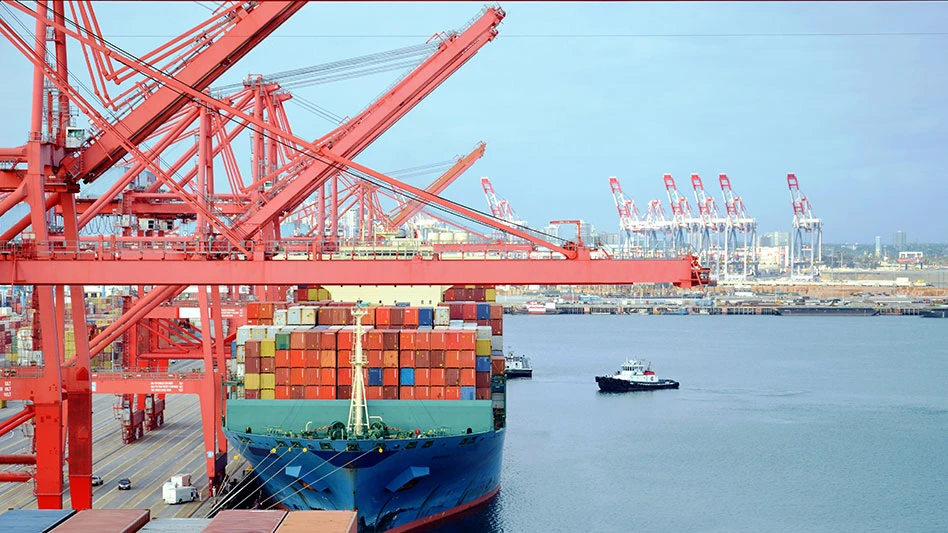
The modifications USTR announced include changing the basis for calculating service fees on vessel operators of foreign-built vehicle carriers and setting the fee at $46 per net ton as of Oct. 14; eliminating, retroactive to April 17, a provision permitting the suspension of liquefied natural gas (LNG) export licenses if certain restrictions on the use of foreign-built vessels are not met; and imposing tariffs of 100 percent on certain ship-to-shore cranes and cargo handling equipment.
Additional modifications the USTR proposes involve adding a carve-out from fees for certain ethane and liquefied petroleum gas (LPG) carriers under long-term charter and imposing additional tariffs of up to 150 percent on certain cargo handling equipment (e.g., rubber tire gantry cranes) and components of such equipment. While USTR evaluates public comments on these proposed further modifications, the payment of certain service fees could be deferred through Dec. 10.
“The seaport industry is challenged by yet more taxes on the equipment necessary for supply chain expansion and resilience," AAPA President and CEO Cary Davis says. "Ports large and small struggle to finance large, modern, world-class equipment like cranes when government policies double the price overnight. The choice is between affordable equipment or lagging behind. AAPA supports the Trump administration’s efforts to bring critical manufacturing back to America, but tariffs on key equipment will not lead to a manufacturing boom; they will only make shipping goods through U.S. ports more costly.”
Regarding the tariff on ship-to-shore cranes, AAPA says it appreciates the Trump administration not applying this tariff to cranes ordered prior to the publication of the proposal, allowing a small number of ports to avoid multimillion-dollar tariff payments on contracts that had been executed when the tariff was proposed. However, AAPA remains opposed to the 100 percent tariff, which makes cranes delivered from allied nations more expensive as there is no American producer of STS cranes. AAPA has endorsed the Port Cranes Tax Credit Act of 2025, led by Rep. Mike Ezell, a Republican from Mississippi, which would incentivize domestic production of STS cranes. Without it, a new 100 percent tariff likely will delay port modernization.
Regarding USTR’s proposal for a new 150 percent tariff on a broad range of cargo-handling equipment from China, including gantry cranes, reach stackers, terminal tractors and more, AAPA says ports will delay expansion and modernization plans for years. Any price increase in equipment must be budgeted for by reducing expenses elsewhere, whether workforce training or capital investment, the association adds. High tariffs on allied nations in Europe and Asia, where much of the world’s port equipment is manufactured, mean costs for cargo handling equipment will continue to rise worldwide.
AAPA says it supports efforts to bring maritime industry manufacturing back to America. “However, these ill-advised trade policy changes will cause America’s ports to slow modernization and fall further behind competitors, when the maritime industry has emerged as a key focus of national and economic security.”
The association is urging the Trump administration to reverse course on these tariffs and instead support American businesses through targeted tax credits and funding for port infrastructure.
Latest from Recycling Today
- Greenwave appoints chief financial officer
- Commentary: A turning point for flexible plastics recycling
- EcoATM announces 7.5M devices collected in 2025
- Update: NAW secures injunction blocking enforcement of Oregon’s EPR law
- Smurfit Westrock to close paper machine at Quebec mill
- Recycled steel sellers get another winter bump
- Century Aluminum Kentucky smelter site to host data center
- Cleveland-Cliffs loses $1.4B in 2025