Recycling Today file photo
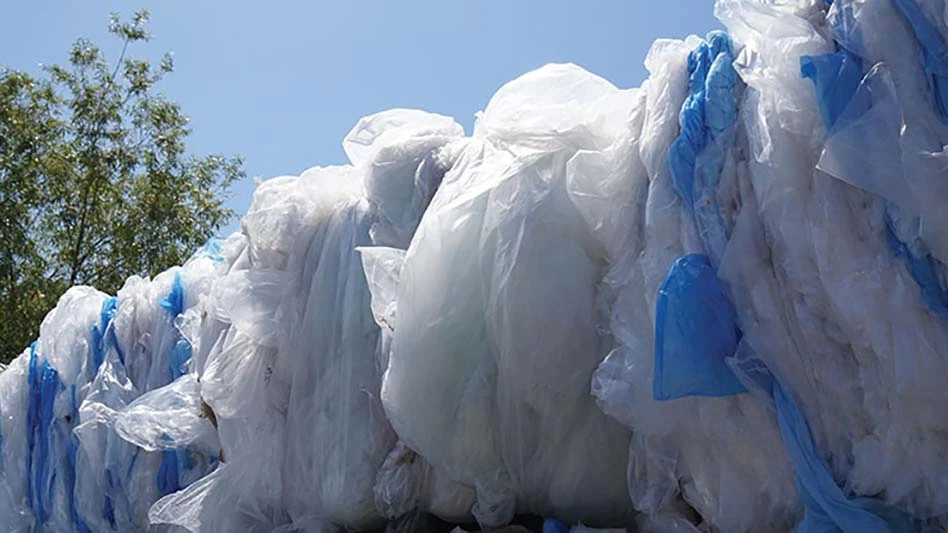
Plastic film, wraps, pouches and labels are everywhere. Whether used to keep food fresh, medicines safe or goods protected during shipping, flexible plastic packaging has become an indispensable part of life, quietly supporting the modern conveniences we rely on every day. It now comprises more than 50 percent of the total plastic packaging market.
But what happens after we’re done with flexible plastic is a wasted opportunity—tossed in the trash, destined for landfills or incineration. These materials present one of the toughest challenges for recycling and circularity. The highly varied, multimaterial composition and lightweight nature of flexible plastic make it difficult and costly to recycle. Even when it is recycled, the resulting material struggles to compete on cost with cheaper virgin resin.
We are now at a crossroads where the convenience of flexible plastic is colliding with the rising cost of its environmental impact. The regulatory landscape is shifting fast. States are debating whether to exclude flexible films and packaging from curbside recycling under extended producer responsibility (EPR) laws, which would increase costs for producers.
One thing is clear: Coordinated, collaborative action is the only way to solve this problem. And while the problem is global, this is an area where the United States is primed to lead on innovative solutions, galvanized by leading brands, technologies and robust public-private partnerships with state and local governments.
Momentum on strategic alliances
Flexible plastic recycling is no longer just a technical challenge. It has become a business imperative for brands, retailers and their suppliers.
This reality is driving much-needed cooperation. Just look at the recent launch of the US Flexible Film Initiative (USFFI), which is bringing together leading consumer brands to tackle the flexibles challenge head-on.
We need more strategic alliances like this—especially ones that include each step in the value chain. If we can bring these players together, we have an extraordinary opportunity for coordinated systems change.
Flexible plastics recycling depends on a tightly interwoven ecosystem. Every link in this chain depends on the ones before and after it. When one link strengthens, the whole system benefits. But when one lags, the entire effort stalls:
- Waste management companies and municipalities determine curbside collection and logistics. They might be willing to invest in more segregated collection and advanced sorting—but only if downstream demand and processing capacity are in place.
- Material recovery facilities (MRFs) sort materials from incoming waste streams. They are critical gatekeepers but often lack the incentives or capacity to handle flexibles efficiently. They might be more likely to invest in sorting infrastructure or have dedicated large-scale secondary sorting centers (plastic recovery facilities, or PRFs), but only if demand from recyclers and end markets is strong and reliable.
- Recyclers typically handle a more granular level of sorting needed for mechanical and chemical recycling of flexible plastics. However, the technology to sort flexibles is expensive, which limits its adoption by recyclers. Recyclers are more likely to scale their capacity if they have consistent, high-quality feedstocks and proven end markets. Investment in dedicated PRFs can unlock more efficient and reliable feedstock supply, enabling recyclers to scale with confidence.
- Brands and converters set the bar for recycled content and design for recyclability. They are more likely to incorporate recycled plastics when supply is reliable, costs are competitive and material performance meets application requirements. And they are more likely to adopt design-for-recyclability guidelines if the infrastructure exists to support recycling of improved packaging formats.
- Investors are more confident deploying capital at scale when supported by clear policy signals, viable business models and coordinated value chain efforts.
A blueprint for systems change
In the Alliance to End Plastic Waste’s most recent "Insights Report," we detail our experience with flexible plastics recycling and propose a three-phased approach to drive coordinated action:
- Map the market and align stakeholders. It begins with market mapping and system design, where governments and trade bodies like the Alliance take the lead in exploring where market demand for recycled flexibles exists and what quality is needed, as well as the technology and infrastructure best suited to meet that need. This process helps align stakeholders by creating a detailed understanding of holistic, long-term solutions and the required enablers and investments.
- Showcase system solutions. Action beats theory every time. Demonstration projects connected across the value chain will highlight the different technical, economic and social requirements for broader scale systems change and build industry and investor confidence in solutions before they are expanded geographically.
- Mobilize the value chain around solutions. The third phase mobilizes brands, recyclers, municipalities and policymakers to understand what it takes to create and expand effective system solutions and replicate them across geographies—driving rapid, real and lasting change.
Mobilizing the U.S.
The cost of inaction is not abstract: It’s visible in the strain on our waste systems, the loss of valuable materials and the erosion of public trust in recycling. Left unchecked, these issues will force harsher regulatory responses, increase costs for producers and consumers and undercut the credibility of industries that rely on flexible packaging.
But the opportunity is just as real and far more inspiring. If we get this right, we unlock a new era of circularity for plastics. We prove that innovation and collaboration can turn a stubborn problem into a shared solution. By building a functioning system for flexible plastics recycling, the U.S. can demonstrate its global leadership, creating new markets, new jobs and new standards for responsible production and consumption. We’ll keep valuable resources in use and out of the environment, demonstrating that economic growth and environmental stewardship can go hand in hand.
The Alliance to End Plastic Waste is committed to being part of the solution: convening partners, sharing insights and showcasing what works. And we need others to join us—brands willing to lead, recyclers ready to innovate, policymakers who enable investment and investors who back the future of circularity.
Progress is possible. The technologies exist. The momentum is building. This is a pivotal moment for flexible plastics recycling, and we want to be part of shaping what's next.
Pranav Goenka is senior advisor and co-chair, Recycling Solutions, at the Alliance to End Plastic Waste.
Latest from Recycling Today
- EcoATM announces 7.5M devices collected in 2025
- Update: NAW secures injunction blocking enforcement of Oregon’s EPR law
- Smurfit Westrock to close paper machine at Quebec mill
- Recycled steel sellers get another winter bump
- Century Aluminum Kentucky smelter site to host data center
- Cleveland-Cliffs loses $1.4B in 2025
- Sims swaps assets in Houston area
- CMI names director of sustainability