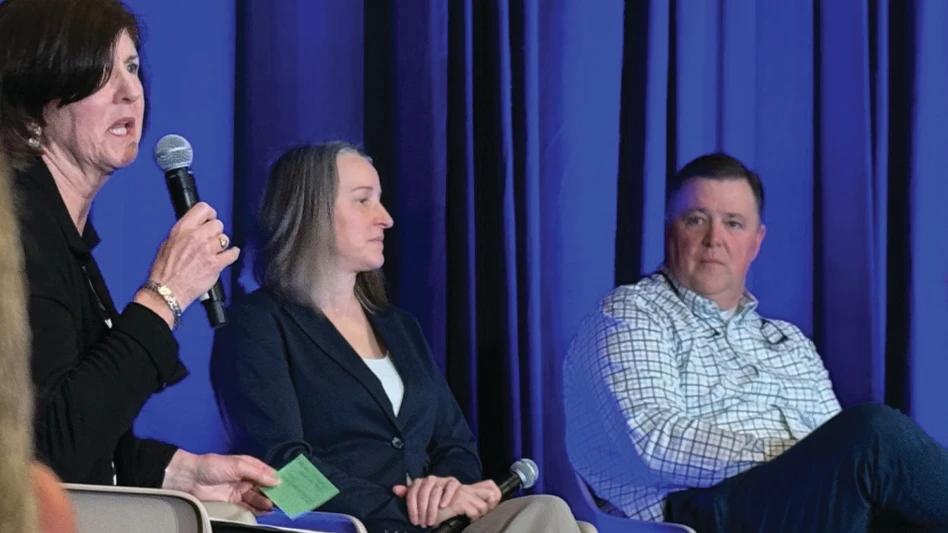
Municipal recycling directors in five of North America’s largest cities hashed out whether it was the best of times or the worst of times for their programs in a session held Mon., May 6, at the Federation of New York Solid Waste Associations conference in Bolton’s Landing, N.Y
The recycling program in New York City has come under the most visible questioning, but recycling officials in several other cities noted that the federal, state and municipal spending deficits are putting their programs under greater scrutiny as well.
The city of Toronto would seem to have the smallest chance of turning its back on recycling, as the city’s government has decided that a recently-closed landfill would be its last one, according to Geoff Rathbone, director of solid waste planning for Toronto.
Rathbone said that “closing what we’re calling our last landfill four months ago,” represents a major commitment to recycling by the city. Currently, however, the city is shipping some 100 railcar or truckloads per day to landfills in Michigan.
But civic leaders have made pledges to boost recycling in the city, with a looming goal of a 60 percent diversion rate coming soon and a zero waste goal only a few years away in 2010. “We are now collecting waste only once every two weeks, but recycling collection continues every week,” Rathbone noted as one example of the city’s commitment.
Bob Besso from a division of Norcal Co., San Jose, represented San Francisco’s comprehensive recycling program, which manages and bills all city residents and businesses for their recycling and solid waste service.
The city has a “pay as you throw” waste collection system, which helps to strongly encourage recycling. In the city’s “Fantastic Three” program, residents have three carts they can put out on the curb: one for recyclable paper and containers; another for food waste and other compostable material; and the third for unrecyclable waste. Residents are charged only for the solid waste container and any additional garbage bags they put out on the curb.
Chicago’s current mayor, Richard Daley Jr., has also committed publicly to recycling, according to Marcia Jimenez, the city’s director of environment.
The city’s Blue Bag program collects mixed recyclables for processing at a series of plants located throughout the sprawling city of 2.9 million people. The city is currently collecting more than 280,000 tons per year of recyclables from residents, compared to more than 1.2 million tons per year of household municipal solid waste.
In Boston, budget deficit questions could change things, but currently curbside recycling is offered to city residents, with varying participation rates. She noted that one challenge in establishing a recycling culture has been that the city’s solid waste division has traditionally offered a comprehensive hauling service. “Public Works takes pride in being able to handle anything we put out on the street,” noted Susan Cascino, Boston’s recycling director.
That culture could be changing in the midst of its current fiscal crisis, however, and Cascino noted that a “pay-as-you-throw” solid waste collection plan has even been studied.
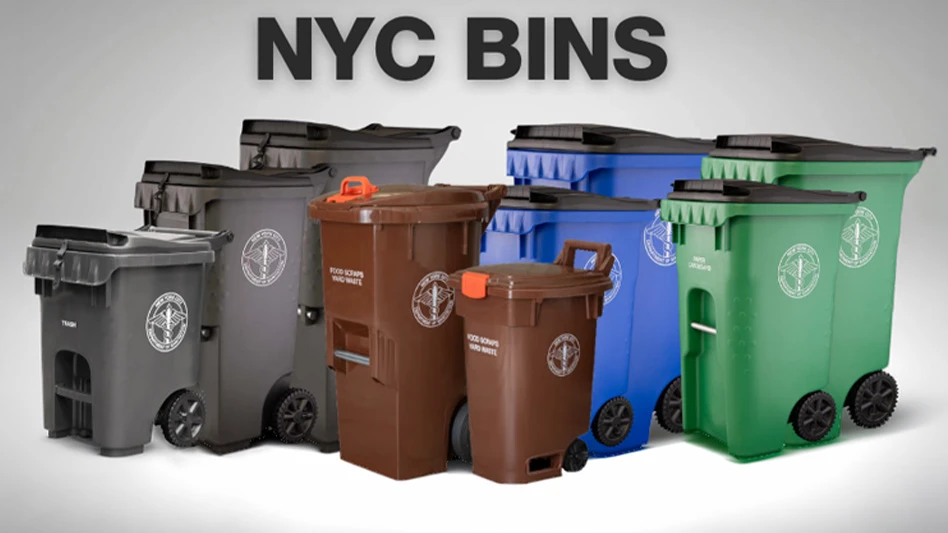
New York’s recycling program has come under visible attack from New York mayor Michael Bloomberg, who fairly early in his administration reduced the number of commodities collected in municipal recycling bins.
According to Robert Lange, the city’s recycling director, part of the problem has been that the recycling program has always been seen as a city council-directed program, so when budget battles began the mayor’s administration saw tinkering with recycling as way to get council’s attention.
Ongoing budget threats remain, said Lange. “Collection is overwhelmingly our highest cost,” he remarks, noting that collection may go to every other week soon in parts of the city. Further automation through the use of trucks with robot collection arms will be difficult because of the widespread existence of on street parking, he remarked.
Nonetheless, the city’s recycling managers continue to work to raise participation rates, such as by offering educational programs to building supervisors to help spur collection at multi-unit apartments.
Latest from Recycling Today
- Greenwave raises revenue but loses money in Q2 2025
- Recycled steel prices hold steady
- EY says India’s need for scrap imports will continue
- Coming full circle
- Amcor, DCM introduce fertilizer packaging with 35 percent recycled content
- Comstock Metals gets closer to commissioning commercial-scale solar panel recycling facility
- Washington selects Circular Action Alliance as PRO
- Smurfit Westrock expands in Latin America