BillionPhotos.com | stock.adobe.com
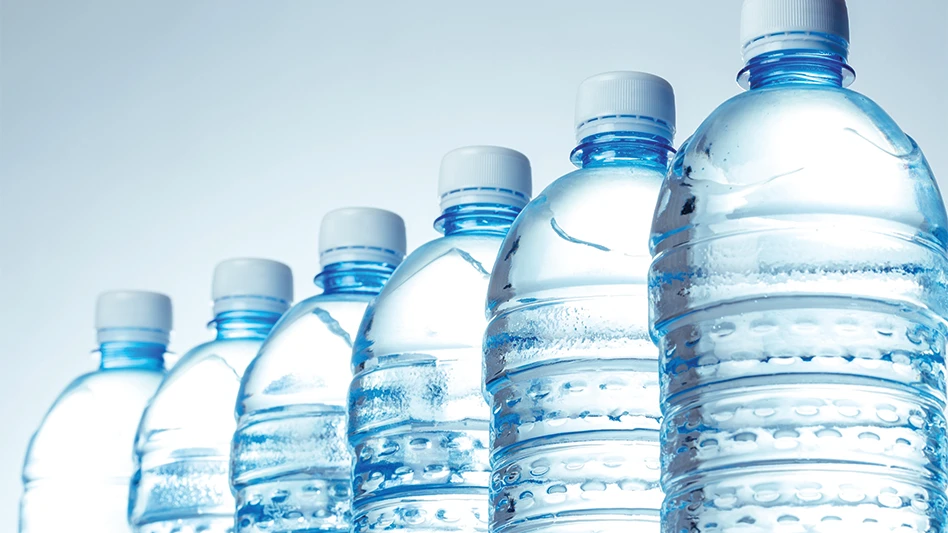
The United States’ recycled polyethylene terephthalate (rPET) market struggled throughout 2025 and into this year, with bottle bale prices falling as low as 6-8 cents per pound in some areas in January. The reasons for those struggles have long been established.
Reclaimers have had to weather an oversupply of domestically produced virgin resin, a multiyear flood of virgin and recycled imports and the walking back of recycled content commitments by packaging producers. In the last 12 months, five U.S.-based reclaimers have closed their doors—the most recent being announced in January.
In The Recycling Partnership’s (TRP’s) Feb. 12 installment of its “Recycling In America” webinar series, a panel of stakeholders dug into the nature of the problem and why PET recycling, long considered a success story compared to all other plastic types, has reached such a crossroads.
“A year ago, it never occurred to me that we’d have to have a conversation about the state of PET recycling,” said TRP founder and CEO Keefe Harrison, who moderated the webinar. “[Recycling] rates remain low, meaning we still have challenges around access and participation, but what we do know is that when material gets into a bin, it turns into new stuff.”
Supply and demand struggles
According to Association of Plastic Recyclers (APR) research, nearly 2 billion pounds of PET bottles are collected for recycling in the U.S. each year, but familiar issues have arisen. From 2022-24, Washington-based APR has reported that rPET imports to the U.S. grew by more than 65 percent. Adding to the resin’s woes, the Middleton, Wisconsin-based National Association for PET Container Resources’ (NAPCOR’s) “PET Recycling Report” claimed the PET bottle recycling rate in the U.S. was 30.2 percent in 2024, a decline from the 32.5 percent reported the year prior.
“A bale of PET is now as cheap as it’s ever been,” said NAPCOR Program Director Alasdair Carmichael, who added that prices have reached lows not seen in 20 years. “East Coast curbside, West Coast curbside and deposits are all in a tough place. Right now, things are not moving. It’s still a difficult market.”
Kate Eagles, program director at APR, reiterated that PET is “very successfully recycled,” adding that more PET is recycled than any other resin globally.
“We recover close to 2 billion pounds of PET annually,” she said. “Most of this goes back into bottles and other PET packaging. It’s also recycled into polyester fiber and carpet, but that’s a smaller percentage.
“There are 25 reclaimer locations in the U.S. and Canada who wash and process the PET we collect. We know hot wo recycle PET containers and we’re good at it, yet we see reclaimers closing.”
Eagles noted that companies have started importing rPET to meet requirements and that fact, combined with the excess of inexpensive virgin resin on the market, has led a number of them to start using less recycled material or none at all. “Over 20 years we’ve seen these cycles,” she said, “but the concern at the moment is that this isn’t a cycle, but a new dynamic.”
Added Carmichael, “Circularity struggles if the supply chain starts 800,000 miles away. It’s very difficult to make a real circularity claim if you are bringing [materials in from] another country, taking their bottles, which could be circularized within their own country, and exporting them to the U.S. At the same time, they’re taking market away from the domestic producer in the U.S. That is not a circular system.”
A producer’s point of view
Molly Laverty, director of sustainability reporting and engagement at Tampa, Florida-based Primo Brands Corp., which includes bottled water brands such as Poland Spring, Pure Life, Ice Mountain and many more beverages, pointed out her company’s commitment to using rPET in its products.
“PET is something we can reincorporate and look into a bottle-to-bottle system as we’re incorporating rPET into our packaging,” she said. “We do have aggressive corporate goals around recycled content which rely heavily on using rPET, as it’s one of the main packaging elements that we’re sourcing.”
According to Laverty, in Primo’s view, seeking long-term contracts with suppliers is an important solution “so we don’t lose access to the rPET supply,” though she noted that it’s becoming a very competitive market.
“We’ve seen reclaimers shut down, tightening up the supply,” she said. “In many cases, the ambition to use more rPET outpaces the volume of high-quality material. Our operations do see issues with rPET with different qualities and how it performs and how we’re incorporating it as we make new bottles.”
Laverty said long-term contracts also provide commitments to domestic suppliers that they need to build out the capacity to meet brands’ demands.
“The global supply chain is very interconnected,” Laverty said. “Even resin we’re seeing that’s made or pelletized domestically could rely on imported feedstock. It’s introducing a level of complexity for procurement and traceability. Making public claims for where you’re sourcing your rPET from is becoming more and more complex as we’re seeing the market dynamic shift.”
The local level
Another issue, according to Chris Slafter, is decreasing public trust in the recycling process.
Slafter is the senior sustainability strategist for San Mateo County, California, and said that when it comes to downstream challenges, “you have the diminishing value of PET bales, you have dwindling markets and that goes hand in hand with a drop in public trust.”
Slafter, whose county works with seven different haulers and has four material recovery facilities (MRFs), said residents and commercial businesses are “just inundated with all sorts of plastic materials, Nos. 1-7,” and the material is “just everywhere in life,” and that means people aren’t always going to know how to recycle and sort items properly.
“They hear about items being landfilled and they just lose faith,” he said. “And that’s in part because the plastic industry, in general, has made it our responsibility—local government and waste haulers—to manage the material they they’re profiting off of. People have come to believe that anything with the ‘chasing arrows’ symbol on them is recyclable, so all this material is being given to our haulers to manage when they don’t have the capacity to do that. It’s expensive for operations because you have to sort everything to get to the actual stuff you can make money off of, and contamination rates reduce the value of that.”
Citing input he’d received from the haulers and MRF operators in his county, Slafter said all agreed that PET is a reliable plastic to sell and there’s a healthy market for it. But success depends on market stability, and market stability depends on material quality, contamination levels and the price of domestically produced recycled feedstock against virgin or imported material.
“They reiterated the need for the creation of a stronger domestic market to keep the PET market in California afloat,” he said.
Sources of relief
The panel discussed ways to provide relief for the struggling U.S. rPET market, with one solution being long-term postconsumer resin (PCR) contracts.
“Contracts are the best indication of commitment that we have,” Eagles said. “We see that in MRF and hauler systems. There might be a [long-term] contract to service a community, and they’re important because they allow for equipment investments to run a recycling program. We have not seen that so much in plastic recycling.
“We definitely have some in PET contracts, but they tend to be a year or so, or maybe no contract at all. Industry relationships have been super important, but you can’t show relationships to your bank and get an equipment loan or other asset loans to really improve or convince investors you have what it takes to invest in.”
Adding that domestic recyclers need to stay globally competitive and install equipment that will allow them to remain so, she said, “We need to scale this market, and we need the confidence to do so. Contracts are something we think are important to look at. We really need to dig in here pretty quickly for the PET industry.”
Eagles also urged policymakers to enact more postconsumer recycled content laws with incentives for producers to purchase domestically sourced rPET, and suggested companies stop buying rPET from overseas.
Panelists noted that legislation such as extended producer responsibility (EPR) for packaging can act as a supply driver, but it needs to be paired with demand drivers such as PCR commitments.
“EPR won’t fix the issue alone, but it is a critical supply mechanism,” Harrison said. “Demand comes when companies buy stuff, and old stuff turns into new stuff.”
Laverty said rPET sourcing is not just a materials challenge, but a systems challenge.
“While brands need to make commitments, we also need to be working in coordination with recyclers, suppliers, policymakers and consumers toward the same common goal.”
Slafter advocated reuse as a potential solution.
“If we’re reusing items instead of single-use items, then we’re not creating material that needs to be managed,” he said. “And if we’re not needing to manage as much material, then it’s going to be easier to deal with the problems we do have, and we’re going to engender public trust.”
Summarizing the discussion, Harrison said that the PET recycling system is proven and effective but has reached a “pivotal moment” where it must scale and not stall.
“That’s what the partnership is working on with everyone, including our brand partners,” she said. “The data is clear: our reclaimer capacity in the U.S. is in decline and imports are on the rise. That’s not the direction that will solve it. The risks are real and are escalating quickly, but we can turn this around. We can change this and keep the U.S. recycling rates viable.”
Latest from Recycling Today
- Work Truck Incyte launches market discovery intelligence platform
- BlueScope posts 118 percent increase in net profit
- Origin Materials announces organizational realignment, business update
- EAF steelmaking transition could reduce industry’s emissions footprint by 38 percent
- European policymakers seek Russian steel import ban
- EPR implementation working group adopts nationwide focus
- CPM Crown to open European operations hub
- Mardi Gras sustainability initiative collects 14K pounds of recyclables