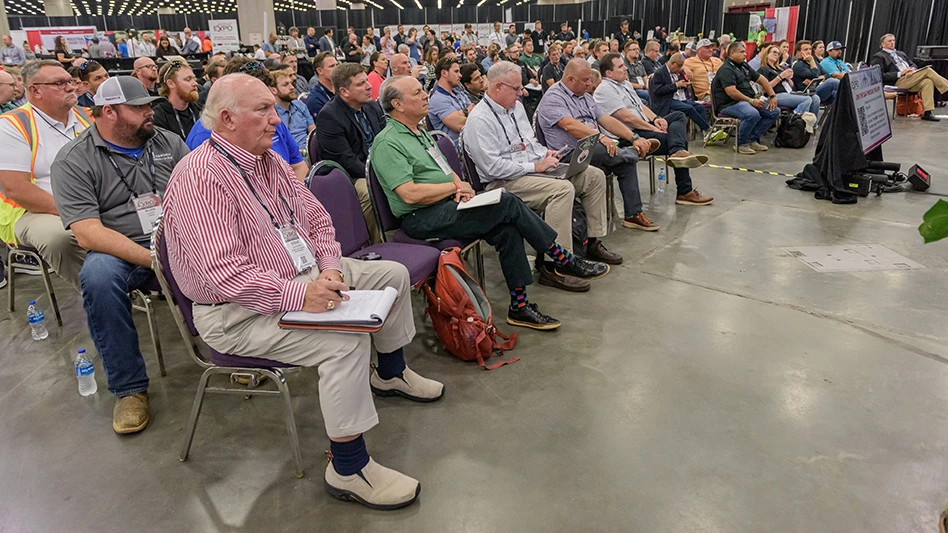
At Scrap Expo 2025, Sept. 16-17 in Louisville, Kentucky, the metals recycling industry will come to life through an interactive outdoor exhibit area showcasing the power of scrap processing and material handling equipment; an indoor exhibit area featuring an array of cutting-edge equipment and services tailored to the industry; and live demos and insightful education sessions designed for attendees to grow their industry expertise.
In a session titled Maximize Growth, Control Costs and Capitalize on Opportunities, Sept. 17 from 9:30-10:30 a.m., Brett Ekart, CEO of United Metals Recycling, Boise, Idaho; Blake Dorsett, president of ShearWorx, Birmingham, Alabama; Brian Ferguson, chief financial officer of United Metals Recycling; and Aldo Jordan, president of The Metals Agency, San Francisco, share best practices for understanding your costs, the options available to reduce and control them and how to identify areas for improved profitability.
To provide a preview of this insightful discussion, Recycling Today spoke with Ekart about how scrap recycling companies can grow amid challenging markets, how third-party and fractional (part-time or outsourced professional) services can help and what attendees can expect to learn from the session.
Recycling Today (RT): What is the current state of the scrap recycling industry, and how can companies grow in this challenging market?
Brett Ekart (BE): It’s currently a challenging market for everyone, and everyone is fighting the same fight, but it all really comes down to who can get their house in order the fastest.When the market is down, it really gives you the chance to get your house in order by looking closely at your overall business and costs. I like to say the biggest steps in growth often take place during the most challenging times because you’re making plans for when the tides turn. You’re already determining what it takes to be successful, and you’re automatically in a strong position to capitalize by preparing in advance instead of waiting for when the market is up and nearly everyone’s business is growing.
Everyone gets a bit nervous to make moves when the market is down, but that’s the time to make a deal on a piece of equipment or another scrap yard. You need to be a confident risk-taker and understand what may not look like growth today could lead to exceptional growth in the future.
RT: When creating a growth strategy, what should business owners and operators pay close attention to and why?
BE: First, you have to identify your strong point and your niche. For example, if you’re great at logistics, focus on that and become the best scrap logistics business. Then, you can build from there by exploring what other business areas have some customer crossover and where you could begin adding additional services or locations. This allows you to diversify your business and build on the strategic advantage you may already have.
RT: What about third-party options or fractional services? What can those consist of, and how can they benefit scrap recycling businesses looking to take their operations to the next level?
BE: A lot of folks in the scrap industry come from multigenerational businesses where if we can’t do something ourselves, we don’t want to do it, or if we can’t pay cash for a piece of equipment, we don’t want it. But, really, we should be looking at all the ways we can get something done, which can include third-party or fractional services.
What a third party allows you to do is be big for a small period of time. So, you don’t necessarily incur the cost of buying a $1 million shear and having an operator run it; you can just access a $1 million shear for six months to tackle a big job, for example. It allows you to compete with a bigger company with more equipment, facilities and manpower without breaking the bank because you know what your fixed cost is going to be.
Ultimately, sourcing third parties allows you flex—to be big when you need to be and to shrink back down when you’re running your normal operations. If you’re operating in a challenging market—like the one today—where everyone is trying to cut costs and stay lean, you’re able to lean-down much quicker than someone who bought a piece of equipment and only got six months to a year of use out of it on a 5- or 10-year deal due to smaller volumes.
Additionally, third parties can be helpful on the admin side of your business where you may not need a full-time employee. It allows you to grow in bite-sized pieces without necessarily having to take the whole bite.
When it comes to fractional services, you can have a fractional chief financial officer or chief marketing officer, for example. There are a lot of options out there.
Some companies, especially smaller businesses, are also turning to artificial intelligence to help them in areas like marketing and accounting. This allows them to better compete with midsized businesses, and I think there’s a real upside for small businesses to utilize those tools.
RT: What do you hope attendees take away from this session and Scrap Expo?
BE: Scrap Expo speaks to the small and medium-sized processors and recycling companies that are trying to figure out the business and carve their way into the industry. They are going through what I went through, and they are coming from where I came from. I am excited to tell my story and share my insights to help others on their own journey.
RT: You’re also leading an exclusive workshop Tuesday morning before Scrap Expo officially kicks off. Tell us about that workshop and what participants can expect to learn?
BE: Our goal is to be an open book, and we encourage attendees to bring their questions.
I will be joined by Nick Snyder, marketing and purchasing director at United Metals Recycling, and Brian Ferguson, chief financial officer at United Metals Recycling, to share insights into how we found success and to help attendees talk through any challenges they may be facing. This workshop is really meant to be interactive so we can all make each other’s business better.
Latest from Recycling Today
- WM opens 2 new MRFs in Ontario
- International Paper to close Washington box plant
- Cascades exits honeycomb packaging, partition business segments
- Customer focus drives Bantam Materials’ success
- ATI reports slimmer profits
- Papilo acquires Allwood Recycling in UK
- RecycleNation helps people find nearby recycling facilities
- Cyclyx International to be restructured