Photo by Chris Voloschuk
For steel mills and foundries processing ferrous scrap, the key is to find the best value from suppliers, according to a pair of industry operators.
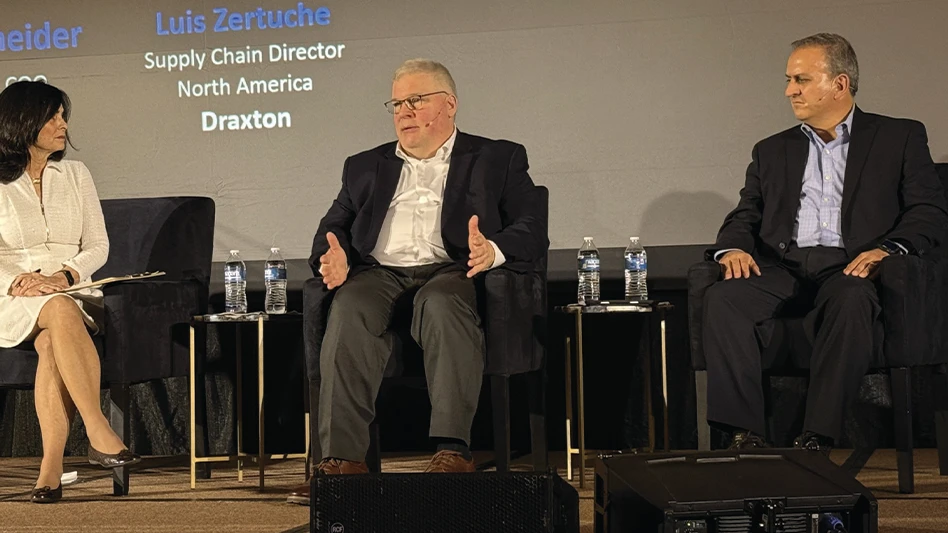
Material needs were the topic of discussion during a Jan. 28 session, Big Mills and Foundries: What Do They Need From Their Suppliers? at the 2026 Fastmarkets Circular Steel Summit in Houston. When asked about how mills are adapting their footprints to meet their demand, Barry Schneider, president and chief operating officer of Steel Dynamics Inc. (SDI) highlighted the need to find that value coming into his company’s facilities.
RELATED: 2026 Circular Steel Summit: Taking stock of tariffs
“We’re also a large recycler, and there’s value in scrap,” Schneider said. “The premise of the EAF [electric arc furnace] community has always been to find the best value of that scrap.”
Schneider pointed to Fort Wayne, Indiana-based SDI’s 2007 acquisition of scrap metal recycler Omnisource Corp. as a prime example of maximizing the material’s value, adding that “it’s been a great addition to our teams because, in America, some 73 percent of steel is generated in EAFs. We’re already heavily involved. Our scrap systems are already adapted, so we continue to find that value and ensure the best opportunities to get that scrap into the best end product.”
Luis Zertuche, North America supply chain director for Spain-based Draxton, which operates foundries and manufactures automotive parts in the United States and Mexico, noted that his company’s scale is quite different from a mill.
“What we do is create alliances with our partners and the scrap dealers,” he said. “We also go directly to the OEMs [original equipment manufacturers] to get the scrap we need.”
Using Draxton’s relationships with auto manufacturers such as General Motors, Toyota and Honda, Zertuche says his company’s strategy is to “go directly to the sources to try to allocate the sources as close as possible to our foundries to avoid the freight and manage those costs.”
Draxton manufactures brake components for Tier 1 and Tier 2 automotive suppliers, and although it doesn’t supply parts directly to OEMs, Zertuche said, “It’s not a fully closed loop, but we need their scrap, so we approach them through an intermediary in the field to help us recover all the scrap we need.”
For SDI, Schneider said OmniSource, in particular, has worked with auto components.
“They segregate those materials as they come through so we can get the most out of that value,” he said. “It’s about being able to be in your customer’s plant and help them find that value and offer that value for sale. That value turns into what I want to buy as a steelmaker.
“We can dilute things, make products that are more sensitive or less sensitive. It’s about finding the best commercial solution for that value and developing that competence from when that scrap is collected to when that finished product is made.”
Meeting contract needs
When it comes to contracts, Zertuche said Draxton has sought long-term deals with some suppliers, but focuses more on developing a supplier base that is reliable.
Because Draxton is part of the automotive supply chain, there are certain certifications its products have to meet. As a result, Zertuche said his company spends a lot of time with its suppliers to help them develop their scrap recovery systems.
“We develop those suppliers,” he said. “We define a formula that we follow so we can track the price of scrap every month, and then we don’t have to be fighting for the price every month.”
Zertuche said the company buys a small portion of the scrap it processes from the spot market, roughly 25 percent compared to 75 percent purchased from its developed supplier base, but noted things can change based on market behavior, as “sometimes there’s volatility.”
Schneider noted that SDI produces a wide range of products and works diligently to supply the right material for its furnaces.
“Steel Dynamics isn’t just a flat-rolled steel producer,” he said, adding that the company also manufactures products such as rebar and merchant bars. “As you start getting into structural and rail, they become more sensitive. We need to take material from scrap streams and find them a proper home, but those scrap commodities are going to melt differently in our furnaces. We also need to look at the amount of carbon contained.
“The riddle is solved differently at all our facilities. The key is to locate all these feeds and make sure we send them to the right places. As you buy more scrap, it’s difficult because you need more. Our scrap and mill teams are constantly working on making that work. It’s a nonstop relationship we have from our scrap team right to our mill teams.”
Schneider said SDI does make spot purchases, though “scrap isn’t something you can just accumulate.”
“It takes a lot of money and energy to buy scrap and store it,” he said. “We move it quickly. Prices change. The faster our engine turns over, the more the cost of our product is. It’s a business model. That openness to talking to brokers and different parts of the scrap markets is an advantage of our scrap team. It’s about responding to the market and what our needs are today.”
Supply quality
When working with suppliers, Zertuche said Draxton is “very focused” on the consistency and quality of scrap it purchases.
“Every load we receive in our factories goes through X-ray [analysis],” he said. “We need to analyze it, then send it to the lab to check the chemistry of the load. We’re producing safety parts for autos, like brakes, so we’re very focused on the quality of the products. We have very tight specifications as well, because we need to be sure that the products we receive and put in our furnaces are the best quality.”
Schneider said SDI uses scrap with varying levels of quality.
“When we use scrap-fed furnaces, we need to know the average we’re putting in for each application,” he said. “If my 0.2 [carbon intensity] product comes out at 0.5, I’ve wasted money. I need to know that when products come in I can build a scrap recipe that can be effective.”
Schneider said SDI processes and shreds “quite a bit” of postconsumer scrap and looks closely at safety with the material coming in, noting that sometimes airbag systems get processed, for example. “When we have ice events, that scrap has ice on it, so you have to be careful when you’re putting that in the furnace.”
Both panelists said they assess their suppliers’ performance. Zertuche said Draxton has a supplier development team in its supply chain department that conducts such assessments, visiting suppliers once or twice per year.
“We monitor their quality systems they have in place,” he said. “We walk together with the supplier to assess them on how to improve their quality system.
Zertuche added that sometimes his company has stopped working with a supplier because of scrap quality issues. “It could be that some material is mixed with a material that’s unacceptable or not to our specification. It could be mixed with a load and sampling went well, but then a problem arises when we put it in the furnace. Then we may have to stop production on that furnace. We might warn them the first time, then maybe stall the relationship the second time until they improve.”
Schneider said SDI works similarly, adding that “it’s an ongoing struggle.”
He continued that SDI’s flat-rolled steel mills are designed to react to issues and have flexibility built in, however.
“We get that [material quality] feedback to the customers,” he said. “It might be a mixed stream and we’ll talk to them about how to get that stream cleaned up. Some forgers might tell us there’s no copper [in the mix] or it’s clean, but it has nickel in it. That gives us options we can walk through.”
Latest from Recycling Today
- Premier expands national rental fleet
- Amcor says Q2 performance in line with ’26 expectations
- Aduro Clean Technologies achieves operational milestone for NGP pilot plant
- USPP outlines ways to advance film and flexible packaging circularity
- Fires, tariffs reduce Novelis’ earnings
- Murphy Tractor partners with Humdinger Equipment
- Shapiro announces promotion
- Carton recycling scrutinized in California