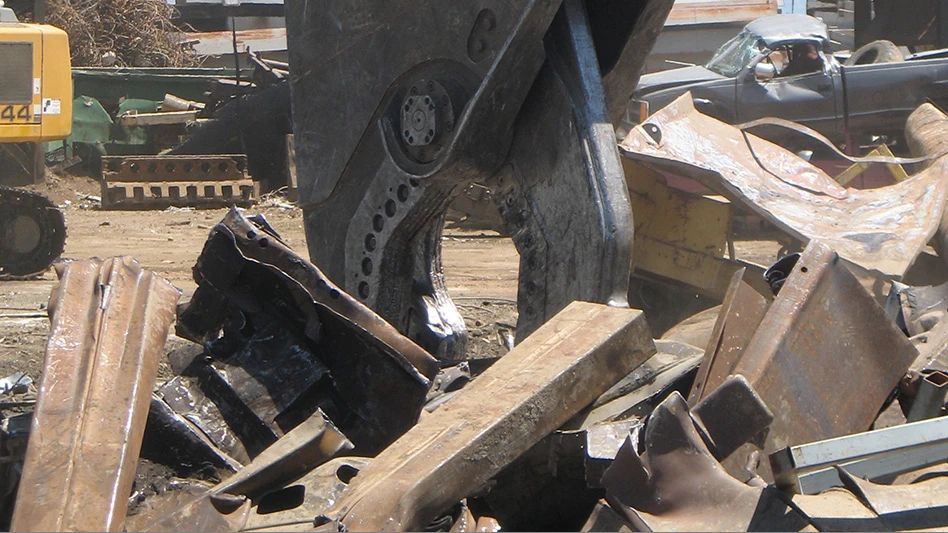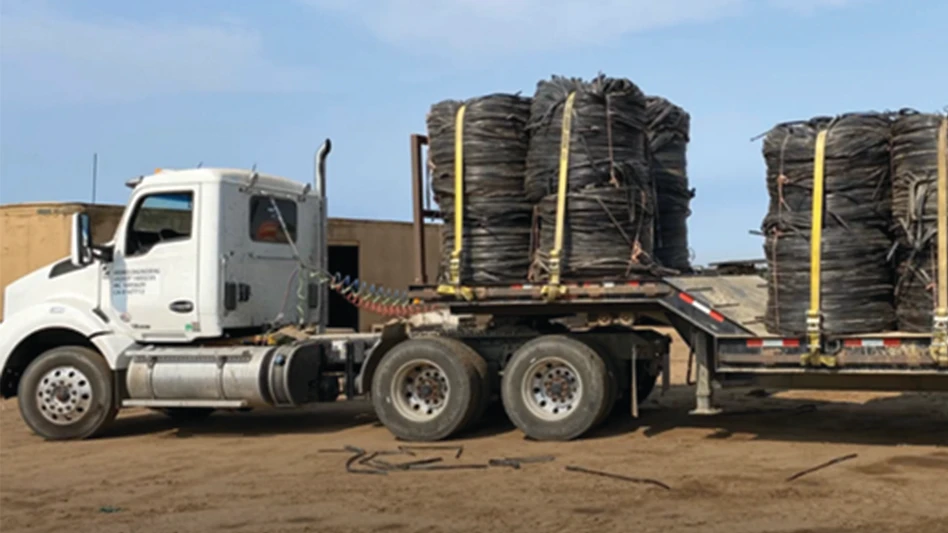
Photo courtesy of Netafim Ltd.
Since its launch in 2019 with the introduction of the Streamline X ReGen dripline for agricultural irrigation, the ReGen program developed by Netafim Ltd. has grown into what the company says is the industry’s first fully circular system for dripline recycling.
Initially focused on thin-walled driplines in the United States, Netafim’s program now operates in multiple countries, including Mexico, Morocco, Turkey and China. In 2024 alone, the company collected more than 10,000 tons of used driplines—made using polyethylene (PE)—for recycling, according to Ido Raanan, global circularity and machinery products manager for Orbia Precision Agriculture.
RELATED: Netafim launches agricultural recycling certification program
Netafim is a business unit of global firm Orbia, which has commercial activities in more than 100 countries and headquarters in Boston, Mexico City, Amsterdam and Tel Aviv, Israel. Netafim USA is based in Fresno, California.
In addition to its dripline recycling operation, Netafim introduced its ReGen AgVantage certification program in the U.S. in 2023, which recognizes growers as certified irrigation plastics recyclers.
Raanan tells Recycling Today that since the ReGen program began, it has demonstrated that sustainability and performance can go hand in hand.
“One of the most notable takeaways is that growers who transition to recycled dripline products rarely revert to virgin-only materials,” he says. “This shift is driven not only by environmental responsibility but also by tangible benefits such as cost savings and improved field operations.”
Raanan adds that the program has helped streamline postharvest cleanup, reduce labor costs and meet increasingly stringent sustainability standards—particularly important for growers targeting export markets.
“Additionally, Orbia Netafim has proven that with precise mechanical recycling, recycled polyethylene can match or even exceed the quality of virgin resin, opening up new opportunities for innovation and circularity in agricultural plastics,” he says.
Structured for recycling
Raanan says Netafim’s key recycling facilities are located in California, and Culiacán, Mexico, and each site was strategically selected based on proximity to major agricultural regions, availability of logistics infrastructure and local partnerships. He notes that the Culiacán facility, in particular, is Mexico’s largest agricultural plastics recycling plant, featuring water recirculation systems, renewable energy setups and advanced laboratory testing.
The Culiacán facility is designed to process 3,000 tons per year, while its Fresno facility has 7,500 tons per year of capacity. “We do hope to expand our capacity in Culiacán to nearly double in the next few years,” Raanan says.
Over the past eight years, Netafim has carried out extensive research using a proprietary grading method that precisely evaluates the quality of recycled materials, according to Raanan, which has aided the company in its mission to safely and reliably integrate recycled-content plastic into its product lines and reduce its carbon footprint, keep fields clean and maintain the value of plastic as a lasting asset rather than a disposable material.
“Netafim has developed an advanced recycling process that operates seamlessly for customers,” Raanan says. “[The process includes] the use of recycled materials, is completely transparent and does not compromise product performance. In fact, some of our recycled products even demonstrate greater stability than those made from virgin materials.”
Driplines collected by Netafim are mechanically recycled at its facilities. The process includes:
- material retrieval from fields via takeback programs;
- shredding and washing to remove contaminants;
- pelletizing of cleaned material; and
- reintegration of the pellets into new dripline manufacturing.
The company says its closed-loop system ensures high-quality output and meets strict cleanliness standards, especially in Europe. Raanan says a unique component of Netafim’s process is its quality assurance step—a specialized test developed by Dr. Shiran Garnai Hirsch that enables the evaluation of the potential lifespan of recycled materials and ensures their safe, uncompromised use in the final product.
“The lab drives innovation in circularity, failure analysis and custom test development, setting global standards for quality,” Raanan says.
To collect driplines for processing, Netafim uses a logistics network that includes field-level retrieval systems, bundling tools made available to farmers and partnerships with third-party collectors. The company has invested more than $3 million in logistics and recycling infrastructure to support the program’s growth, Raanan says, adding that the logistics network now spans multiple continents, with ISO 14001-certified collection services that allow for CO2 reduction reporting.
Pushing forward
In the coming years, Raanan says Netafim aims to significantly scale the ReGen program’s impact, along with its AgVantage certification program. Notably, the company plans to achieve 45 percent recycled content across all of its dripline and pipe products by 2030, claims that some lines already have reached up to 60 percent.
Expansion to new locations also lies ahead as it continues to build out its logistics and recycling infrastructure globally.
“Through these efforts, Orbia Netafim hopes to lead the industry toward a zero-waste future, where every meter of dripline is responsibly recovered, recycled and reused,” Raanan says.
Latest from Recycling Today
- Phoenix Technologies closes Ohio rPET facility
- EPA selects 2 governments in Pennsylvania to receive recycling, waste grants
- NWRA Florida Chapter announces 2025 Legislative Champion Awards
- Goldman Sachs Research: Copper prices to decline in 2026
- Tomra opens London RVM showroom
- Ball Corp. makes European investment
- Harbor Logistics adds business development executive
- Emerald Packaging replaces more than 1M pounds of virgin plastic