Lulla | stock.adobe.com
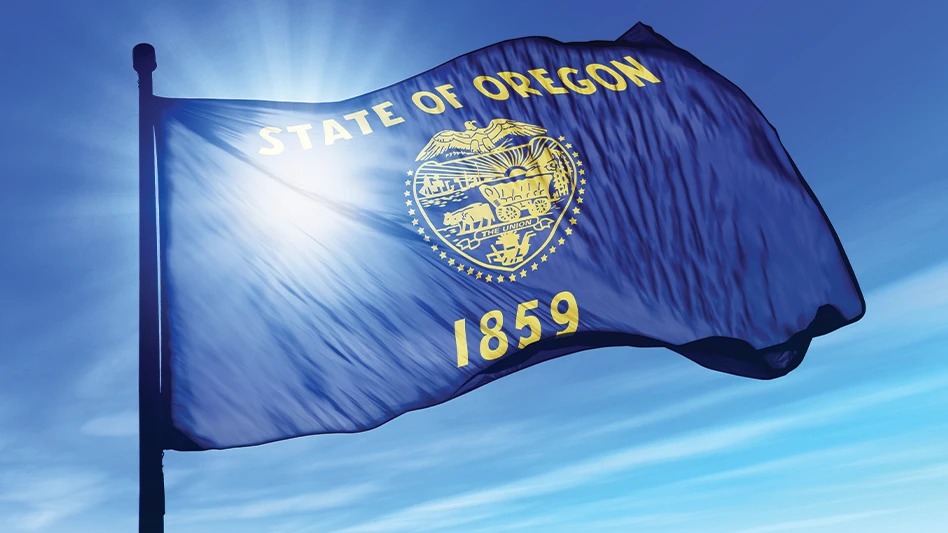
In February, the National Association of Wholesaler-Distributors (NAW) secured a preliminary injunction blocking enforcement of Oregon’s Recycling Modernization Act (RMA), which established a statewide extended producer responsibility (EPR) program that took effect July 1, 2025.
The injunction prevents Oregon’s Department of Environmental Quality (DEQ) from enforcing the law on NAW members until the U.S. District Court for the District of Oregon, located in Portland, rules on the law’s merits at a hearing scheduled for July 13.
RELATED: ILMA files lawsuit challenging Colorado’s EPR law
Karen Harned, director of litigation and legal policy for NAW’s Legal Policy Center (LPC), says the organization is looking forward to the court date and is “excited to present our case.”
According to Harned, the build-up to and implementation of the EPR program was “outrageous” from the beginning and proposes an “existential threat” to the organization’s members.
“I think that has already shown up in what we’ve put forward so far,” she says. “I think that’ll probably only be amplified in what people hear in July.”
Oregon is the first U.S. state to launch an EPR program for packaging, and six more states are set to follow in the coming years. The Washington-based NAW’s lawsuit, initially filed July 30, 2025, recently has gained support from other organizations ahead of this summer’s hearing.
On March 16, the Washington-based American Forest & Paper Association (AF&PA) filed to take part in the lawsuit, looking for a similar stoppage to the RMA’s enforcement on its members. Additionally, Oregon Business & Industry (OBI), the Northwest Grocery Association and Food Northwest have joined the suit. OBI is a statewide chamber of commerce and trade association that advocates for more than 1,600 member businesses of varying sizes and sectors, while Food Northwest represents food processors and manufacturers throughout Oregon, Idaho and Washington state.
“I was more surprised, quite frankly, that [other organizations] were not expressing more concerns earlier on,” Harned says. “But I’m proud of NAW for doing so. We knew it was the right thing for us to do for our members. I really do think we have a strong case, and I’m really excited for our hearing in July.”
For the different organizations taking part in the suit, there are similar concerns regarding the legislation and its impact on their members. For NAW members, there was confusion early on.
“When these laws were being debated, our members were loosely aware of them, but when they heard ‘producer,’ they did not think of ‘wholesaler-distributer,’” Harned says. “They thought of manufacturers. So, when these laws ended up capturing them and they saw that and then had to start trying to comply with it, then you saw the rubber meeting the road as far as the true impacts they were going to have on them.”
One issue the NAW cites in its lawsuit is the assessment of producer fees. Harned says for many of the organization’s members, the fees exceed profit margins for those selling into the state, “and that’s an issue which is going to mean that some members are seriously considering not selling into Oregon if we don’t prevail here, which I think is problematic.”
“It’s also frustrating for them, quite frankly, because they have so little control over the amount of packaging that comes in because they’re just that last step [in product distribution],” Harned continues. “They just don’t have the control that the manufacturer is going to have on the type and amount of packaging they use for a specific product.”
In a February news release responding to the court’s injunction, the DEQ noted that multiple claims made by the NAW were dismissed, with two left to be heard in July. The department also pointed out that under the RMA, producers of packaging materials are required to pay fees to help cover the cost of those materials to Oregon’s recycling system and fund improvements to modernize and expand recycling opportunities in the state.
DEQ said those fees are collected by its selected producer responsibility organization (PRO), the nonprofit Circular Action Alliance (CAA), which implements the program under DEQ oversight.
“Oregon is known as a leader in recycling and is the first in the nation to implement this approach to recycling that brings many parties together to share the costs of recycling improvements,” DEQ Administrator Jen Parrott said in February. “Extended producer responsibility programs that reduce the burden on consumers are prevalent in Oregon and around the world, and we’re certain it can work for recycling.”
Harned describes the EPR system CAA is implementing in Oregon as “opaque,” with questions around how fees are collected and what methodologies are used to calculate them. She claims the fee methodology has been kept confidential by CAA and DEQ, with program transparency lacking.
“From our perspective, [EPR] laws are not the right way to address [the recycling and pollution] problem, and we just don’t see a pathway for them to get there,” she says. “One of the things that is also missed on this is, yes, there have been EPR laws before, but they’ve been very narrow. They’re programs for batteries, mattresses, bottles, but [the RMA] captures everything.
“When you have a program this vast that touches literally every product that comes into a state, everybody talks about the law of unintended consequences when it comes to laws and regulations. But this is the poster child for that because of the vastness of what it covers.”
The NAW also is concerned about CAA’s role as the PRO, believing the state should administer the program. The lawsuit describes CAA as enforcing a law that “mandates producers to sign contracts with a single approved private organization, giving up their economic freedom and due process rights.”
There also is a consumer education component that isn’t being discussed as widely, according to Harned.
“If what we’re trying to do is reduce the use of plastic in particular, and other packaging, you need the end user to understand what’s happening,” she says. “They’re not going to understand why their products are going to cost more as a result of this law. For all they know, it’s tariffs [or another cause], because really CAA and the structure creates a buffer and makes it more opaque for the end user. And I think that is not giving anybody a good service. If people want this kind of program, I think they need to understand what the true costs of it are and not try to hide those from the public.”
This year, statewide packaging EPR is being introduced in Colorado, followed by California in 2027. Washington, Minnesota, Maryland and Maine have passed legislation and are developing program plans. Harned says the NAW is following the legislation in each state and has equal concern about each, though it hasn’t yet filed any similar lawsuits.
“We’re just looking at our options, but Oregon is really our focus right now,” she says.
Latest from Recycling Today
- England's Environment Agency extension provides stability for metal shredding operators
- Schupan names new chief financial officer
- Recycle Coach partners with Bartec Municipal Technologies
- EPA proposes abandoned tire cleanup plan with focus on energy recovery
- BIR welcomes new policy officer for trade & environment
- Global Recycling Foundation recognizes Recycling Heroes
- Recycling Today Media Group launches Paper and Plastics Recycling Conference webinar series
- Equipment finance index takes dip in March