Recycling Today file photo
England’s Environment Agency has extended Regulatory Position Statement RPS 314 for 12 months, a decision that was welcomed by the British Metals Recycling Association (BMRA).
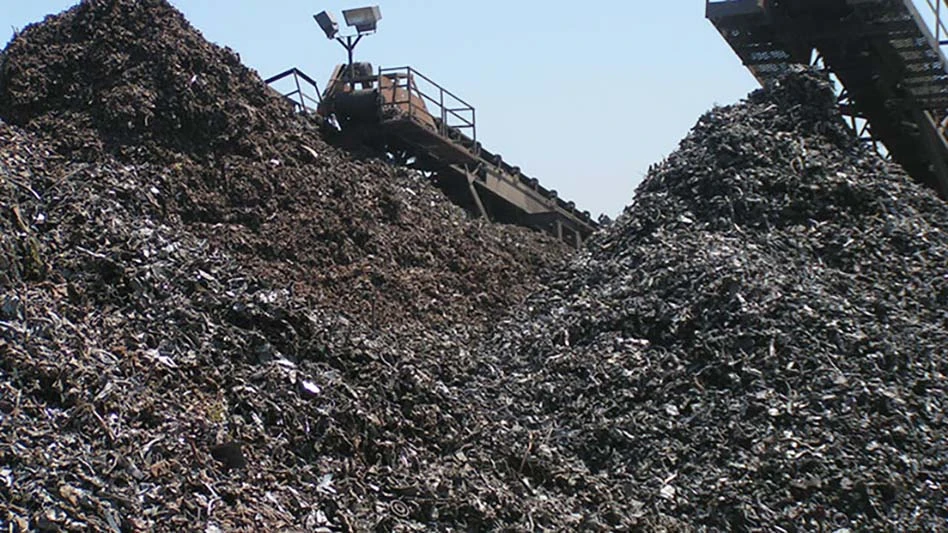
RPS 314 enables managing the disposal or further processing of shredder residues generated from recycling end-of-life vehicles, waste electrical and electronic equipment and mixed-metal scrap.
RELATED: Guidance on ASR focuses on UK regulations
BMRA says the extension provides regulatory stability for metal shredding operators in England while work continues to identify lawful, scalable and practical long-term alternatives for managing shredder residues and related hazardous waste.
Feb. 27, BMRA submitted a formal proposal to the Environment Agency requesting a time-limited sectorwide extension of the RPS. This request was supported by evidence collected from operators across England and after extensive engagement with the Agency’s senior policy advisers, BMRA says.
According to survey data BMRA collected, respondents rely on RPS 314 to manage shredder residues, shredder fines and related hazardous wastes, with between 75 percent and 100 percent of shredder residue being managed under the RPS. More than 750,000 metric tons of material per year are handled through this route.
Operators report that no viable large-scale alternatives to nonhazardous landfill currently exist, BMRA says. Options such as hazardous landfill, energy-from-waste, cement kilns, further treatment or export face significant barriers, including waste acceptance criteria, exceedances, limited treatment capacity, permitting constraints, incompatibility with downstream processes, high operational costs and limited commercial demand.
BMRA emphasizes that the extension should be viewed as a managed transition period, allowing the sector and regulators to work together to develop long-term solutions, adding that while the extension provides short-term certainty, further review and potentially additional extensions could be needed if viable large-scale alternatives are not developed within the time frame.
“The extension of RPS 314 provides essential stability for metal shredding operators and the wider recycling sector,” says Howard Bluck, BMRA technical director. “Shredders play a central role in processing complex waste streams such as end-of-life vehicles and electrical equipment, and without the RPS, the sector would face significant operational and compliance challenges.
“The industry remains fully committed to reducing its reliance on the RPS and to developing long-term solutions. However, the technical and market barriers to alternative outlets remain significant, and these challenges will take time to resolve,” he adds.
BMRA says it reiterated its call for regulators and policymakers to adopt more risk-based approaches to waste classification, especially where hazard-based assessments increasingly categorize complex residues as hazardous waste. Managing hazardous wastes is further complicated when viable alternative treatment or recovery routes do not exist at scale, according to the association, or when the material’s chemical composition or calorific value is unsuitable for options such as energy-from-waste or cement kilns.
Latest from Recycling Today
- Schupan names new chief financial officer
- NAW looks ahead to July hearing in Oregon
- Recycle Coach partners with Bartec Municipal Technologies
- EPA proposes abandoned tire cleanup plan with focus on energy recovery
- BIR welcomes new policy officer for trade & environment
- Global Recycling Foundation recognizes Recycling Heroes
- Recycling Today Media Group launches Paper and Plastics Recycling Conference webinar series
- Equipment finance index takes dip in March