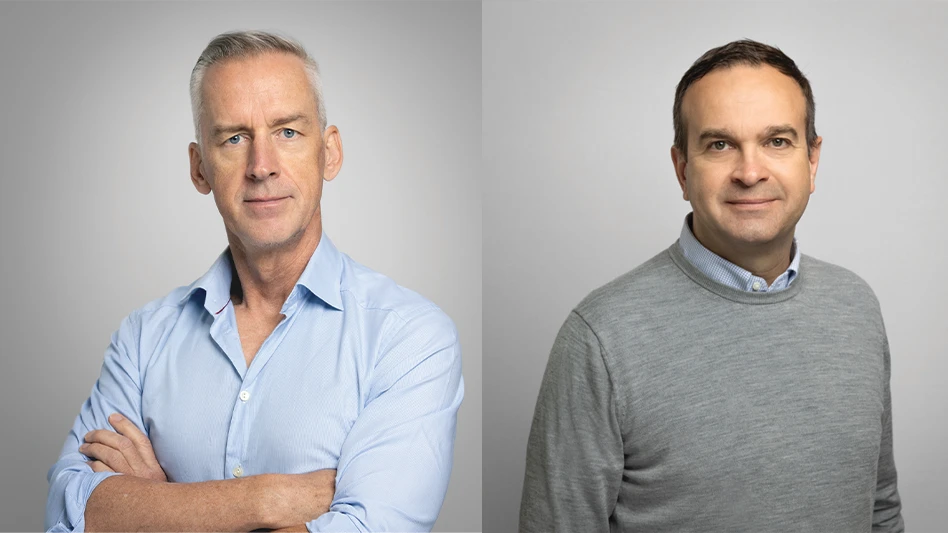
Photos courtesy of Bantam Materials International
Vytas Gruodis would describe his company, Bantam Materials International, as a “boutique” operation, though its global reach might suggest otherwise.
The staff of the Montreal-based recycled plastics supplier totals just eight people, a “lean” crew as Gruodis puts it. And the company’s primary focus is on helping recyclers secure clean, washed polyethylene terephthalate (PET) flake.
But the search for that material is where Bantam goes big. Since Gruodis founded it in 2005, the company has steadily built a network of trading partners around the world along with a customer base that includes large converters, packaging manufacturers and thermoformers in North, Central and South America.
And the company’s commitment to sourcing recycled PET (rPET) for those customers has allowed it to flourish even as global resin markets have ebbed and flowed.
“We’re fiercely dedicated and loyal to our customers and to our supply chain partners,” says Gruodis, who also serves as Bantam’s director. “We’ve been successful and continue to be successful because we translate that loyalty and dedication into performance.”
Built to fill
According to Gruodis, Bantam was formed to help fill a gap in recycled resin supply.
He recalls that 20 years ago virgin plastics such as PET, polypropylene and high-density polyethylene, for example, maintained a wide price disparity from their recycled counterparts.
“In relative terms, recycled plastic was measurably less than virgin,” he says. “We came into existence during a time when there was a significant gap in supply and there wasn’t as well-established of a recycled plastics supply chain capacity in the U.S. as there is today.”
Early on, Bantam began shipping material from South America to companies seeking to incorporate recycled content into their products.
“One motivation was cost savings, another was the young but rapidly evolving drive towards sustainability, meeting targets and satisfying the consumer demand for more recycled content.”
He adds that elements of sustainability had existed for decades prior to Bantam’s founding, but developments in the public and business consciousness regarding plastic pollution have been more recent.
“Since the 2010s, the focus has been on sustainability rather than just economics,” he says. “Increasing recycled content and satisfying internal and external mandates. All that drives demand.”
Bantam’s CEO, William Tretiak, notes that one major change along with the increase in sustainability initiatives has been the price of recycled resins compared to virgin. Gruodis adds that the overall expansion of recycling infrastructure in the U.S. and abroad in the 20 years since Bantam’s start has allowed it to grow.
“The market pull now is not driven by price,” Gruodis says. “It’s driven by a construct that we must have sustainability, and we must have recycled content. And on the foundation of that is the massive expansion in the recycling, curbside and deposit recycling capacity in the U.S. that’s just grown by a very large factor.”
“The plastics sector has grown in lockstep with the global demand growth in PET. It’s still a rapidly growing space and that expansion of demand has obvious benefits for recycled plastics.”
Tretiak says that, over the years, Bantam’s success has come from helping recyclers get reliable, consistent sources of supply over the long-term, even as market dynamics constantly change.
Ironing out logistics
Bantam takes numerous steps to ensure its customers get the recycled content they need, no matter how the market’s performing.
“That means we can supply recyclers anywhere in the country looking for regular sources to augment what they produce or purchase domestically,” Tretiak says. “And it may come from a particular geography for an extended period of time.”
He notes that the local market dynamics of the material’s country of origin may change, or the ocean freight market may change, and a customer may suddenly need to get 10 or 20 loads per month from an alternative supplier or geographic region, as the business case for the existing supply no longer applies. Bantam can help with those logistics.
“It may be necessary for a client to switch geographical suppliers to hit their cost targets. From Asia to Latin America, for example. We’re there to bridge gaps and manage relationships with suppliers worldwide to ensure that our clients are well served,” says Tretiak.
Gruodis cites one reason–PET homogeneity relative to other plastics. "There are fewer variants in terms of core properties and it’s a high-volume commodity. We can do very well, as a company, by focusing on this niche.”
To better service its customers, the company has warehousing across the U.S., in addition to its home base in Montreal. Gruodis is based in Costa Rica, close to several Bantam’s Central and South American suppliers.
“One of the things that’s been part of our success is maintaining strong relationships with suppliers from all over the world, visiting them and auditing their facilities,” Tretiak says. “We don’t sell materials from places we haven’t visited. We cover a lot of ground and have done so over 20 years.”
Gruodis estimates that he’s visited more than 150 recycling facilities around the world.
“We don’t buy product from people we haven’t met. Visiting factories and auditing facilities is essential risk-avoidance.”
Gruodis adds that Bantam has been able to partner with several of the “absolute strongest, most dependable players in the geographic regions where we source,” because of its approach. “What really makes the business work is a mutual respect between parties, integrity and trust and knowing they have our back and we have theirs.”
To better serve its customers once material reaches the U.S., for example, Bantam also uses third-party storage facilities, located near major ports, to hold material when necessary.
Meeting needs
In Gruodis’ view, an important factor driving the current needs of Bantam’s customers, particularly in the U.S., is the availability of rPET flake domestically.
“Nine years ago, U.S. consumers of PET flake could source the majority of their needs domestically, and the balance was imported,” he says. “That’s where we came in. We were swing volume specialists. But it’s now flipped.”
Gruodis says that with consolidation in the plastics recycling industry, including large players with a global presence acquiring recycling and conversion assets and building their own integrated capacity, there is less rPET flake supply available from domestic sources, relative to 20 years ago.
“The growth in pelletization capacity has outstripped domestic flake production. Even as some new flake capacity has come online recently, a lot of older wash lines have been shut down,” Gruodis says.
He says that while some U.S.-based consumers have continued to expand and add capacity in recent years, other PET recyclers have closed their doors, creating the question of where domestic flake ultimately will come from.
“The supply of imports can be very important to the market,” Tretiak says. “When demand is high, there’s only one additional source: imports.”
Another key factor driving consumers’ needs for imported material is the quality, Gruodis says.
“Imported flake from Southeast Asia, Latin America and India is generally higher quality than U.S.-produced flake,” he says. “Even companies that are vertically integrated recognize that the material we supply from these regions is often significantly better than what they make in their own factories.”
In many ways, he says, imports have elevated the quality of recycled pellets that go into the market.
“Companies that are importing 100 percent of their [recycled content] requirement are inherently producing higher-quality pellets because they’re getting a higher-quality raw material,” adds Gruodis.
Navigating troubled waters
The rPET market struggled in 2025, and the Trump administration’s tariff regimen has impacted Bantam customers, according to Gruodis and Tretiak. For example, in September of last year, the administration removed the tariff exemption for imports of virgin and recycled PET, which fall under the same harmonized system (HS) codes.
“It’s been total chaos at all levels,” Gruodis says, adding that Bantam has managed to continue trading despite any setbacks. “But we’ve had to change and pivot from [sourcing] from the least tariff-resilient geographies to the most tariff-resilient.”
Gruodis says the company isn’t planning more than one month in advance—a move that has been echoed in other sectors.
“Ultimately, our customers have had to eat some of that cost,” Tretiak says. “And their ability to pass it on is extremely limited. I think there were some attempts to increase pricing by the big PET producers early into the tariffs, but they haven’t really had a great deal of success.”
“Whether the tariffs are inflationary or not, they’re certainly causing a decline in demand because the costs are higher and there’s less money to go around. There are people buying less of everything. It’s been a real challenge for our customers, and it’s been a challenge for us and our suppliers. Many of them are really hurting.”
Tretiak points out that while the U.S. is an important export market for rPET producers, the notion would arise that they would turn to other markets to offset losses in the U.S., but that has not been the case.
“Other markets – Asia and Europe – have not been very attractive either,” he says. “They’ve not been performing well. Demand is not great and prices are very low in Asia for recycled materials. There’s nowhere else that can absorb excess capacity. We think demand is low everywhere right now in the recycled space.”
Gruodis and Tretiak don’t expect much improvement this year.
“I think the market will be tight as bales become less available,” Gruodis says. “Bale supply has been low since August 2025, not just in the U.S. but in Europe and Asia too.”
He says that after the tariff change came into effect last year, the market “just tanked” and buying slowed under the combination of tariffs and weakness in the economy and in demand.
“Things really slowed down late last summer, and we think it will take a while for the market to fully recover,” Gruodis says.
Adds Tretiak, “We don’t anticipate a real recovery until there can be some signs of recovery in the consumer economy.”
Gruodis says Bantam’s best hedge against economic uncertainty is longevity and customer service.
“We will continue to focus on our strengths – delivering exceptional client service and investing in strategic relationships worldwide, while fostering transparency and mutual respect. In our 20-year history, we have experienced turbulence before. We will persevere and emerge stronger than ever.”
Latest from Recycling Today
- WM opens 2 new MRFs in Ontario
- International Paper to close Washington box plant
- Cascades exits honeycomb packaging, partition business segments
- ATI reports slimmer profits
- Papilo acquires Allwood Recycling in UK
- RecycleNation helps people find nearby recycling facilities
- Cyclyx International to be restructured
- Fornnax appoints new sales partner in Germany