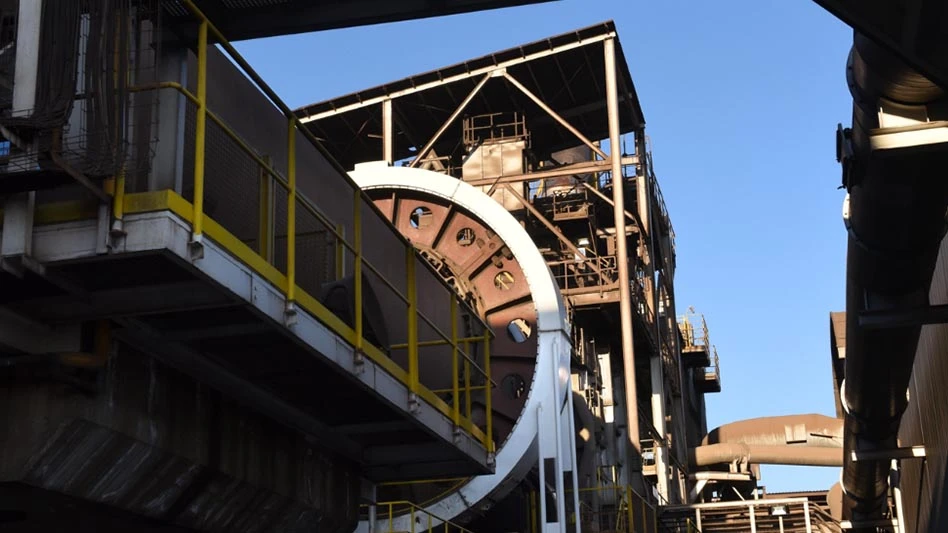
Photo courtesy of Befesa
Befesa S.A., a leading provider of hazardous waste recycling services for the steel and aluminum industries, has announced financial results for the third quarter of 2025, which show a 1 percent decrease in total revenue but a 27 percent increase in adjusted earnings before interest, taxes, depreciation and amortization (EBITDA).
The company says its financial results show solid operational and financial performance despite a challenging market environment.
“Befesa has delivered a solid third quarter despite a challenging operating environment, with adjusted EBITDA up 27 percent and leverage reduced to x2.59, demonstrating the resilience of our business model and the effectiveness of our strategic execution, which positions us well to deliver on our full-year guidance,” says Asier Zarraonandia, CEO of Luxembourg-based Befesa. “We remain on track to achieve leverage below x2.5 by year-end, reinforcing our commitment to disciplined capital management whilst executing our strategic growth initiatives.”
RELATED: Befesa remains profitable, increases revenue in 2024
For the first nine months of this year, total revenue decreased by 3 percent to 892 million euros ($1.03 billion) from 915 million euros ($105.6 billion) in 2024. For the third quarter, Befesa’s total revenue decreased by 1 percent to 290 million euros ($335 million), down from 294 million euros ($339.2 million) in the comparable quarter last year.
Befesa achieved adjusted EBITDA growth of 15 percent to reach 174 million euros ($200.8 million) in the first nine months of 2025 compared with 152 million euros ($175.4 million) for the same period in 2024. For the quarter, the company saw adjusted EBITDA growth of 27 percent, reaching 62 million euros ($71.5 million) compared with 49 million euros ($56.5 million) in 2024. These increases reflect favorable zinc treatment charges and effective zinc price hedging strategies.
Operational highlights
Befesa’s Steel Dust segment saw adjusted EBITDA increase by 27 percent in the first nine months of 2025 to reach 154 million euros from 122 million euros last year, while the adjusted EBITDA margin improved to 21.3 percent in the recently completed quarter versus 16.6 percent in the third quarter of 2024.
Steel dust throughput increased modestly by 1 percent to 896,000 metric tons through the end of September, with an average capacity utilization of 69 percent. The segment benefited from a favorable zinc treatment charge of $80 per metric ton for 2025, representing a 52 percent reduction from the previous year, as well as improved zinc hedging prices averaging 2,606 euros per metric ton.
Following planned maintenance activities during the first half of the year, the Steel Dust segment showed particularly strong momentum in the third quarter, Befesa says, with significantly higher volumes across key markets. The company’s Palmerton, Pennsylvania, plant expansion in the U.S. is completed, with the second kiln commissioned in July, increasing electric arc furnace (EAF) steel dust recycling capacity. Operations in Asia showed overall improving trends, whilst China continued with breakeven results, the company says, noting that Europe showed strong performance despite challenges in steel production there.
The Aluminum Salt Slags segment saw headwinds over the first nine months of this year, with EBITDA decreasing to 23 million euros ($26.5 million) from 30 million euros ($34.6 million) in 2024. Befesa says the decline was affected by compressed metal margins in the secondary aluminum business given challenging conditions in the European automotive sector and restricted access to aluminum scrap. Salt slags recycled volumes stayed almost flat at 314,000 metric tons, maintaining an 89 percent capacity utilization rate. Secondary aluminum alloys production decreased by 8 percent to 117,000 metric tons, with capacity utilization at 77 percent, reflecting these ongoing market challenges.
Outlook
Befesa says it expects a strong fourth quarter, driven by high EAF dust volumes across all markets following the completion of maintenance activities in the first half of the year.
The outlook is underpinned by several positive factors: inventory levels of steel dust, high EAF dust volumes in the fourth quarter across all markets, the benefits of historically low zinc treatment charges, favorable zinc hedging prices and the incremental volume contribution from the new U.S. contracts. The guidance accounts for continued headwinds in the secondary aluminum business arising from compressed metal margins and ongoing weakness in the automotive sector, according to the company.
Befesa’s growth capital expenditure in the next quarter will focus primarily on the Bernburg, Germany, expansion following the completion of the Palmerton project in the US. The Bernburg project continues to progress, targeting completion by the end of the first half of 2026, which will expand aluminum alloy production capacity from 75,000 metric tons to 135,000 metric tons and position Befesa to capitalize on anticipated growth in European aluminum demand.
The company says its strategic positioning, supported by its asset footprint and diversified portfolio, continues to benefit from favorable macro trends in decarbonization and circular economy solutions.
Latest from Recycling Today
- Phoenix Technologies closes Ohio rPET facility
- EPA selects 2 governments in Pennsylvania to receive recycling, waste grants
- NWRA Florida Chapter announces 2025 Legislative Champion Awards
- Goldman Sachs Research: Copper prices to decline in 2026
- Tomra opens London RVM showroom
- Ball Corp. makes European investment
- Harbor Logistics adds business development executive
- Emerald Packaging replaces more than 1M pounds of virgin plastic