The growing recycling industry of Central America is developing at its own pace but could benefit from additional outside commitment and resources.
Those are the views of recycler Daryl Arias, who is founder and co-owner of Green AF Group, headquartered in the Dominican Republic.
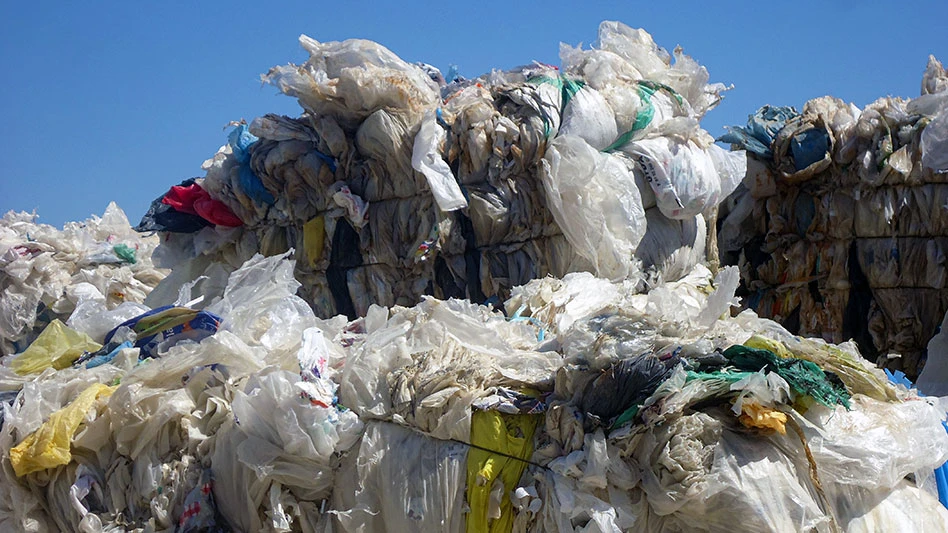
Through its four material recovery facilities in the Dominican Republic, the company collects, processes and trades recovered paper and plastics. Major products include old corrugated cardboard (OCC), office paper, mixed paper, high-density polyethylene (HDPE), polyethylene terephthalate (PET), low-density polyethylene (LDPE), and used beverage cans (UBCs).
In addition to the Dominican Republic, the company operates in other Latin American countries with the help of business partners in Uruguay, Ecuador, Costa Rica and the United States.
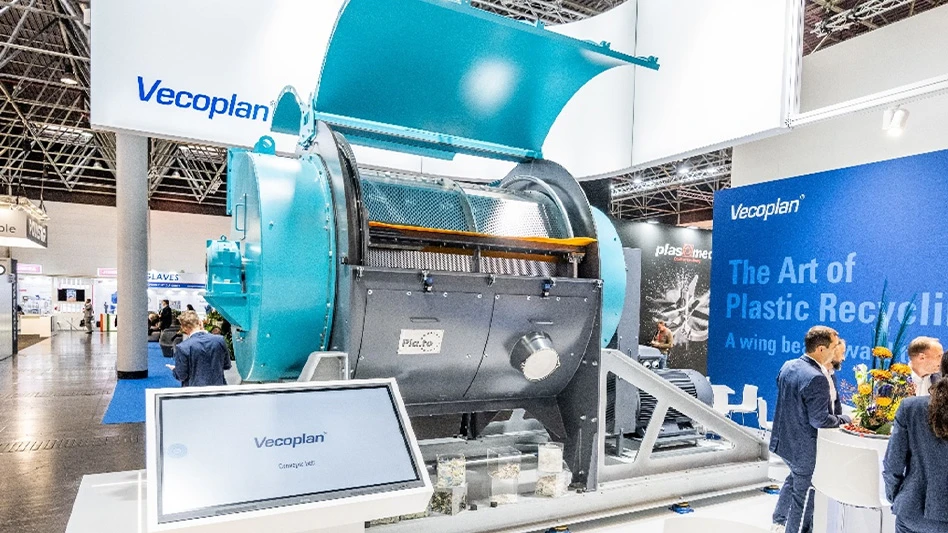
Arias says Green AF Group operates 15 vertical balers, two horizontal balers and plastic grinding equipment and employs nearly 25 people.
Arias says that while the Central American recycling markets for paper and plastics are relatively young and still developing, they also seem to be rather complicated. And, as he explains it, the informal collection structure is often out of touch with greater market demand, supply and pricing issues that dictate business in other parts of the world.
Recyclers say that while the Latin American region’s relatively low labor costs are a boon to its recycling industry, its informal collection structure presents other challenges not present in more developed recycling economies.
A need for information
Arias says with recycling companies and individuals in the region generally not regulated and not necessarily obligated to report their numbers, it seems there is no framework for collecting valuable market information about products, tonnages and exports. However, this is just the sort of information that could promote further investments in the region.
A similar view is expressed by Frank Hurtado, managing director of Costa Rica-based Grupo Empresarial, parent company of the ferrous scrap recycling business Industrias Frivarso S.A. The company operates three scrap yards in Costa Rica: one in the metropolitan area, one in the north region and a third on the Pacific coast.
Hurtado says scrap supply in the region has been unstable in recent years, “mostly because of international prices that impact the local prices.” Demand is also unstable, he says, though the company continues to receive orders.
The company collects material with its own trucks as well as from many private peddlers who bring material to the company’s yards.
“Among the challenges I can number are the informal metal individuals and companies that try to do business without operating under law,” Hurtado says. “Also, people making business offers that make no sense—they offer prices that are not [in line with] prices around the world.”
However, there are opportunities too, he adds, including the fact that recycling contributes to economic development and improving the environment, and his business has been strong.
Hurtado says his exports are often dictated by established business relationships rather than price. “We prefer to keep our commercial relationships with our known clients.”
He says materials are exported within Central America by truck and by sea to the Asian region.
He also observes that recycling in the region is changing, mainly by way of changing government requirements pertaining to everything from collection and processing to the export and use of the scrap metal.
On the paper side, Arias says, demand for his products has been healthy. Green AF Group sends between 1,000 and 1,800 tonnes of recycled fibre and plastics per month to consumers in the Central American region, with just about everything else exported to China.
The company operates a handful of trucks to collect commercial recyclables from such entities as schools, printing companies and grocery stores. In some cases, he also has installed balers in these facilities.
“We have good demand for all the fibre we produce,” he says, adding, “when one market goes down, I go to another.” Arias says most of the regional demand comes from mills in Ecuador, Uruguay and Brazil, though he adds that customs officers in those countries can make trading tricky at times.
“They try to use their own material,” he says, describing past experiences when containers of recovered fibre were not able to reach their final destinations.
“It’s confusing to them, because they don’t understand the differences the material can have,” says Arias, referring to the difference in values for washed and unwashed PET, for example.
Arias says he is one of a select group of recyclers handling these commodities at this volume in the Dominican Republic, in addition to several other smaller companies.
On the plastics side of the business, Arias says conditions have not been as positive in recent months. Local markets were affected negatively after a reprocessor entered the PET market offering significantly higher prices for material but was never able to begin operations. The lack of Chinese demand for recycled plastics also has hurt the local plastics recycling sector, Arias says.
But not all Latin American markets seem to be experiencing such difficulties. In Guatemala, plastics recycling company Ingrup, founded in 1974, has built a strong business model, with a presence in 20 countries, according to marketing manager Andrea Monge.
The company manufactures a variety of items, including containers, packaging, labels and household products, by processing such plastics as PET, HDPE, LDPE, polypropylene (PP) and polycarbonate (PC). The raw materials for these products come from suppliers delivering material that has been classified by type, origin and color, Monge says.
“Our grinding and pelletising processes transform the region’s plastic waste into raw materials,” Monge says. Ingrup has collected more than 14,000 containers over the last three years, she says, from Guatemala and other Central American countries, as well as from Mexico and Belize.
Monge says Ingrup was the first company to install an industrial recycling plant in the region in 1994. And in 2013 the company added bottle-to-bottle technology for postconsumer PET recycling. The resulting raw material is used either in the textile industry or to produce new PET containers for beverages and food, she says.
Long-term potential
Arias says Green AF Group has grown exponentially in the five years it’s been in business. However he believes reaching the next level of growth could require involvement from partners outside the region.
“What we need is more opportunities to work with other companies that have the same mentality we do,” he says, referring to strategically oriented entities interested in the long-term picture.
“We are looking for strong players that are looking for equity in our industry,” Arias says.
He also says the Dominican Republic market holds significant growth potential, estimating that the country generates around 13,000 tonnes of waste per day, with about one-fourth of that being recyclable. However, only a fraction is currently being collected and processed, Arias says.
“We are only recovering maybe 1,000 tonnes per day, but the potential to recover that is there,” he says of the Dominican Republic market for recycled paper and plastic. “We need structure, and we are working on it; but, we are still far from being where we should.”
One solution, Arias says, could be more involvement by consuming mills. And his own company could benefit if he added some trucks.
“The problem here is logistics,” he says. “If you want to recover more, you’ve got to spend more.”
Arias explains that the company’s ability to invest in the business could be significantly assisted with some sort of outside help, provided they understand the market.
“As a small company, we can’t really do that type of investment unless we have a larger company behind us,” he says. “Our growth is limited because we have to make the money and spend it accordingly without jeopardizing our operation.”
Arias says investors in the region likely would see a return on their investments, but they also would have to be realistic about the time frame, considering the current market structure. The large numbers of peddlers in the region who make their living by collecting recyclables represents a well-established economy. Transactions often are conducted in cash, as many peddlers don’t have bank accounts, Arias says. However if they did, they could apply for loans that might also benefit the region’s recycling infrastructure going forward.
“This is something that is overlooked; but, in most of Latin America, this is a reality,” he says.
Arias points out that the local peddler trade also is benefitting government by way of avoided tipping fees.
“If we are sending around 80 or 90 containers per month for export, how much are we saving the government, and, also, how are we contributing to the development of these people that are producing money for their families,” Arias conjectures.
On the other hand, he points out that a growing number of individuals in the country are choosing to collect waste for the island’s landfills, which are running out of space.
Arias says companies interested in investing in Latin America’s recycling industry should be prepared to contribute to long-term development of the industry rather than simply making a quick buck. He says he is wary of business arrangements, such as some he’s seen in the past, in which outside investors might in turn require recyclers to sell their materials to them at lower-than-market prices. That’s difficult to do in a market where much of the cash flow is committed to the peddler trade.
“These types of industries are still not loved by banks,” he adds, noting that his business was one of the first recycling companies in the country to have secured a bank loan, as most banks don’t understand the business.
“For us to get that funding is hard,” Arias says. “When we do get people interested in investing, that can lead to trouble because usually they’re looking for their returns right away.”
Arias observes that recycling conditions in other Latin American countries are similar. Costa Rica and Uruguay, for example, have better waste management systems in place, but there are logistics issues when it comes to recycling. To a lesser extent, the same is true for Brazil.
“Again it comes down to logistics in most of these places,” he says. Arias says another factor that may be unique to Latin American markets is that recyclers can’t wait as long to sell their recycled materials.
“I have brokers tell me they’re going to buy this month, but next month they can’t buy,” he says. “I already created demand with my peddlers. I can’t just tell them not to bring it.”
The author is managing editor of Recycling Today Global Edition and can be reached at lmckenna@gie.net.
Latest from Recycling Today
- Ocean freight interruptions poised to continue
- Danieli to supply shredder to Australian company
- Equipment from the former Alton Steel to be auctioned
- Novelis resumes operations in Greensboro, Georgia
- Interchange 360 to operate alternative collection program under Washington’s RRA
- Waste Pro files brief supporting pause of FMCSA CDL eligibility rule
- Kuraray America receives APR design recognition for EVOH barrier resin
- Tire Industry Project publishes end-of-life tire management guide