> METALS
Alumisel Opens New Scrap Facility in Spain
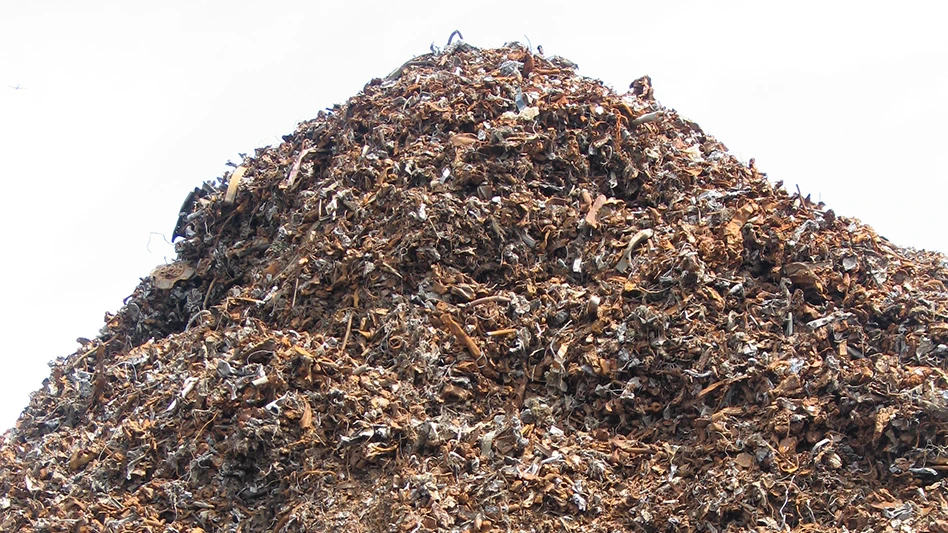
Metals recycler Alumisel, based in O Porriño, Spain, has invested ¤5.5 million ($6.9 million) to build a metal recycling plant with an automated metals sorting line in the Galicia region of Spain.
 The new plant, located in the municipality of O Porriño, will be anjacent to the company’s current facility there. Alumisel says the new plant, expected to be operational in September, will have “advanced technologies for the treatment of metallic waste materials.”
The investment increases Alumisel’s capacity by 70%, the company says, and is designed to offer quality improvements in metals classification.
“It is a strategic investment for the company that will make it possible to open to new niche markets, allowing us to offer a material ready to use directly to the final client,” says Manuel Nogueira, general director of Alumisel.
The company had 2011 sales of ¤96.5 million ($121.5 million), an 11% increase from 2010.
“The slight increase of the metal prices in the international stock markets, together with the bigger volume of nonferrous metals treated, resulted in the growth,” remarks Fernando Lodeiro, financial director of Alumisel. “In 2011 we modified the productive process, adding a bigger value to our products, which also contributes to this increase.”
> ZERO WASTE INITIATIVE
Biffa Recycling helps Birmingham Fruit Market Achieve Zero Waste to Landfill
The U.K.’s Birmingham Fruit Market says it has achieved the goal of zero landfill waste following the adoption of a new service delivered by waste management provider Biffa, based in Buckinghamshire, United Kingdom.
 Biffa, a provider of collection, recycling and energy generation services, is collecting food and dry mixed recycling (DMR) as well as general waste and wood for the market. More than 3,300 tonnes of food and DMR waste as well as cardboard, wood and mixed materials will be collected under the deal each year.
“It is encouraging to see such iconic businesses as the Birmingham Fruit Market working with Biffa,” says Bob Barltrop, Biffa group sales and marketing director.
The food waste will be processed at Poplars anaerobic digestion (AD) plant, at Cannock, Staffordshire, U.K. DMR waste will be processed at the Aldridge materials recycling facility.
> PAPER
SCA Divests its Packaging Business
SCA’s previously announced divestment of its packaging business, excluding two kraftliner mills in Sweden, has been completed.
DS Smith Plc, based in the U.K., has acquired the packaging business for a purchase price of ¤1.7 billion. The divested operations have approximately 12,000 employees.
Previously, the European Commission (EC) cleared the proposed acquisition of the former SCA Packaging, a subsidiary of the Swedish group Svenska Cellulosa Aktiebolaget (SCA), by DS Smith. SCA Packaging and DS Smith both produce corrugated packaging. The clearance was conditional upon the divestment of some production plants in the U.K. and France.
The EC had noted that a preliminary investigation showed the proposed transaction would have endangered competition for some types of packaging in the two countries. The EC found that the proposed transaction, as initially notified, would have raised competition concerns in the U.K. for heavy duty and off-set litho laminated, as the merged entity would have had a strong market position without sufficient competition from other companies. The EC also identified concerns in the Brittany region of France for corrugated packaging, as the merged entity would control the only three production sites in that region and competitors would face higher transport costs.
To remedy the situation, DS Smith and SCA Packaging have offered to divest one of the two U.K. plants producing heavy duty corrugated packaging and one plant producing litho-laminated corrugated packaging. The divestments have been designed to entirely remove the increment resulting from the merger in these product areas. In addition, the merging parties committed to divest one of their three plants in Brittany which would eliminate any overlap resulting from the proposed transaction.
> METALS
BIR Releases Updated Global Ferrous Statistics
The Ferrous Division of the Bureau of International Recycling (BIR), Brussels, has released the third edition of its “World Steel Recycling in Figures” brochure.
 Among the findings in 2011, the BIR reports the world’s steelmakers consumed some 570 million tonnes of ferrous scrap in 2011 while the United States exported some 24.4 million tonnes in 2011.
The BIR offered print versions of the 28-page brochure at the BIR World Recycling Congress in Rome in late May and early June. A PDF version of the brochure is available at http://www.bir.org/assets/PressReleases/416RomeFerrous-Statistics.pdf.
In a BIR news release, BIR Ferrous Division President Christian Rubach says the division is aware of the importance of reliable figures and will strive to continue to publish the statistics both yearly and quarterly.
Rolf Willeke, statistics advisor to the BIR Ferrous Division, says the newest annual report covers the five-year period from 2007 to 2011 and contains more than 30 graphs and tables. New information includes figures for scrap consumption and export figures for the 27 European Union nations. In addition, new charts have been developed to help characterize steel scrap flows within the United States and the EU.
> AUTO SHREDDING
EMR, Chinook Sciences Break Ground on ASR Plant
Innovative Environmental Solutions (IES), a joint venture between United Kingdom-based European Metal Recycling (EMR) and New Jersey-based Chinook Sciences Ltd., has started construction on what the companies say will be the largest “end-stage recycling plant” for auto shredder residue (ASR). The plant is being constructed at EMR’s West Midlands, U.K., scrap processing facility.
 The facility has been designed to process 350,000 tonnes per year of shredder residue from end-of-life vehicles and appliances by deploying Chinook Sciences’ RODECS recycling and gasification technology. The shredded material will produce 40 Megawatt hours of electricity and recover more than 190,000 tonnes of plastics, glass, aggregates and metals.
EMR says that while 75% of the material from the automobiles is easily accessed metal, recovering the remaining 25% of primarily non-metallic material has historically been more of a challenge.
The companies say that IES’ deployment of Chinook Sciences’ RODECS recycling and gasification technology will be integral to EMR’s ability to achieve its recycling goals while displacing fossil fuel power generation, resulting in an estimated reduction of carbon dioxide emissions of 2 million tonnes. In addition to the West Midlands plant, IES has gained planning permission at additional sites for similar facilities.
> PLASTICS
NextLife, 300 Recycling Establish Supply Agreement
The plastics recycling company Next-Life, based in the United States, has formed a strategic relationship with United Kingdom-based company 300 Recycling. Under the terms of the deal, NextLife will use 300 Recycling’s collection arm to expand NextLife’s plastics recycling services in the U.K.
NextLife converts plastic scrap into U.S. Food and Drug Administration- and Health Canada-approved plastic resins. The company currently supplies recycled-content resin to global customers in a variety of industries.
“This strategic partnership allows NextLife to process more material from around the world, extending NextLife offerings to the U.K. and Europe,” says Robert Dishman, executive vice president of global supply chain for NextLife. “We plan to work together to create new product offerings and recycling opportunities in the United Kingdom.”
300 Recycling, based in Cheshire, U.K., is involved in all aspects of plastic recycling and niche recycling services.
Ian Glassbrook, managing director of 300 Recycling, says, “300 Recycling welcomes this exciting opportunity to collaborate with NextLife. The partnership with NextLife will enable 300 Recycling to offer our clients a real closed loop process, turning their waste into a resource for new products with NextLife’s sustainable resin solutions.”
> ELECTRONICS
Boliden Opens Electronics Recycling Plant
The Stockholm-based metals and mining company Boliden has officially opened its new electronics recycling plant at its Rönnskär copper smelter in Sweden. The company invested $182 million in the project, which is expected to increase the smelter’s capacity to 120,000 tonnes per year. Boliden says the new capacity will make the company a global leader in electronics recycling.
 “A growing share of the metal production will originate from recycling,” says Lennart Evrell, president and CEO of Boliden. “With this project, Boliden combines high environmental performance with good business returns.”
The expansion began in 2010 and the smelting of obsolete electronics began in January 2012.
Roger Sundqvist, Rönnskär general manager, says, “Boliden Rönnskär has for many years been a technological leader in the field of recycling electronics. This expansion takes advantage of our extensive experience in recycling electronics and enhances our competitive position in a growing market.”
> METALS
Honda Develops Rare Earth Metals Recycling Plan
Auto manufacturer Honda Motors Co. Ltd., Tokyo, has announced plans to start reusing the rare earth metals that can be extracted from used nickel-metal hydride batteries by the end of 2012. Since April 2012 Honda has been extracting the metals in cooperation with Japan Metals & Chemical Co. Ltd.
According to a news release issued by Honda, the company says it will pursue reusing the extracted rare earth metals in new nickel-metal hydride batteries and for use in a range of components.
Honda also says it is looking at ways to recover residual voltage from the used nickel-metal hydride batteries so it can be used as regenerative voltage during the disassembly process.
The press release also indicates Honda is studying ways to recycle rare earth metals extracted from used parts such as hybrid motors and lithium-ion batteries.
> PAPER
2012 Paper Recycling Conference Europe Set for London in November
The 2012 Paper Recycling Conference Europe (PRCE), organized by the Recycling Today Media Group in collaboration with Smithers Pira, will be held 6-7 November 2012, at the Park Plaza Victoria London hotel, located in Central London.
The event is designed to provide industry networking opportunities on a global scale along with expert analyses on the latest market trends. Hosted annually since 2005, Paper Recycling Conference Europe is attended by recovered paper merchants, brokers, consumers, mill representatives and equipment and service suppliers involved in paper recycling.
For more than seven years, Paper Recycling Conference Europe has been bringing the supply and consuming sides of the industry together to create an active dialogue and generate trading opportunities.
The show’s programme features sessions is designed to help industry executives gain a market edge. Key sessions include a 2012 market overview, sourcing and supply opportunities, regulatory dynamics and the future plastics market.
More information on the event, including the conference programme, can be found at www.PaperRecyclingEurope.com.
Latest from Recycling Today
- Ocean freight interruptions poised to continue
- Danieli to supply shredder to Australian company
- Equipment from the former Alton Steel to be auctioned
- Novelis resumes operations in Greensboro, Georgia
- Interchange 360 to operate alternative collection program under Washington’s RRA
- Waste Pro files brief supporting pause of FMCSA CDL eligibility rule
- Kuraray America receives APR design recognition for EVOH barrier resin
- Tire Industry Project publishes end-of-life tire management guide