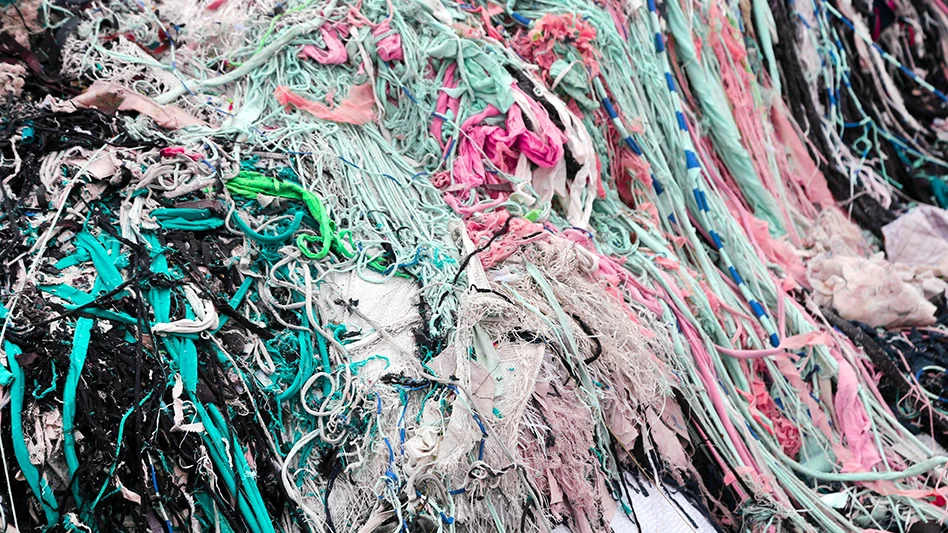
A catalog of the many variations of plastic resins (and combinations of resins) used by manufacturers goes on for hundreds of pages, presenting a formidable task for collectors and processors of recyclable materials merely to identify plastic scrap properly.
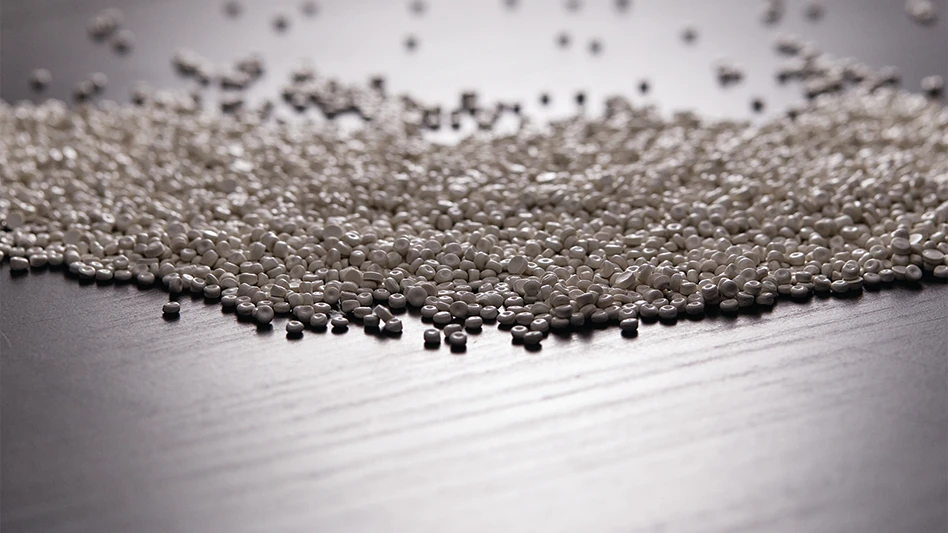
The majority of consumers of plastic scrap, however, are seeking a pure recycled plastic pellet or flake, often separated by colour as well as resin.
Recyclers around the world continue to work with equipment makers and technology providers to find the most reliable and cost-effective ways to sort through the widely varied end-of-life plastic stream to create secondary commodities of value.
People and processes
The sorting of plastic scrap as practiced around the world does not always consist of a dizzying array of highly automated optical and mechanical machinery.
Recyclers throughout the world are happy to secure source-separated material that flows into their plants as uniform plastic scrap of one resin in one color. Such relatively clean, pure streams can more quickly enter the reprocessing stage without the need for labour-intensive or capital-intensive sorting.
In regions where labour costs are still comparatively low, mixed post-consumer plastics such as bottles and jugs or plastic obsolete electronic components are still dismantled and sorted by hand by trained workers. (See the sidebar “Going old school”)
“In Asia this hand-sorting will continue for plastics, as the priority is on metals and [higher] value scrap,” says Venkatesha (Venky) Murthy, managing director of Vans Chemistry, Singapore. “In Singapore, most of the plastic from municipal solid waste (MSW) or other sources is being separated by manual means,” he adds.
However, Murthy, who previously worked for Singapore-based electronics recycler Cimelia Resource Recovery, says plastic sorting automation has been making inroads in Asia, “mostly for WEEE (waste electrical and electronic equipment) materials.”
|
Going old school While recyclers in high-labour-cost nations invest in automation to sort plastic scrap, in nations where affordable labour is more abundant, hand sorting continues to predominate. “Hand-sorting is the traditional way where manpower cost is cheaper,” says Venkatesha (Venky) Murthy, managing director of Singapore-based Vans Chemistry. “As per my knowledge, India does not have [automated] systems of separation and goes mostly manual.” Two presenters at the Electronics Recycling Asia event, held in mid-November 2013 in Singapore, described how manual collecting and sorting techniques continue to contribute to India’s high plastics and electronic scrap recycling rate. Millions of individuals in that nation scour discarded materials for metals, plastics and paper and collect obsolete items door-to-door. The two presenters commented that India’s future recycling industry is likely to include these millions of scavengers and peddlers, for whom the income brought about by scavenging is crucial. Dr. Lakshmi Raghupathy, former director of India’s Ministry of Environment & Forests, told attendees that while India currently generates less electronic scrap than the United States or China, the nation sells 12.5 million television sets annually and has some 220 million cell phone users, so the amount of electronic scrap is destined to grow. She said an estimated 95% of electronic scrap generated in India goes through the informal sector. “It gives a lot of employment,” Dr. Raghupathy said of this network of unlicensed collectors and accumulators. “We have to have a system that includes them, not replaces them,” she commented. In Bangalore, India, Peethambaram Parthasarathy and his company E-Parisaraa Pvt Ltd. have been working to formalize the local network of electronics and plastic scrap collectors. Parthasarathy estimated that as many as 500,000 people in India collect, buy and sell plastic or electronic scrap in an industry sector that has long been “labour intensive, not capital intensive.” This informal network, however, is providing India with a plastics recycling rate that he estimates at 60%—“the highest in the world,” according to Parthasarathy. E-Parisaraa now employs 150 people and “another 150 indirectly,” said Parthasarathy, and continues to use low-tech resin identification and hand-sorting methods in a process through which traditional scavengers play a role in a larger corporate setting. “The informal sector can be formalized, especially with training,” he states. Recycling practices such as these may be less automated than in other parts of the world, said Parthasarathy, but that does not make them sub-standard. “We don’t burn or dump [scrap] in India,” he declared, “and we’re now making components like computer mouses and keyboards from our recycled scrap.” |
In more expensive labour markets such as Europe and North America, recyclers have been far more willing to invest in automation and experiment with emerging plastic scrap identification and sorting technologies.
In Canada, electronics recycler ERS International (www.ers-international.com) has been developing its own proprietary system to sort the different plastics emanating from the obsolete electronics stream that it processes.
Rick Fine, the company’s global director of business solutions, says the ERS International process employs optical sorting, size classification, density separation and electrostatic separation technologies as well as “other proprietary technologies.”
Internally at ERS International, the technology helps turn the company’s varied plastic scrap stream into pure secondary plastic products that the company “can sell to any global consumer,” says Fine. The company also uses its self-produced recycled resins to make plastic lumber and PVC (polyvinyl chloride) pipe products.
Recyclers who wish to take in a wide variety of materials and wish to produce pure secondary plastic commodities with a small workforce will, like ERS International, likely use a number of technologies to achieve the right end results.
Positive identification
Stamped resin codes and proper training can help workers identify the resin used to make a bottle or larger computer component.
Large-volume recycling plant operators who want to speed up and automate that process can choose from competing technologies to achieve satisfactory results, with optical sorting gaining wide acceptance in this role.
In the United States, food-grade recycled polyethylene terephthalate (rPET) maker CarbonLite Industries (www.carbonliterecycling.com) has installed optical sorting technology at its plant in Riverside, Calif. The technology was provided by London-based Buhler Sortex Ltd., a subsidiary of Switzerland-based Bühler AG.
CarbonLite says the technology selected has “the ability to carry out simultaneous, multi-characteristic sorting of rPET flakes, including the removal of a wide range of foreign materials.” At the Riverside plant, CarbonLite has the ability to sort incoming rPET flakes by colour while simultaneously removing non-PET polymers including PVC, PE (polyethylene), PP (polypropylene), PA (polyamide) and PS (polystyrene). The process also ejects aluminium and paper from the clear rPET product that CarbonLite ultimately produces.
In a news release announcing the installation, Buhler Sortex Ltd. says it was able to draw on more than 60 years of Bühler optical sorting experience in the food industry “to combine its sophisticated double-sided viewing capability, precise ejectors and enhanced InGaAs technology, in a high capacity rPET solution.” InGaAs cameras detect contaminants that reflect energy at certain wavelengths rather than absorbing it, allowing these materials to be identified and removed, according to Bühler.
The optical sorting technology will be deployed on a considerable scale at the 20,440-square-metre (220,000 square foot) CarbonLite plant in California. The company has the capacity to recover more than 2 billion used plastic PET bottles annually at the plant. The inbound scrap is sorted and separated so rPET pellets can be created that can be manufactured into new plastic beverage bottles to the standards of food industry customers such as Pepsico and Nestlé.
CarbonLite chairman Leon Farahnick is clear about his expectations for the new optical sorting system. “We’re committed to being the leading bottle-to-bottle recycler while we preserve resources and reduce the carbon footprint from PET bottle production,” he states.
Bottled water producer Nestlé is now using ReBorn-branded bottles made with 50% rPET. Optical sorting technology producer Buhler says “more rPET is still needed” and that optical technology for sorting plastics “will go a long way to meeting this growing need.”
Hungry for polypropylene
In the U.K., Axion Consulting (www.axionconsulting.co.uk) has been working on behalf of WRAP (the Waste & Resources Action Programme) to find solutions for turning scrap polypropylene food containers back into new food contact-grade plastic.
Axion says its research focuses on developing an automatic process that uses diffraction gratings to identify and separate PP that has been in contact with food from PP scrap that has not. “Under European food packaging regulations, only PP that has been in prior contact with food can be recycled into new food-grade PP,” says Axion in a news release summarizing the project.
(Full details of WRAP’s research project managed by Axion can be found in WRAP’s report at http://www.wrap.org.uk/sites/files/wrap/ Diffraction%20grating%20report.pdf.)
For the post-consumer sorting process to work, food-contact PP packaging material must first be manufactured with lines (a diffraction grating) that can be scanned by a laser to reflect a specific pattern.
At recycling plants, “the pattern is then captured by a camera connected to a computerised image recognition system that is able to identify the marked food contact PP packaging,” says Axion. The company says the technique is potentially applicable to other polymer types, such as high density polyethylene (HDPE) and PET packaging.
“This represents an innovative application of existing technology that could revolutionise any food contact plastic recycling in offering a commercially viable automated solution,” says Axion chemical engineer Richard McKinlay, who helped build the demonstration unit for the project.
“Manual sorting is simply too expensive,” adds McKinlay. “Diffraction is when one beam of light is split into several, so we are utilising this phenomena to detect a particular type of plastic packaging.” The diffraction grating can be used on packaging labels, or stamped on a mould or directly onto a packaging item.
In its pioneering stage, Axion estimates a single diffraction grating sorting unit, including conveyors and ancillary equipment, can be installed for about €590,000 ($815,000) with a payback potentially being achieved within four years. Recyclers with access to baled PP food container scrap will likely have to work with new food container manufacturers to help ensure such a payback.
“Challenges remain, including the need to widen applications and markets for this technology,” says Axion Senior Consultant Liz Morrish. “It is also crucial for retailers, manufacturers and machinery suppliers to adopt agreed industry-wide methods that would optimise the identification and subsequent recycling of these waste streams,” she adds.
“Although we focused heavily on PP for this project, using this technology initially to sort HDPE milk bottles could be advantageous, Morrish continues. “Once it has been shown to work on this material, it may give the industry more confidence to invest further to allow the technology to be used on PP.”
Recyclers in the trenches who must produce secondary commodities while maintaining a profit margin will be the ultimate judges as to the effectiveness of this emerging sorting technology, as they have with so many others.
The author is editor of Recycling Today Global Edition and can be contacted at btaylor@gie.net.
Latest from Recycling Today
- U.S. Aluminum Co. explores aluminum fabrication plant in Oklahoma
- Sonoco completes portfolio transformation
- Eriez Shred1 data demonstrates scalable copper control
- RCI selects CurbWaste as exclusive operational management platform
- Updated: Supreme Court strikes down IEEPA tariffs
- Recycling Today Media Group launches Scrap Expo Lunch & Learn Webinar Series
- LyondellBasell scales back recycling target
- Former Liberty UK mills eyed by 3 suitors