Plastics
rPlanet Earth closes its doors
RPlanet Earth, a vertically integrated polyethylene terephthalate (PET) recycler that also manufactures various types of PET packaging, has closed, according to industry sources.
Headquartered in Vernon, California, the company operated out of a 300,000-square-foot facility where it converted curbside bales of post-consumer PET into food-grade packaging. According to the company’s website, it recycled 58 million pounds of PET in 2023, with 100 percent of its products made from up to 100 percent postconsumer recycled PET (rPET). The company claimed more than 99 percent of the postconsumer plastic it processed came from curbside recycling.
In a statement confirming the closure, the Washington-based Association of Plastic Recyclers (APR) says rPlanet Earth accounted for approximately 4 percent of the rPET capacity in the United States, adding that the company faced low demand for its products while competing against a surge of low-cost imported material and cheap, oversupplied virgin plastic.
“These dynamics are driven by two factors: brands pulling away from recycled-content commitments to instead buy more new virgin plastic, and by brands choosing to buy imported rPET to meet their U.S. recycled-content requirements instead of buying from U.S. recyclers like rPlanet,” the APR writes. “The result is that U.S. recyclers are being squeezed out of the market at a time when the nation urgently needs more—not less—domestic capacity to build a truly circular economy.
“The sad truth is that this closure underscores that plastics recycling is a tough business, and until recycling plastics is equal to or more profitable than making new plastic, the U.S. will not make any significant progress in reducing plastic pollution.”
Sally Houghton, executive director of the PET Recycling Corp. of California (PRCC), called the news of rPlanet’s closing “devastating” for the industry and the circular economy in California.
“They were the only reclaimer processing Grade B bales at a large scale, and now there’s very limited end market demand for that material,” Houghton tells Recycling Today. “PRCC will continue to search for markets to move the material, but there are few and low-paying options. There are some export possibilities, but not at a significant volume. As winter approaches, supply usually tightens, so we hope some reclaimers and end buyers may stockpile, but that remains uncertain.”
RPlanet Earth’s facility was a $100 million investment, and it had received a variety of financing in previous years to aid its development.
In 2016, Citi, MBS Urban Initiatives and New Markets Community Capital provided New Market Tax Credit (NMTC) financing for the company, with financing for the facility project structured through the NMTC Program, a federal initiative designed to spur investment in businesses and real estate projects in low-income communities.
Citi provided $7.5 million in NMTC allocation and $6.6 million in NMTC equity. New Markets Community Capital provided $8 million of NMTC allocation, and MBS Urban Initiatives provided $5 million of NMTC allocation. Private investors provided the rest.
In late 2018, rPlanet Earth also received a $2 million California Climate Investment loan from the California Department of Resources Recycling and Recovery (CalRecycle) as well as a $3 million grant and tax breaks from the state. That same year, the Closed Loop Fund also invested $1.5 million.
RPlanet Earth is not the first large-scale PET recycler to close in California this year.
In February, Riverside-based Evergreen Recycling, which specializes in PET bottle processing, closed a portion of its facility and laid off 57 workers, citing economic factors.
Houghton notes that with the state’s extended producer responsibility (EPR) law, Senate Bill 54, coming online in January 2027 and with the state’s mandated recycled-content law on the books, responsible end markets are crucial for success.
In its statement regarding the rPlanet Earth closure, APR says it is not an isolated incident, noting that Europe, too, has experienced multiple plant closures under similar conditions, with the U.S. risking following the same path if current policy trends continue.
“Without immediate action, the U.S. recycling industry could be overwhelmed by imports, jeopardizing jobs, investment and the very infrastructure needed to keep plastics out of landfills and back into new products,” the organization writes. “APR urges policymakers to act decisively: create strong incentives for brands to use domestically sourced recycled content and require country of origin labeling.
“Only with clear, enforceable measures can we ensure that U.S. recycling capacity survives, grows and delivers on its promise to reduce plastic pollution and the production of new plastic.”
Metals, Personnel
Radius, under new ownership, replaces CEO

Tamara L. Lundgren, who for 17 years served as CEO of Portland, Oregon-based metals recycling company Radius Recycling and its predecessor firm, Schnitzer Steel Industries, stepped down from that post in early September.
In a letter dated Aug. 31 and posted to her LinkedIn page, Lundgren says effective Sept. 1, Chief Operating Officer Marc Hathhorn will take over as CEO and Lundgren will remain as executive chairperson through Nov. 30 to oversee the 100-day transition plan to facilitate Radius Recycling’s merger with Toyota Tsusho Corp., or TTC.
In July, Toyota Tsusho America Inc. (TAI), a United States subsidiary of TTC and the larger Toyota Group of Japan, completed its acquisition of Radius Recycling Inc.
“We’ve grown from a regional Pacific Northwest enterprise into a global leader in metals recycling—powered by innovation, operational excellence and a commitment to our people, communities and planet,” Lundgren says.
During that time, Radius took part in about 40 acquisitions and significant capital investments.
“Today, we proudly serve customers in over 30 countries, support more than 10,000 suppliers across North America and have introduced new offerings such as 3PR and GRN steel,” Lundgren says. “We deployed our Advanced Metals Recovery Technology Systems—an innovation that not only enhances incremental metal recovery but also enables our teams to broaden our customer reach and increase product optionality.”
Lundgren says she is “filled with optimism” about the opportunities the merger with TTC brings.
“Leading this organization has been one of the most meaningful experiences of my career—shaped by the relationships we’ve built, the partnerships we’ve cultivated and the milestones we’ve achieved together,” Lundgren says. “I will carry with me not only the lessons learned but also the profound sense of pride in what we’ve accomplished as a team.”
Metals
US Steel drops lawsuits against Cleveland-Cliffs, USW
The United States Steel Corp. business unit of Japan’s Nippon Steel Corp. (NSC) has ended legal actions it previously pursued against the United Steelworkers (USW) union and rival steelmaker Cleveland-Cliffs Inc.
The suits had pertained to the lengthy acquisition process NSC undertook to gain control of Pittsburgh-based U.S. Steel and the countermoves made by Cleveland-based Cliffs and the USW to back a competing bid.
NSC, U.S. Steel and the newly formed Nippon Steel North America Inc. (NSNA) have ended all litigation and other disputes related to the partnership between Nippon Steel and U. S. Steel, which was finalized June 18, U.S. Steel says in a statement.
This includes the dismissal of the lawsuit that NSC, NSNA and U.S. Steel filed against USW International President David McCall and the withdrawal of an unfair labor practice charge filed by the USW against U.S. Steel with the National Labor Relations Board.
NSC says the winding down of the legal actions did not involve any financial considerations.
Litigation between NSC and Cleveland-Cliffs related to the NSC-U.S. Steel partnership also has been ended or dismissed, including any actions against Cliffs CEO Lourenco Goncalves.
“This outcome speaks for itself,” Goncalves says. “The case has been dismissed with prejudice, there was no financial consideration exchanged and all claims have been released.
“We remain fully focused on advancing our steelmaking leadership in North America.”
The merger resulted in the U.S. government holding a golden share in NSNA designed to encourage investments in American steelmaking and protect U.S. jobs. That condition has come into play already, based on a report concerning the future of the U.S. Steel campus Granite City, Illinois.
A report from AP News refers to a U.S. Steel letter indicating the Granite City site will stop processing steel slabs later this year. The site’s blast furnaces have been idle since late 2023.
NSC has publicized intended investments at the Indiana and Pennsylvania blast furnace/basic oxygen furnace campuses of U.S. Steel, while not mentioning Granite City.
While the latest report indicates another reduction in activity in Granite City is looming, the letter cited also states U.S. Steel won’t lay off any of the approximately 800 workers there until this year or next, according to the AP.
“They’ll keep their jobs at least until 2027, as a result of a national security agreement between Trump and [NSC] that allowed its buyout of U.S. Steel to go forward,” the report says.
However, according to recent reports, the decision to wind down steel rolling activity at the Granite City site could be reversed after intervention by the Trump administration.
An AP News report posted early the week of Sept. 22 indicates the Commerce Department has used the federal government’s “golden share” in NSC’s U.S. operations to disapprove of the Japanese steelmaker’s earlier decision to reduce its footprint in Granite City.

Paper, Mergers & Acquisitions
PCA purchases Greif’s containerboard business for $1.8B
Packaging Corp. of America (PCA) has completed its acquisition of the containerboard business of Delaware, Ohio-based packaging company Greif Inc. in a deal worth $1.8 billion.
“The closing of this sale marks an important step forward for Greif,” Greif President and CEO Ole Rosgaard says. “This transaction unlocks immediate value for our shareholders and allows Greif to deliver stronger and more consistent earnings power, enhances our capital efficiency and accelerates debt reduction.”
The move originally was announced in July. As a result of the divestment, Greif also is adjusting its 2025 full-year guidance to $507 million to $517 million of adjusted earnings before interest, taxes, depreciation and amortization. Cash proceeds will be allocated to debt repayment.
Greif’s containerboard business includes two mills, one in Gladstone, Virginia, and another in Massillon, Ohio, both of which produce recycled packaging and have a combined production capacity of 800,000 tons annually.
The business also includes eight sheet feeder and corrugated facilities across the United States.
“The mills nicely complement PCA’s system and will provide containerboard to support PCA’s continued corrugated products growth,” PCA CEO Mark Kowlzan said in a news release issued in July announcing the deal. “We expect to achieve significant synergies with minimal capital investment through our operational expertise and will identify even more opportunities within the combined system for future high-return investments to grow with our corrugated and sheet feeder customers.”
PCA, based in Lake Forest, Illinois, operates eight mills and 86 corrugated products facilities and related sites across North America, and a Reuters report says this latest deal boosts the company’s containerboard capacity to approximately 6 million tons annually.
“We have a great deal of respect for Greif and are very pleased to have reached agreement to acquire this business,” PCA President Tom Hassfurther says.
“Greif’s people have developed deep and lasting relationships with their customers, who we look forward to serving with Greif’s well-capitalized facilities. It is a very strong cultural fit with us in terms of safety, innovation, growth and dedication to serving the needs of customers. We will apply the sales, customer service and operational expertise of the combined organization to even better serve our corrugated and sheet feeder customers and achieve additional growth and profitability.”
The move marks the third major packaging acquisition in the last year and, notably, the first to be entirely focused in North America.
In July 2024, Dublin-based Smurfit Kappa completed its $11 billion acquisition of Atlanta-based Westrock, then in February of this year, Memphis, Tennessee-based International Paper (IP) acquired London-based DS Smith in a deal worth $7.2 billion.
The U.S. corrugated box business generates up to $42 billion per year, according to Fibre Box Association figures cited by Fastmarkets RISI.
According to Fastmarkets, these three deals have a combined cost of about $20 billion and represent the most paid in a year in containerboard merger and acquisition activity.
Including Greif, PCA remains the third-largest containerboard producer in North America behind IP and Smurfit WestRock, according to Fastmarkets figures. IP’s containerboard capacity is about 29 percent, and Smurfit Westrock’s is about 20 percent. With the acquisition, PCA increases to nearly 16 percent, and the combined share of the largest three companies would be about 65 percent of the more than 40 million tons per year of regional containerboard capacity in the U.S.
Mergers & Acquisitions
GFL Environmental buys Superior Waste Industries
Red Dog Equity LLC, an Atlanta-based private equity firm that invests in lower middle-market companies poised for strong growth, has sold Superior Waste Industries LLC of Shawnee, Oklahoma, to GFL Environmental Inc. in an all-cash transaction.
Billy Dietrich established Superior Waste, an environmental services holding company, in March 2022 with an investment from Red Dog Equity to purchase Central Disposal, a Shawnee-based integrated solid waste management company founded by Mike Adcock.
The company also purchased Harley Hollan later that year, establishing a footprint in the Tulsa, Oklahoma, market, and Sue’s Recycling and Sanitation in 2024, extending Superior’s reach into Vian and Eufaula, Oklahoma. The company also purchased SDS Roll-off Dumpsters in Shawnee that year.
Dietrich told the Recycling Today Media Group previously he was approached by many private equity firms about running businesses but was “fairly picky” about who to work with, ultimately choosing Red Dog Equity.
“We’ve known Patrick Dovigi, the founder and CEO of GFL, for over 15 years and are confident GFL will take excellent care of Superior’s team and customers,” says Toby Chambers, co-managing partner at Red Dog Equity.
“We’re grateful to Billy, the Adcock family [and] all those on Superior’s teams who came to work every day to provide service to their communities and our investor partners at TPO [the Pritzker Organization] and Monroe [Capital],” adds Tom Connolly, co-managing partner of Red Dog Equity.
Stifel acted as the exclusive financial advisor to Superior Waste on this transaction.
“Building a solid waste business like Superior has been a dream of mine for as long as I can remember, and Red Dog was the perfect partner for me,” Dietrich says. “They supported me every step of the way.”
Legislation & Regulations
ReMA lobbies for shredder wear parts tariff exclusion
The Office of the U.S. Trade Representative (USTR) has extended an exclusion on Section 301 tariffs that could be applied to auto shredder wear parts such as hammers.
The extension is for three months and applies to nearly 180 products used in shredding plants that could be included in an existing Section 301 tariff action.
Section 301 actions are designed to remedy targeted foreign trade practices.
The applicable Section 301 tariff places a 25 percent duty on imports of the components from China, but the exclusion will delay that outcome until at least Nov. 30.
“ReMA continues to urge the Trump administration to permanently exclude shredder wear parts and other components, equipment and machinery from any of the tariff programs, including the Section 301 duties from China,” says Adam Shaffer, vice president of international trade and global affairs at the Washington-based Recycled Materials Association (ReMA).
ReMA has long contended there are few or no available domestic options to source several auto shredding components and wear parts.
“Since many crucial pieces of equipment and components for recycling operations nationwide are not available for purchase from domestic manufacturers, these increased costs associated with import tariffs on these products will adversely impact the competitiveness of the U.S. recycled materials industry,” Shaffer says.
In addition to the proposed 25 percent Section 301 tariff, as of last month the same components are subject to a 50 percent Section 232 (national security) tariff when they are imported. Shaffer says ReMA also is seeking an exclusion in that case.
“Our strategy has been to demonstrate how essential recyclers are to manufacturing supply chains and U.S. national security, including the domestic steel and aluminum sectors,” he says.
“While we are pleased that the USTR has once again extended this exclusion for an additional three months, we are very concerned about the potential impact on recyclers of the expansion of the Section 232 steel derivatives to include shredder wear parts.”

Municipal/IC&I
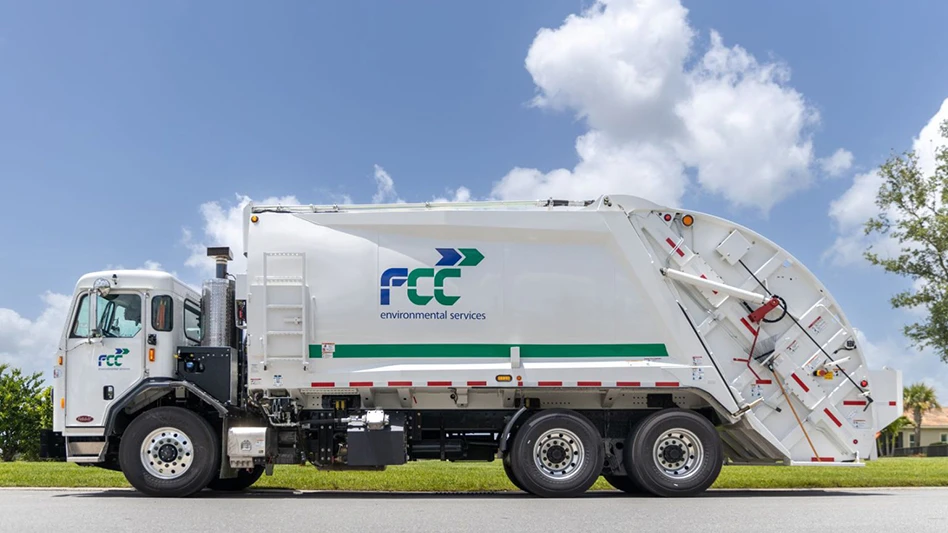
TRP invests $4.25M in FCC Houston MRF
The Recycling Partnership (TRP), headquartered in Washington, has awarded a $4.25 million grant to FCC Environmental Services’ material recovery facility (MRF) in Houston, designed to improve the facility’s ability to recover film and flexible packaging (FFP).
The grant, supported by brands PepsiCo Inc., Kraft Heinz Co. and the Film and Flexibles Recycling Coalition, will enable a facility retrofit to recover incidental FFP, address cross-contamination of other recyclable commodities, create high-quality bales and offer data and learnings for building a road map to scaling FFP recycling.
TRP says FFP, such as plastic bags, pouches and wraps, makes up 34 percent of the total U.S. plastics packaging industry, though it has a low annual recycling rate due to complexities such as disruptions in recycling equipment and contamination of other recyclables like paper, high processing costs and limited end market demand.
TRP says these factors have led to reluctance by both communities and processors to accept FFP in their local programs and facilities.
“Plastic film and flexible packaging are widely used but have historically been excluded from curbside recycling due to processing limitations and contamination concerns,” FCC Vice President of Recycling John Rabon says. “This upgrade represents an important step forward, offering Houston residents new opportunities to recycle more and reduce what ends up in the landfill. While still early, the initiative is designed to strengthen material recovery for the city of Houston and provide learnings that can help guide scalable, sustainable solutions across the country.”
Through the grant, FCC will retrofit its Houston MRF with advanced technology to improve the recovery of plastic film. In partnership with its suppliers, FCC has designed a system intended to meet market specifications and recover plastic film at high levels of purity from a single material stream. The upgrades will include Tomra optical sorters to distinguish film from paper and other materials, along with additional conveyors to enhance processing and efficiency.
TRP launched the Film and Flexibles Recycling Coalition in 2020 to tackle challenges related to FFP recycling. The coalition has deployed nearly $11 million across 25 projects to demonstrate how to increase material capture and quality and support the incorporation of more recycled content into products.
Explore the October 2025 Issue
Check out more from this issue and find your next story to read.
Latest from Recycling Today
- Fleetio launches AI capability to accelerate fleet maintenance approvals
- The Metals Agency receives approval for export credit insurance
- Recycle Ann Arbor extends drop-off station operating hours
- Sybilion seeks to help manufacturers confidently address volatility
- Rio Tinto, Prysmian partner on low-carbon aluminum solutions for data centers
- Unilever criticized for plastics approach
- USTR to study additional steel, aluminum tariffs
- Electrified Materials adds processing capacity