Legislation & Regulations
NAW secures injunction blocking enforcement of parts of Oregon’s EPR law
The Washington-based National Association of Wholesaler-Distributors (NAW) has secured a preliminary injunction blocking enforcement of Oregon’s Recycling Modernization Act (RMA) on its members, which establishes a statewide extended producer responsibility (EPR) program.
The injunction prevents Oregon’s Department of Environmental Quality (DEQ) from enforcing the law on NAW members until the U.S. District Court for the District of Oregon rules on its merits. The law took effect July 1, 2025, and remains active for all other stakeholders.
The NAW claims the Portland-based court agreed that the law’s “opaque regulatory scheme” raises serious questions about whether it violates the due process and dormant commerce clauses in the U.S. Constitution.
“This ruling is a significant victory for NAW members, who face imminent and irreparable harm under the act, including unrecoverable compliance costs, competitive distortions and the risk of steep civil penalties,” NAW President and CEO Eric Hoplin says. “This is a major win for NAW member companies who have been dramatically impacted by the exorbitant fees imposed under the law by the Circular Action Alliance. NAW looks forward to presenting its case on the merits when the court hears our case on July 13.”
The NAW filed its motion for a preliminary injunction in November 2025, asking the court to pause all obligations under the RMA, including reporting and payment requirements, pending final resolution of the case. The organization initially filed suit July 30, 2025, against the DEQ, the Oregon Environmental Commission and Oregon Attorney General Daniel A. Rayfield.
In a news release, the DEQ notes that the district court dismissed multiple claims against it regarding NAW’s lawsuit, and two remaining claims will be decided the July trial. The department says that under the RMA, producers of packaging materials are required to pay fees to help cover the cost of processing those materials through Oregon’s recycling system and fund improvements to modernize and expand recycling opportunities in the state. Those fees are collected by a nonprofit producer responsibility organization—the Circular Action Alliance (CAA)—that is charged with implementing the act under DEQ’s oversight.
“Oregon is known as a leader in recycling and is the first in the nation to implement this approach to recycling that brings many parties together to share the costs of recycling improvements,” DEQ Administrator Jen Parrott says. “Extended producer responsibility programs that reduce the burden on consumers are prevalent in Oregon and around the world, and we’re certain it can work for recycling.”
When it announced its lawsuit, the NAW said the EPR law “misses the target” in terms of encouraging a circular economy and modernizing the state’s recycling program.
“While NAW supports the goal of a circular economy, the Oregon EPR law, as enacted, is unconstitutional, creates new mandates, inhibits interstate commerce and fails at its primary goal of encouraging circularity,” Hoplin said last July.
“Rather than encourage sustainability through a uniform and transparent system where compliance burdens are shared across industries, Oregon chose to shift the burden to the parts of the supply chain that have little to no control over decisions to design, reduce, reuse or recycle a product.”
In reference to CAA, the lawsuit also alleges that Oregon’s EPR program “mandates producers sign contracts with a single approved private organization, giving up their economic freedom and due process rights.”
Plastics
Cyclyx International to be restructured

Norway-based chemical recycler Agilyx ASA has agreed to a nonbinding memorandum of understanding to restructure its plastics sorting joint venture, Cyclyx International, with petrochemical industry partners ExxonMobil and LyondellBasell.
The companies, which operate a Circularity Center in Houston and are building a second in the Dallas-Fort Worth area, will split ownership of those facilities. ExxonMobil and LyondellBasell will own the Houston location, while Agilyx will be the sole owner of the still-in-development Dallas-Fort Worth location.
In a news release, Agilyx says it will assume full ownership of the Cyclyx consortium by March 25 and will keep its 50,000-metric-tons-per-year offtake agreement with ExxonMobil, with the potential to add volume in the future. The company is holding onto the lease for the Dallas-Fort Worth site and says it could consider subleasing it. As part of the restructuring, Agilyx is looking to unwind its $50 million senior secured bond for the Dallas-Fort Worth Circularity Center, also known as CCC2.
The Cyclyx consortium consists of plastics industry stakeholders such as PepsiCo, AstroTurf, Advanced Drainage Systems Inc., Eastman and many more.
“The restructuring positions each joint venture member to focus on respective strengths and business objectives while continuing our work to help address the plastic waste challenge,” Cyclyx says in a statement.
According to Agilyx, the restructuring will eliminate its capex exposure at Cyclyx, remove a material standalone operating cost base and improve long-term returns on capital. The company plans to shift its focus to the expansion of European plastic recycling platform GreenDot Global, which it purchased a 44 percent stake in last year.
At the time of its purchase, Agilyx said GreenDot was licensed in 29 countries and processed more than 1 million tons of packaging scrap annually, including more than 400,000 tons of plastic. Currently, Agilyx expects GreenDot to generate more than $23.6 million in earnings before interest, taxes, depreciation or amortization this year, with ambitions to exceed $118 million by 2030 through mergers and acquisitions and organic growth.
“This reorganization represents a decisive step in simplifying Agilyx’s business and reducing risk,” Agilyx CEO Ranjeet Bhatia says. “By transferring the Cyclyx Houston Circularity Center to our partners, acquiring 100 percent ownership of Cyclyx International and retaining the long-term offtake contract with ExxonMobil, we are substantially reducing our capex and opex exposures while significantly increasing strategic and financial flexibility. These actions preserve the strategic value of Cyclyx while increasing alignment with our expanding European platform.”
In an October 2025 announcement, Cyclyx said it had supplied more than 60 million pounds of postuse plastics as feedstock for chemical and mechanical recycling.
Cyclyx’s approach combines data-driven sourcing, customized feedstock and partnerships with recyclers and municipalities. Using proprietary technology and advanced sorting capabilities, the company can analyze, blend and create customized feedstock to meet customer specifications for ISCC Plus certified products.
However, it is unclear if the Houston Circularity Center, or CCC1, has been completed. In April 2025, the company said it had finished all major civil and structural work at the facility. When fully operational, the site will have the capacity to produce 300 million pounds of feedstock per year.
If CCC2 in Dallas-Fort Worth is completed, it will double Cyclyx’s feedstock capacity to 600 million pounds per year.
Notably, ExxonMobil announced Feb. 2 that its third chemical—also known as advanced—recycling unit at its Baytown, Texas, complex was fully operational.
With the third unit up and running, the Baytown site now has the capacity to process up to 250 million pounds of plastic scrap annually. ExxonMobil says it also is on track to reach about 450 million pounds of annual advanced recycling capacity at its global facilities by the end of this year.
The site’s first unit came online in late 2022, joined by the second in June 2025.
The capacity expansion at Baytown is part of a more-than $200 million investment by the company into its chemical recycling operations there as well as at its facility in Beaumont, Texas.
ExxonMobil’s Baytown facility is supplied in part with material collected by Cyclyx.
Paper
Smurfit Westrock to shut paper machine at Quebec mill

Amid ongoing market challenges, Smurfit Westrock announced Feb. 9 plans to permanently close one of the paper machines at its mill in La Tuque, Quebec.
According to Smurfit Westrock, which has global headquarters in Dublin and North American headquarters in Atlanta, the La Tuque machine’s annual production capacity of 127,000 tons of solid bleached sulfate (SBS) has faced scale and cost challenges, prompting the closure.
Smurfit Westrock also says the change is part of its commitment to strengthen its SBS portfolio and ensure the long-term competitiveness of its paperboard operations.
“This was a difficult but necessary decision to align with market realities and strengthen our long-term position,” says Laurent Sellier, president and CEO of Smurfit Westrock, North America Region.
“We remain committed to our people, our operations in Canada and to delivering reliable, quality service to our customers.”
The company also will close its extrusion facility in Pointe-aux-Trembles, Quebec, which converts grades produced on the La Tuque machine. The closures impact about 30 jobs at La Tuque and 60 jobs at Pointe-aux-Trembles.
Metals
Century Aluminum, EGA partner on new primary aluminum smelter
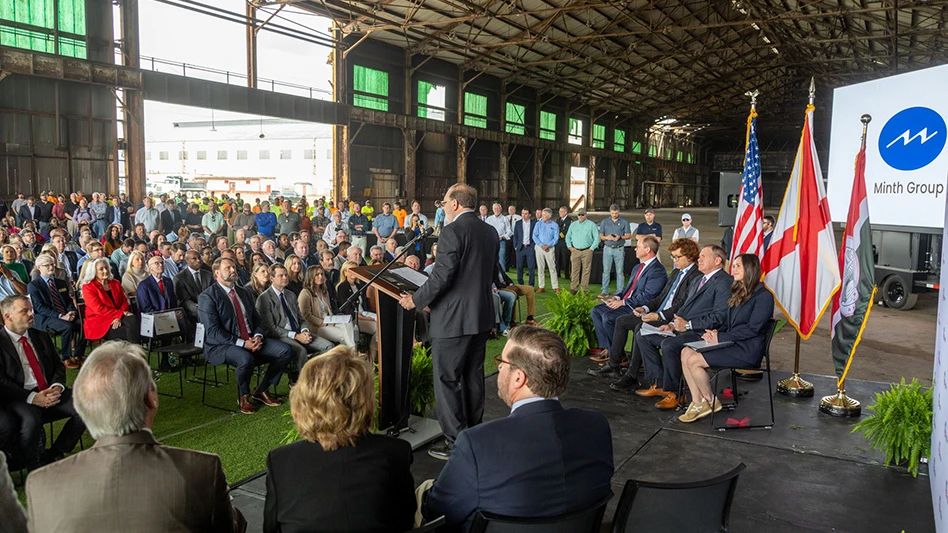
Emirates Global Aluminium (EGA), Dubai, United Arab Emirates, and Century Aluminum Co., Chicago, have entered into a joint development agreement to build a primary aluminum production plant in Oklahoma. Both parties will focus their greenfield development efforts in the United States solely on this site, the first greenfield primary aluminum smelter in the U.S. since 1980.
Per the agreement, EGA will own 60 percent of the joint venture, and Century will own 40 percent. The plant, to be built in Inola, Oklahoma, as EGA previously announced, is expected to produce 750,000 metric tons of aluminum per year, which is larger than the 600,000 metric tons the company previously envisioned, more than doubling current U.S. production.
EGA expanded its U.S. presence earlier this decade with the acquisition of an 80 percent share in aluminum recycling company Spectro Alloys of Rosemount, Minnesota, which recently expanded its production capacity.
The Inola plant will create about 1,000 permanent direct jobs at the facility and 4,000 jobs during construction, the companies say.
They add that the partnership combines EGA’s EX aluminum smelting design and technology, construction and operation with Century’s extensive history and expertise operating aluminum smelters in the U.S. using domestic supply chains.
Once completed, the Inola plant will be the largest ever primary aluminum production plant in the U.S. and the first built in nearly 50 years, the companies say. About 85 percent of the aluminum needs of U.S. industries are met by imports. The new smelter will expand the domestic supply of this critical mineral and grow the American aluminum workforce.
Construction is expected to start by the end of 2026, and production is expected to begin by the end of the decade. Detailed engineering work is underway, and negotiations with Public Service Co. of Oklahoma and the state of Oklahoma on a competitive long-term power supply are progressing, according to the companies.
The plant will be built at the industrial park at Tulsa Port of Inola, located on the McClellan-Kerr Arkansas River Navigation System, which is connected to the Mississippi River system for efficient bulk freight movement.
The Inola plant is expected to drive the development of a regional aluminum-focused industrial hub in Oklahoma, creating jobs and economic opportunities in the upstream supply chain and in downstream aluminum manufacturing, the companies say.
Explore the March 2026 Issue
Check out more from this issue and find your next story to read.
Latest from Recycling Today
- Amcor earns UN certification for industrial containers with PCR
- Oregon lawmakers pass battery recycling bill
- Volvo says loader updates improve efficiency
- One and One focuses on PCB recycling
- Indicators point to hiccups in steel demand momentum
- WM opens upgraded recycling facility in Southern California
- City of Providence to receive new collection carts through $7.4M investment
- CAA has submitted updated REM program plan in Oregon