Paper
Graphic Packaging starts up CRB mill in Waco, Texas
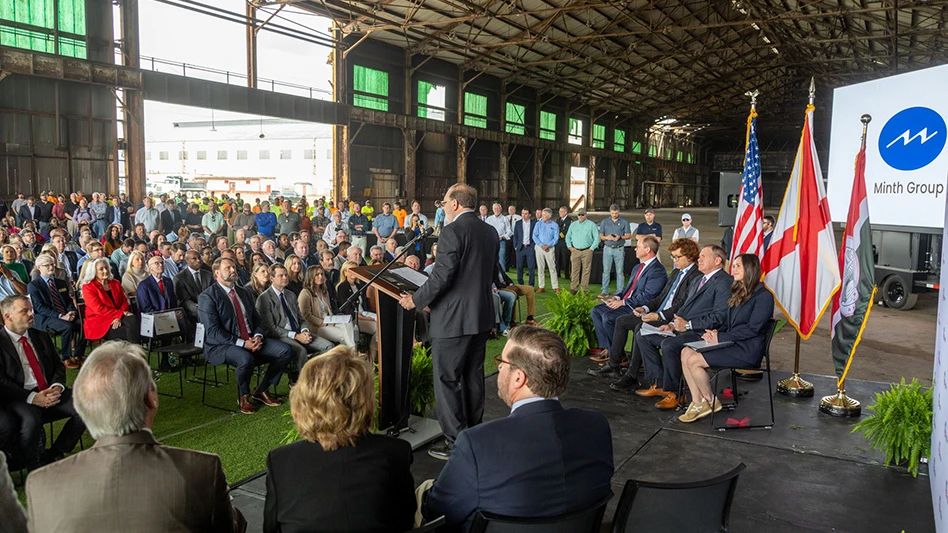
Graphic Packaging International officially has started up its coated recycled paperboard (CRB) mill in Waco, Texas—a nearly $1 billion project originally announced in February 2023.
The mill produced its first commercially saleable roll of recycled paperboard Oct. 24, with CEO Michael Doss saying that was significantly earlier than planned and a faster startup than the startup of its CRB machine at its mill in Kalamazoo, Michigan, in early 2022.
The Atlanta-based packaging company originally targeted a fourth-quarter startup in Waco.
“I could not be more proud of our team, many of whom were part of our team that built our Kalamazoo K2 machine,” Doss said Nov. 4 during an earnings call. “Waco was Graphic Packaging’s largest capital investment and extends our economic and quality advantage in recycled paperboard across all of North America.
“Waco is a critical enabler for the consumer packaging we sell, improving surety of supply, reducing waste, allowing us to only offer the highest quality packaging materials and expanding the markets our recycled paperboard packaging can serve. Having Waco in our system gives us competitive advantage that will last for decades.”
The Kalamazoo and Waco CRB mills represent more than $2 billion in capital investment for Graphic Packaging.
The Waco site is expected to reach full production in the next 12-18 months, and Doss said the company has developed an internal fiber-sourcing plan, allowing it to procure recovered fiber from its packaging facilities for the Waco mill.
“By closing the loop between our own manufacturing system scrap and Waco’s recovered fiber sourcing, we dramatically reduce overall system waste while simultaneously improving our production economics,” he said. “And with the inclusion of paper cups in the Recycled Materials Association’s recently updated guidelines, a key strategic investment we made at Waco looks even better.”
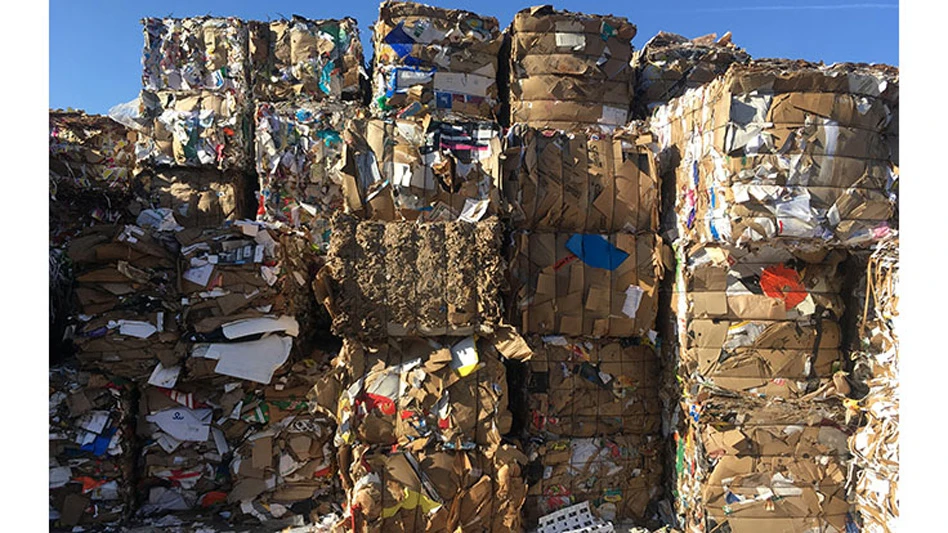
The Waco mill was designed to have the capability to process up to 15 million paper cups per day, and previous estimates indicate the facility also will consume about 20,000 tons per month of old corrugated containers.
Metals
USGS adds copper to critical minerals list
The U.S. Geological Survey (USGS) has finalized its List of Critical Minerals for 2025, updating its 2022 list. The list of 60 minerals features 10 new minerals, including copper for the first time.
Originally created in 2018, the U.S. Critical Minerals List contains minerals deemed essential to U.S. economic or national security that have supply chains vulnerable to disruption.
Compared with the draft list released in late August for comments, the final list added arsenic, boron, metallurgical coal, phosphate, tellurium and uranium, with the Federal Register citing Department of Energy advocacy for metallurgical coal and uranium and Department of Agriculture advocacy for phosphate as reasons for inclusion.
Arsenic and tellurium, which were recommended for removal by USGS on the draft list, were included because of national security concerns raised by the Department of Defense, while boron was added given additional information USGS received during the public comment period that indicated the mineral has similar supply chain vulnerabilities to other critical minerals like silicon and titanium.
Along with copper, the draft list included lead, potash, rhenium, silicon and silver, which remain on the final list.
Gold, which several Trump administration actions have recognized as critical, was not added to the final list.
When compiling the 2022 list, USGS used a new qualitative methodology to assess the supply risk score by calculating the economic vulnerability, disruption potential and trade exposure of various minerals. USGS stopped calculating with 2018 data when compiling the 2022 list, resulting in copper missing the required 0.4 supply risk score threshold for automatic inclusion.
However, in early 2023, the Copper Development Association (CDA), McClean, Virginia, released a report noting copper met the USGS’ benchmark Supply Risk score of 0.4 for automatic inclusion on the U.S. Critical Minerals List. According to the CDA, the report replicates the USGS methodology to determine mineral criticality.
At that time, the CDA noted that more recent USGS data show the share of copper consumption in the U.S. met by net imports had increased from 33 percent in 2018 to 44 percent in 2021 and 41 percent in 2022. In the first half of 2022, the net import reliance stood at 48 percent.
In a news release CDA issued after copper made the draft list, it says the flow of U.S. copper to market has been stymied by “convoluted permitting, overreaching regulations” and a lack of strategic industrial policy to protect domestic producers from what it says are trade-distorting practices of China and other nonmarket economies.
“The timing is crucial as the U.S. needs to rapidly implement an ‘all-of-the-above’ sourcing strategy to meet the projected doubling of copper demand by 2035,” CDA says of the addition of copper to the list.

In memoriam
Alfred Arnold Nijkerk
The Bureau of International Recycling (BIR), based in Brussels, has announced the death of Alfred Arnold Nijkerk, saying he was “a towering figure in the global recycling community and one of the most respected voices in our industry’s history.”
Before his death, Nijkerk was the only living recycler who was present at the founding of BIR in Amsterdam almost eight decades ago and an ongoing supporter of the organization and its mission, the organization says.
A law graduate from Leiden University in 1954, Nijkerk joined his family’s scrap recycling company in Amsterdam two years later, becoming the sixth generation of his family to enter the business, which was established in 1823.
Over a 52-year career, he played a central role in advancing the scrap and ship dismantling sectors, becoming chairman of the Shell-Billiton Recycling Division.
Among numerous career achievements, Nijkerk also founded Magazine Recycling Benelux in 1966 and served as chief editor for more than 25 years. He co-authored the Handbook of Recycling Techniques, published in 1995 with Wijnand Dalmijn. The book sold in 86 countries and received the first Dutch Recycling Award in 2003.
The BIR recognizes Nijkerk’s contributions, pioneering spirit and unwavering belief in the power of recycling to shape a better world.
Explore the December 2025 Issue
Check out more from this issue and find your next story to read.
Latest from Recycling Today
- Stena Recycling invests to handle EV batteries
- Amcor earns UN certification for industrial containers with PCR
- Oregon lawmakers pass battery recycling bill
- Volvo says loader updates improve efficiency
- One and One focuses on PCB recycling
- Indicators point to hiccups in steel demand momentum
- WM opens upgraded recycling facility in Southern California
- City of Providence to receive new collection carts through $7.4M investment