Legislation & Regulations
EPR program launches in Oregon
Oregon officially is the first state to implement an extended producer responsibility (EPR) program for packaging, printing and writing paper and food serviceware.
Established under the state’s Plastic Pollution and Recycling Modernization Act (RMA), signed into law in 2021, many stakeholders, including Oregon’s Department of Environmental Quality (DEQ), spent several years developing a plan designed to provide statewide access to consistent, quality recycling, upgrade recycling facilities and establish accountability mechanisms for packaging producers to ensure materials are properly recycled.
Improvements to the state’s recycling infrastructure are funded through fees paid by those producers. Overseeing the program as its producer responsibility organization (PRO) is the Washington-based Circular Action Alliance (CAA).
“Oregon’s recycling system has set a national standard,” Gov. Tina Kotek says in a news release celebrating the July 1 launch of the program. “Implementation is just the start. The Recycling Modernization Act will make sure of a future with less waste and pollution, holding producers responsible for their part in waste prevention.”
CAA says that through the RMA, brands play a role in how materials are collected, sorted and processed statewide, helping address long-standing challenges such as gaps in recycling access, infrastructure limitations and consumer confusion.
Key elements of the program include:
- Producer registration and reporting – All obligated producers are required to register with CAA and submit brand and material data through the Producer Portal.
- Eco-modulated fee structure – Producers will contribute fees based on type, weight and recyclability of materials placed on the market. Fees are structured to reward use of recyclable, low-impact packaging, providing financial incentives for better design choices.
- Cost coverage – Producer contributions ensure compliance with the RMA by supporting the cost of processing covered materials, local government reimbursements, transportation of recyclables from rural areas, statewide education and outreach and the expansion of a drop-off network of recycling centers for materials not accepted in home or business recycling bins.
- Producer support – CAA provides technical assistance to help with registration and reporting requirements.
- Transparency and data access – Producers will have access to performance data and cost breakdowns to ensure accountability and inform packaging and compliance strategies.
“The launch of Oregon’s EPR program marks a historic step forward, empowering producers to lead the transition to a more circular system for packaging and paper,” CAA CEO Jeff Fielkow says. “By working together, we can reduce waste, improve recycling and build a model that delivers measurable impact while making it easier for producers to fulfill their sustainability commitments.”
According to the DEQ, obligated brands and producers began paying fees to CAA July 1. CAA’s program plan was approved in February, and producers were required to register with CAA and submit their supply data by March 31.
“Under the RMA, people in Oregon can be confident the materials they recycle are actually recycled and in a way that does not harm people or the environment, here or abroad,” DEQ Director Leah Feldon says. “The RMA brings transparency and accountability to Oregon’s recycling system.”
By Dec. 31, 2027, Oregon’s EPR program aims to:
- expand curbside recycling access to more than 150,000 homes and businesses statewide;
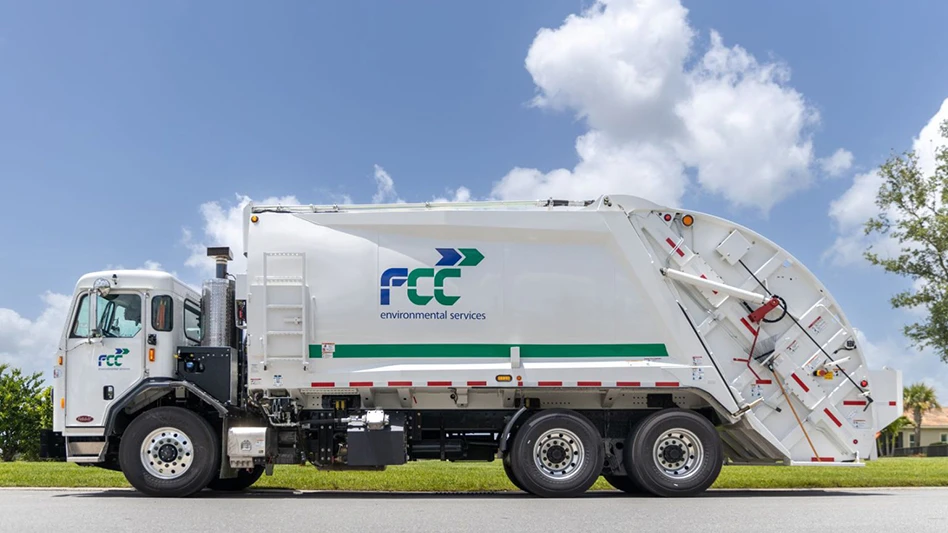
- deploy nearly 100 new recycling collection trucks across the state;
- establish more than 140 new drop-off sites in communities statewide;
- deliver clear, consistent recycling education to help Oregonians recycle with confidence;
- reduce contamination and improve recycling system performance;
- standardize recycling statewide through the Uniform Statewide Collection List;
- make strategic investments to on-ramp identified materials into the recycling program; and
- achieve statewide recycling goals as outlined in the program plan.
“Oregonians have always taken recycling seriously but, until now, the system hasn’t always made it easy to do the right thing,” CAA Oregon Executive Director Kim Holmes says. “Oregon’s new EPR program aims to modernize and simplify recycling across the state. Over the next few years, Oregonians will have access to clearer information, more consistent services and a stronger recycling system that reduces waste and creates a stronger circular economy.”
Oregon is the first of seven EPR states to launch its program. Colorado is scheduled to begin its program in 2026, followed by Maine and California in 2027. Minnesota, Maryland, and Washington also are developing their programs.

Metals
EGA Spectro Alloys begins aluminum billet production
EGA Spectro Alloys, based in Rosemount, Minnesota, has started producing aluminum billets from recycled aluminum, broadening its product offering and capabilities.
The company, which is 80 percent owned by Emirates Global Aluminium (EGA), shipped its first recycled billets to Crown Extrusion in Chaska, Minnesota, to be turned into a waterfront dock for Dock Rite, based in Hutchinson, Minnesota, and fabricated into sustainable docks for sale across the region.
EGA Spectro Alloys completed construction of its 90,000-square-foot facility at the start of this year after breaking ground on the project in March 2024. The installation of equipment at the site was completed earlier this year and includes new melting and holding furnaces and a vertical casting pit, which allows the company to produce billets in 7-, 8-, 9-, 10- and 12-inch diameters, EGA Spectro Alloys President Luke Palen told Recycling Today in late March, adding, “That will cover most of the regional demand in terms of billet diameters.”
The company also has installed the same billet homogenizing technology EGA has at its facilities.
“It’s top-of-the-line, world-class homogenizing technology,” Palen told Recycling Today.
EGA Spectro Alloys plans to supply its billet to the extrusion industry to produce products that include railings, window and door trim and structural components for cars, boats, airplanes, trailers, docks and more.
EGA Spectro Alloys says it will produce up to 120 million pounds of recycled aluminum billets from aluminum scrap annually. The expansion also will add up to 50 full-time jobs once the facility reaches full production capacity, which the company expects to be in the first quarter of next year.
The company also produces roughly 120,000 tons of die-cast and foundry alloys annually that it supplies to more than 125 customers throughout the U.S. and into Canada and Mexico, with almost half of its current production being used in the automotive sector. Other sectors Spectro serves include small engine manufacturing, construction and the recreational vehicle business.
Metal from the expansion project will be sold under EGA’s recycled product brand, RevivAL, a nod to the company’s 52-year legacy of giving used aluminum new life.
The facility also includes a new, world-class quality laboratory that will help ensure customers receive the highest quality recycled aluminum at their precise specifications in diverse industries across the country, according to the company.
“More and more, manufacturers are looking for supply chain solutions that help them meet their environmental goals, and using recycled aluminum is a win for everyone. With this expansion, we will produce high-quality, recycled billet, made in America, and contribute to a circular economy in our region and throughout the U.S.,” Palen says in a news release announcing the startup of billet production.
Paper
Latest updates to ReMA’s ISRI specs include paper cups
The Washington-based Recycled Materials Association (ReMA) has updated its “ISRI Specifications” to include the board-approved addition of paper cups to the allowable commodities in the inbound residential single-stream and dual-stream material recovery facility specifications.
The additions to the allowable paper commodities for inbound residential single-stream recycling include:
- uncoated white office paper, printing and writing paper;
- newspaper;
- magazines;
- phonebooks;
- junk mail; paperboard;
- tissue boxes/rolls;
- paper towel and toilet paper rolls;
- cardboard;
- brown or kraft paper;
- paper boxes/cartons;
- pizza boxes (if food and liners are removed); and
- paper cups.
Additions to the allowable paper commodities for inbound residential dual-stream recycling are:
- paper separated at the collection point (either stacked below or separate, not to be mixed with containers);
- uncoated white office paper, printing and writing paper;
- colored paper;
- newspaper;
- magazines; phonebooks; tissue boxes/rolls; paper towel and toilet paper rolls;
- cardboard;
- brown or kraft paper;
- paper boxes;
- pizza boxes (if food and liners are removed); and
- paper cups.
ReMA’s “ISRI Specifications” are internationally recognized guidelines used by buyers and sellers of recycled materials and products.
ReMA says the specifications are intended to assist in scrap commodities trading and are reviewed regularly and updated to reflect the expanding range of commercially recyclable materials.
Packaging, Plastics
Amcor to expand PCR capabilities in Kentucky

Packaging producer Amcor PLC, based in Evansville, Indiana, plans to invest in its Nicholasville, Kentucky, facility to increase postconsumer recycled (PCR) packaging production capabilities to support its customers’ varied PCR needs.
Amcor says the “state-of-the-art” system planned for Nicholasville incorporates dedicated silos that feed multiple production lines to enable precise PCR blending, giving customers the ability to choose their optimal PCR percentage. The flexibility in PCR content—up to and including 100 percent PCR—is offered for custom and stock rigid packaging.
Amcor says the new system demonstrates its ability to optimize manufacturing processes and enable increased use of PCR material.
“Many brands look to adopt packaging that not only protects and promotes products but also aligns with sustainability goals,” says Greg Rosati, vice president, Amcor Rigid Packaging North America. “This facility gives customers more choices for the recycled content levels of their packaging and reinforces Amcor’s commitment to a circular economy.
“While the investment was made to support the specific demands of our spirits customers, there are opportunities to support customers across other segments. In addition to the spirits market, this new system will also be available to customers in the health care, food and home and personal care segments.”
The company says it is committed to helping customers find solutions to their evolving sustainability needs.
During the 2024 fiscal year, the company’s rigid packaging business worked with customers to bring more PCR-based packaging to market, increasing its purchase of PCR polymers by more than 50,000 metric tons compared with the previous year.
“With minimum-recycled-content legislation enacted in several states—and more on the horizon—Amcor’s enhanced PCR capabilities can help brands to stay compliant, support recycling markets and contribute to a circular economy,” the company says.
Paper
IP announces more closures, will exit molded fiber business

International Paper (IP) has announced a series of what it says are “strategic changes” to help strengthen its North American operations.
As part of that strategy, the Memphis, Tennessee-based company will:
- exit the molded fiber business and convert its facility in Reno, Nevada, to support its packaging business;
- close its packaging facility in Marion, Ohio;
- close its recycling facility in Wichita, Kansas; and
- sell its Mexico-based containerboard mill in Xalapa and its recycling facilities in Xalapa and Apodaca to Acabados de Papeles Santinados y Absorbentes (APSA).
“These decisions are never easy because of the impact on our employees, their families and the communities in which we operate,” says Tom Hamic, executive vice president and president of IP’s Packaging Solutions North America business.
“We will assist employees and customers as much as possible through this transition. While difficult, these decisions will help enable IP to prioritize the right geographies, customers and products and make investments in resources to support our growth in sustainable packaging.”
In the U.S., the changes will affect approximately 110 hourly and 24 salaried employees, while in Mexico, APSA intends to retain current on-site employees at each location, according to IP.
Details on the timeline of the closure of the Marion site were not immediately available, but IP planned to cease all operations at the Wichita recycling site on or before July 31.
These moves are the latest in a string of IP closures announced this year.
In February, the company revealed plans to permanently close four facilities, affecting 674 employees. Those sites include its Red River containerboard mill in Campti, Louisiana; a recycling facility in Phoenix; a box plant in Hazleton, Pennsylvania; and a sheet feeder facility in St. Louis.
All those facilities ceased operations by the end of this April.
International, Legislation & Regulations
EuRIC sees no grounds for aluminum export ban
The European Recycling Industries’ Confederation (EuRIC), Brussels, says it strongly rejects any proposals to introduce export fees or other export restrictions on recycled aluminum leaving the European Union.
The organization says messages coming from the EU Aluminium organization and aluminum producers in Europe are deceiving and “reflect neither the concerns nor the interests of European aluminum recyclers.”
Figures gathered by Eurostat show the EU was a net importer of recycled aluminum from the U.S. in 2024. Last year, the EU imported 43,000 tons of recycled aluminum from the U.S., while exports to that nation stood at just 9,300 tons.
In the first quarter of this year, exports remained at low levels, ranging from just 1,200 to 2,000 tons per month.
“These figures are negligible when compared to the EU’s total recycled aluminum production of approximately 5 million tons annually,” EuRIC says.
The organization acknowledges aluminum producers shut down about half the EU’s primary aluminum plants in 2022 and 2023 because of high energy prices.
Then, and in contravention to the EU’s low-emissions targets, imports from countries with more carbon-intensive energy mixes met more than half of Europe’s 2023 demand.
“Restrictions and limitations on the trade of recycled aluminum will not solve these problems,” EuRIC says. “Most traded recycled aluminum grades are being exported because of insufficient allocation on the EU’s market.”
The group points to the shredded zorba grade, saying that mixture of aluminum alloys is used by the automotive industry to manufacture internal combustion engines, which are no longer made in the EU.
The organization says export fees or other measures designed to limit the export of recycled aluminum beyond the EU would not support the European aluminum industry and instead would put pressure on recyclers.
It adds that metal recyclers in the EU already face a looming burden with the enforcement of the revised rules tied to the Waste Shipping Regulation.
“Instead of restricting exports of recycled aluminum, actors of the whole value chain should look at other means to restoring the EU’s industry competitiveness,” EuRIC says. “This includes tackling high energy prices and burdensome administrative procedures. Only if free trade remains possible and recyclers can operate under predictable and favorable market conditions, their contribution to the decarbonization of the European industry can be fully harnessed.”
Explore the August 2025 Issue
Check out more from this issue and find your next story to read.
Latest from Recycling Today
- Fleetio launches AI capability to accelerate fleet maintenance approvals
- The Metals Agency receives approval for export credit insurance
- Recycle Ann Arbor extends drop-off station operating hours
- Sybilion seeks to help manufacturers confidently address volatility
- Rio Tinto, Prysmian partner on low-carbon aluminum solutions for data centers
- Unilever criticized for plastics approach
- USTR to study additional steel, aluminum tariffs
- Electrified Materials adds processing capacity