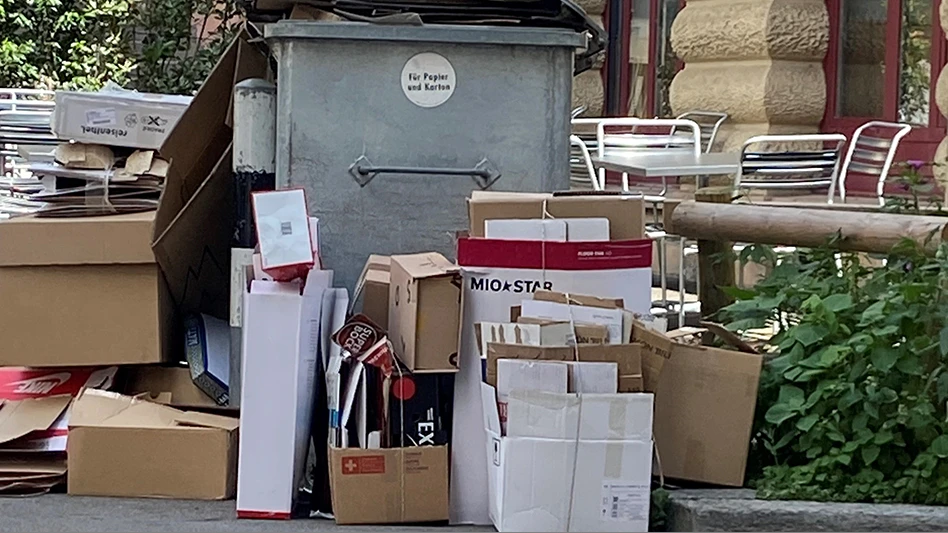
The Brattleboro, Vermont-based Northeast Recycling Council (NERC) has updated its compendium of state disposal bans and mandatory recycling laws around the country. The “Disposal Bans & Mandatory Recycling in the United States” resource provides state-specific information, including contact information; which materials are banned for disposal; and to whom the ban applies, as well as what has to be recycled and by whom. The document can be accessed here.
“Interestingly, every state but one—Montana—has at least ‘something’ banned from disposal in its solid waste facilities—at a minimum lead acid batteries, as is the case in Arizona and Wyoming. And 22 states have at least one mandatory recycling requirement,” NERC says in a release announcing the update.
 The most commonly banned materials are presented in the chart at left.
In addition, there are bottle bill laws in 10 states and Guam, including California, Connecticut, Hawaii, Iowa, Maine, Massachusetts, Michigan, New York, Oregon and Vermont.
NERC describes itself as a multistate nonprofit organization that is committed to environmental and economic sustainability through responsible solid waste management. The organization conducts research, projects, training and outreach on issues associated with source reduction, reuse, recycling, composting and environmentally preferable purchasing.
“Interestingly, every state but one—Montana—has at least ‘something’ banned from disposal in its solid waste facilities—at a minimum lead acid batteries, as is the case in Arizona and Wyoming. And 22 states have at least one mandatory recycling requirement,” NERC says in a release announcing the update.
The most commonly banned materials are presented in the chart at left. In addition, there are bottle bill laws in 10 states and Guam, including California, Connecticut, Hawaii, Iowa, Maine, Massachusetts, Michigan, New York, Oregon and Vermont.
NERC describes itself as a multistate nonprofit organization that is committed to environmental and economic sustainability through responsible solid waste management. The organization conducts research, projects, training and outreach on issues associated with source reduction, reuse, recycling, composting and environmentally preferable purchasing.
Latest from Recycling Today
- QCC torches include customizable features
- Umicore finishes 2025 with increased earnings
- Indonesian policy could affect stainless scrap prices
- Casella posts a loss in Q4 2025
- California bill targets recycled content definition
- McNeilus names Haaker Equipment first Dealer Partner of the Year
- NWRA, SWANA issue responses to BLS fatality data
- ReMA board to consider additional nonferrous specification