
In the United States recycling industry, the true challenge in designing a sorting plant is not achieving peak performance on paper but sustaining reliable operations day after day.
The real test is keeping plants running reliably under unpredictable conditions with limited staffing and constant pressure to avoid downtime. A design that looks optimal in a steady-state model may struggle in a facility where input quality fluctuates daily. In this environment, downtime has immediate financial consequences.
This operational reality is central to how STADLER America approaches plant design, engineering and long-term customer relationships.
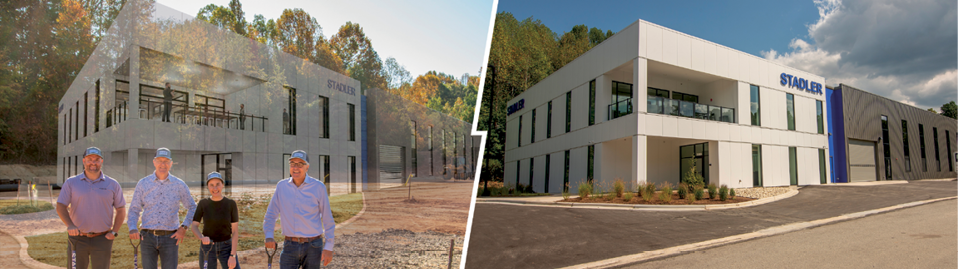
In 2025, a strong year for the business, the company delivered multiple large and technically demanding projects across North America while continuing to strengthen its engineering depth, service organization and internal processes. The opening of a new office and warehouse in North Carolina was a direct response to customer needs. It is expanding STADLER America’s ability to support plants throughout their full lifecycle rather than simply at the point of delivery.
Designing for real-world conditions
What fundamentally distinguishes the U.S. recycling market from others is not only scale but also the realities of daily operating conditions, making reliability a critical business priority.
STADLER’s response is rooted in a simple philosophy: earning the partnership rather than getting the sale. This mindset shapes how systems are designed long before a contract is signed.
STADLER invests significant effort upfront to stress-test layouts, validate material assumptions and challenge operating scenarios on paper. Problems solved early are far less costly than those discovered after commissioning. If a project is not set up for long-term success, STADLER is willing to step back.

Systems-thinking and ownership of real-world performance
“What differentiates STADLER is that we think in systems and we take ownership of how they perform in the real world,” STADLER America CEO Mat Everhart says. “Integration for us isn’t just assembling equipment; it’s aligning process design, mechanical engineering, controls and operational reality.
“We also place a strong emphasis on disciplined engineering and clear responsibility, which reduces interface risk for our customers.”
This approach extends to how plants are designed for day-to-day use.
“We design plants with a clear understanding of how operators will access, maintain and adjust equipment over time, not just how the system looks on a flow diagram,” Everhart says.
A partnership that extends across the life of the plant
This emphasis on operational reality continues after installation. For STADLER America, the end of commissioning marks the beginning of the relationship, not the conclusion of responsibility.
The company places strong emphasis on preventive service, structured inspections and proactive support to help customers avoid downtime before it occurs. This includes evaluating parts inventories, understanding component life cycles, conducting structured inspections and identifying operational risks before they result in unplanned downtime.
Digital tools as enablers
Digital tools play a supporting but important role in this approach. Solutions such as STADLERconnect provide clear visibility into plant performance, enabling operators and managers to detect emerging bottlenecks, track performance trends and identify deviations before they lead to downtime or quality losses.
Digital monitoring also supports accountability across the value chain, helping operators understand how incoming material quality affects performance. Importantly, automation and digitalization are not pursued for their own sake but as enablers of better decision-making in complex operating environments.
Beyond integration: Long-term operational ownership
Ultimately, what differentiates STADLER America is not a single technology or service but an organizational mentality. Territory managers, service technicians and engineering teams work closely with customers on-site, focusing on long-term performance rather than short-term transactions. This hands-on, partnership-driven approach reflects a belief that reliable plants are built not only through good design but also through sustained engagement over time.

Looking ahead, STADLER America is not chasing growth for its own sake. Strategic priorities center on strengthening service offerings, expanding U.S.-based parts availability and continuing to deliver systems that perform reliably under real-world conditions. In this view, growth is a result of trust earned through results.
“The true measure of success is how a plant performs years after handover, when conditions are far from ideal,” Everhart concludes.
In a market where uptime defines success, STADLER America’s commitment to operational reliability positions the company as a long-term partner in the evolution of U.S. recycling.
Explore the March 2026 Issue
Check out more from this issue and find your next story to read.