Copper is the metal that underpins the world’s electrification push, from electric vehicles and renewable power to semiconductors and artificial intelligence (AI) data centers.
Despite the wave of federal actions by the Trump administration in 2025, including executive orders, tariffs and permitting reforms, there is a critical market constraint that remains: a lack of sufficient domestic refining and processing capacity.
The Paris-based International Energy Agency projects copper deficits could reach 30 percent within the next decade, while the U.S. Geological Survey reports that U.S. domestic supply has run at a deficit to consumption for at least the past five years.

Historically, the approach taken by mining companies and the broader industry has been to build new projects, expand current operations and import refined copper. While those are the most feasible approaches from a longer-term perspective, in the near term, challenges such as declining ore grades, capital requirements in developing new projects, permitting delays, geopolitical conditions and technical challenges affect the ability to meet current demand.
The question is: Can copper recycling or secondary smelting reduce the supply-demand gap?
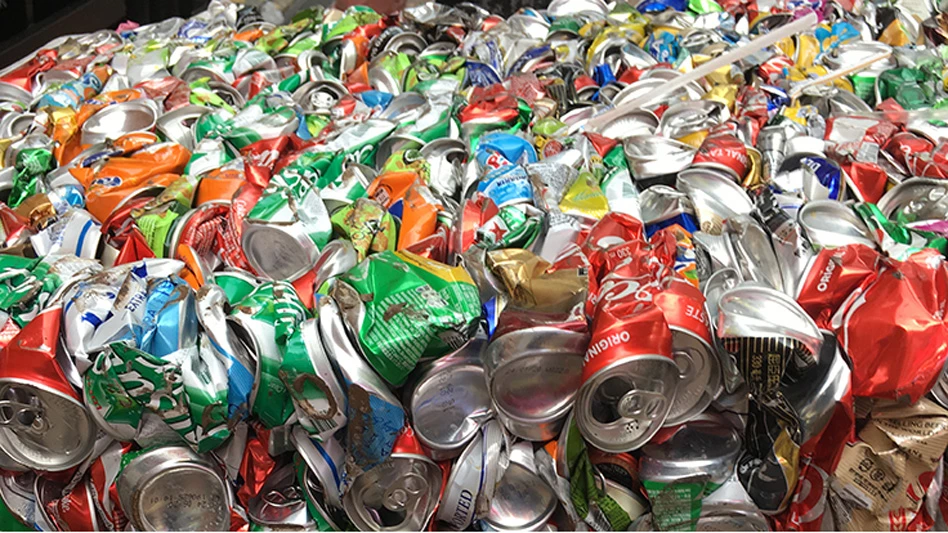
While recycled copper alone cannot meet the current 1 million-ton-per-year deficit, it certainly can bridge the gap and provide the metal required for energy transition in the near term. The volume of postconsumer copper scrap has risen steadily over the past four decades and is expected to continue to grow by about 4 percent annually from 2020 to 2050, reaching a total of approximately 14 metric tons by 2050.
Based on benchmark data, in 2024, the U.S. produced approximately 620 kilotons (kt) of scrap and exported 84 percent, indicating a strategic gap in processing copper scrap in the U.S.
Major secondary smelters produce about 130 kt of refined copper today, with about 280 kt to come online, led by Aurubis AG and Wieland Recycling. Despite new production, it is evident that copper scrap availability exceeds secondary processing capacity, creating huge entry opportunities in the U.S. copper markets.
But the copper famine makes it clear this is a value chain problem and that downstream industries must play an active role in managing it.
Automakers such as General Motors and Ford and technology firms like Apple and Microsoft rely heavily on copper to meet growth and decarbonization targets and cannot afford to remain passive. They must ensure supply resilience through investment, innovation and supply guarantees.
Investment and M&A

Several downstream and diversified companies already are moving to secure access to secondary materials.
Aurubis, for example, has built the first multimetal recycling facility in the U.S. Meanwhile, Rio Tinto has invested in Exurban, an urban recycling venture, while Glencore has supported battery recycling startups.
Traders and original equipment manufacturers also are beginning to invest in scrap processing and secondary smelting, either through expansions of existing facilities or greenfield builds. These investments increase the recycling footprint of the copper value chain and provide greater vertical integration, ensuring closer alignment with raw material supply.
Innovation
While traditional copper recycling is technologically mature, it is capital-intensive and has been concentrated in Europe. However, recent advances are changing the economics of recycling and recovery rates.
Modular smelters are being developed to integrate recycling capabilities directly into existing copper smelters as an alternate source of feedstock supply. Novel metallurgical processes, such as pulse electricity and advanced electrolytic separation, are being commercialized to improve recovery rates and purity. Additionally, AI and machine learning increasingly are being used in sorting, improving the efficiency and economics of recycling facilities.
These technologies provide a pathway for downstream producers to further grow baseline metal production at scale.
Supply guarantees and market shaping

Downstream players can stabilize supply by creating long-term market commitments. This includes signing offtake agreements with recyclers, embedding recycled copper content requirements into procurement policies and cofinancing the development of urban mining hubs.
These mechanisms not only provide supply security but also derisk investment in secondary facilities, encouraging broader adoption of recycling technologies.
Downstream players uniquely are positioned to accelerate this ecosystem by pooling demand signals, funding pilot projects and forming joint ventures with miners and recyclers. This approach aligns corporate carbon goals with growth targets and provides a sustainable solution to long-term copper shortages.
What are the challenges?
Scrap recycling is a well-known process, but technical challenges limit production scale-up, and innovation is going to be critical in achieving targeted outcomes.
Scrap processing presents some early challenges:
- Feedstock supply and material composition. Secondary smelters require consistent volumes of well-characterized scrap to operate at stable conditions. In practice, scrap supply is fragmented, with contamination from alloys, coatings, plastics, oils and other elements. Inconsistent feedstock undermines capacity utilization and raises operating costs, limiting scale-up of secondary processing.
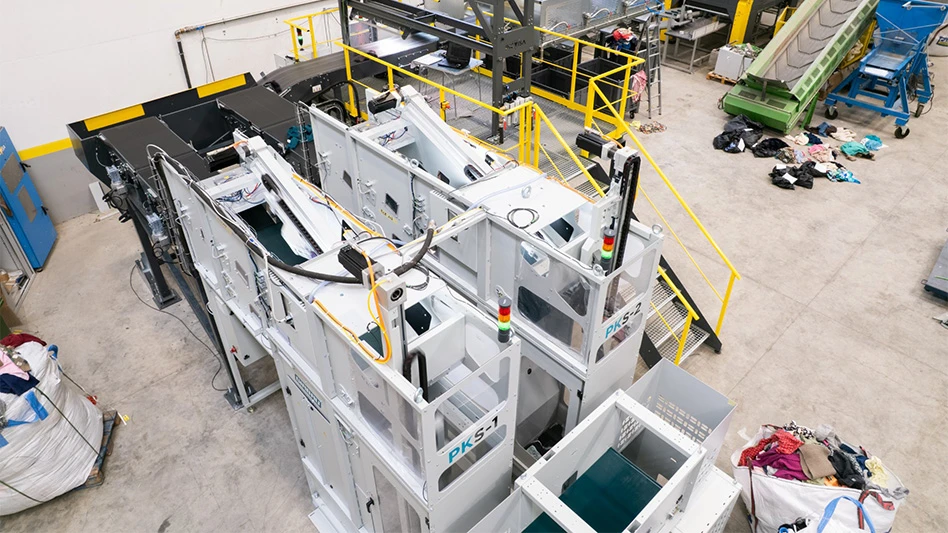
- Sorting and preprocessing. Efficient downstream recovery depends on accurate sorting by grade and alloy (high-grade copper, low-grade mixed scrap, e-waste, alloys, etc.). Manual and mechanical sorting lead to yield losses and impurity carryover. AI-enabled vision systems, X-ray fluorescence sensors and smart shredding lines can help preclassify scrap streams, improving blending and reducing metallurgical risk.
- Economics of secondary processing. Although scrap often contains higher copper grades than concentrates, secondary smelters face higher logistics and handling costs, price exposure tightly correlated with London Metal Exchange copper and narrow treatment margins arising from competition for clean scrap, while selective recovery of byproducts (e.g., precious metals from e-scrap or alloy separation) requires added downstream hydrometallurgical or electrorefining circuits, increasing capex and elongating payback periods.
- Safety and operational risk. Scrap composition and handling methods introduce nontrivial safety risks, particularly from batteries, pressurized containers or reactive materials. Safety incidents threaten operating continuity and asset integrity.
While technical solutions continue to evolve, mining companies uniquely are positioned to scale recycling through partnerships, targeted innovation investments and the deployment of advanced automation and sensing technologies alongside piloting selective hydro- and pyrometallurgical processes that improve recovery and economics.
Failure to move further downstream risks an expanded end-to-end offering and future growth opportunities in the copper value chain.
Ultimately, the looming copper shortage is not just a mining constraint, it’s a systemic value chain challenge. If downstream players fail to act, they face escalating costs, supply insecurity and the risk of demand erosion through substitution. If they engage now through targeted investment, innovation adoption and long-term supply commitments, they can reshape the copper economy, bridge the supply deficit and secure the material foundation of the energy transition.
Explore the Winter 2026 Scrap Recycling Issue
Check out more from this issue and find your next story to read.
Latest from Recycling Today
- Press Metal affected by currency, hedging issues
- Steel output rises in top economies in January
- Thommen Group announces personnel changes
- International Paper to close South Carolina container plant
- A look inside WM’s new $90M south Florida MRF
- Waste to Resource Ontario announces new co-chairs
- WIH Resource Group adds senior associate
- BlueScope rejects recent SGH, SDI bid and notes terms for additional engagement