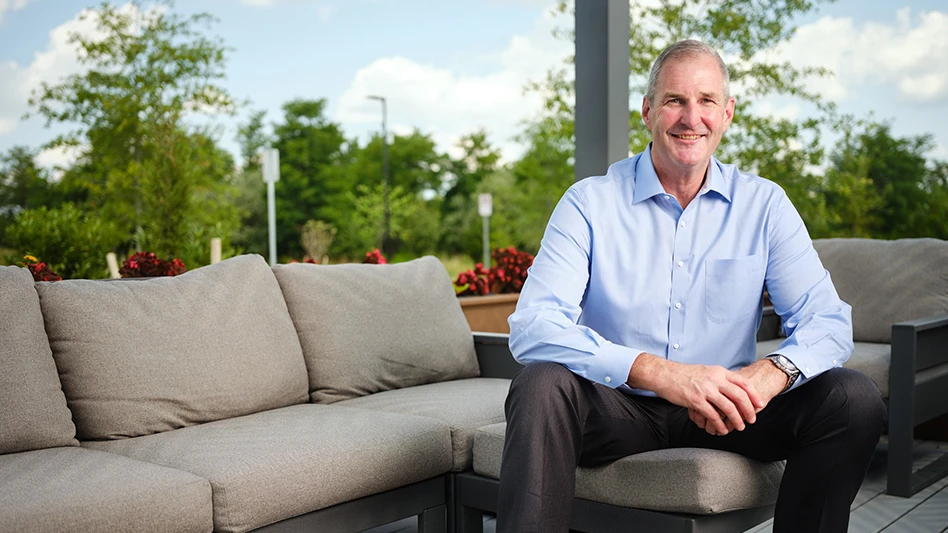
For Nicole Papadakis and a team of nearly 100 employees at Resource Plastics Inc., working in the plastics recycling industry means there’s never a dull moment.
No two days are alike at the company’s 180,000-square-foot facility in Alsip, Illinois—just south of Chicago—and are filled with new shipments of material coming in, new developments and new customers.
But according to Papadakis, the company’s president, along with that daily variety comes a level of consistency that has allowed Resource Plastics to meet customer needs and continue to grow over the course of 31 years.
The company started as a one-man brokerage in 1994 has turned into a vertically integrated recycler of an array of postindustrial plastics that processes more than 100 million pounds per year.
While maintaining a number of long-term customer relationships, internal culture also is a priority, and Papadakis estimates about 25 percent of Resource’s staff has been employed for more than 15 years.
“We have a strong network of customers and suppliers, and we’ve had a lot of our customers for over 20 years,” she says. “I wouldn’t even say they’re customers necessarily; it’s a partnership. And we’ve been able to change some of our processes over time to make sure it works for both parties.
“Our success has come from working together with our customers and our suppliers, really focusing on our quality and then, of course, our culture, making sure our employees are happy. We have a very high success rate of having long-term employees.”
Steady growth

Resource first established operations in a 6,000-square-foot warehouse in Posen, Illinois. Initially, the company purchased a used grinder and a single forklift and processed mostly polyvinyl chloride (PVC) and polystyrene (PS).
In 1998, the company purchased new granulators and other equipment and moved into a larger warehouse, where it added staff and started running a second shift. In 2004, Resource relocated to an 85,000-square-foot space in Blue Island, Illinois, adding new granulators, conveyor systems and balers, processing millions of pounds per year.
“Once Resource added grinders and pelletizers, it really allowed us to become a much larger outfit, and we were able to handle different types of material,” Papadakis says. “At first [the company] was more of a brokerage, and now it’s more of a manufacturer.”
Resource launched a sister company, RPI Extrusion Co., in 2005 to close the loop in its recycling process. It operated in a 35,000-square-foot space near Resource’s Blue Island plant, running multiple extruders to manufacture new products like lawn edging and brick paver edging using 100 percent-recycled material supplied by Resource.
Following Resource’s move to its current Alsip site in 2014, RPI also relocated and now uses about 20 percent of the facility’s space. In 2022, the company joined Plastics Family Americas (PFA), an Irving, Texas-based wholesale, value-add plastics distributor with 35 portfolio companies, and supplies them with recycled materials.
Meeting needs

Resource collects and processes a wide variety of postindustrial plastics sourced from manufacturers primarily across Illinois and the Midwest but also throughout the U.S. and Canada.
“Being located in the Midwest, it’s a very heavy manufacturing hub, so there’s a lot of postindustrial plastics around, and that’s simply how the business got started,” Papadakis says, adding that postindustrial plastics generally are easier to process than postconsumer material. “We wanted something that we could more easily process and could really assure the quality of.”
She notes that throughout the company’s history, postindustrial plastic has been abundant, especially in nearby manufacturing hubs such as Wisconsin, Indiana and Ohio, making it the right focus for Resource’s operation.
“We have strong ties to a lot of manufacturers that produce this material,” Papadakis says. “So, for us, it was just a very seamless fit. ... We have customers located all across the U.S., but we predominantly source and sell within a 200-mile radius.”
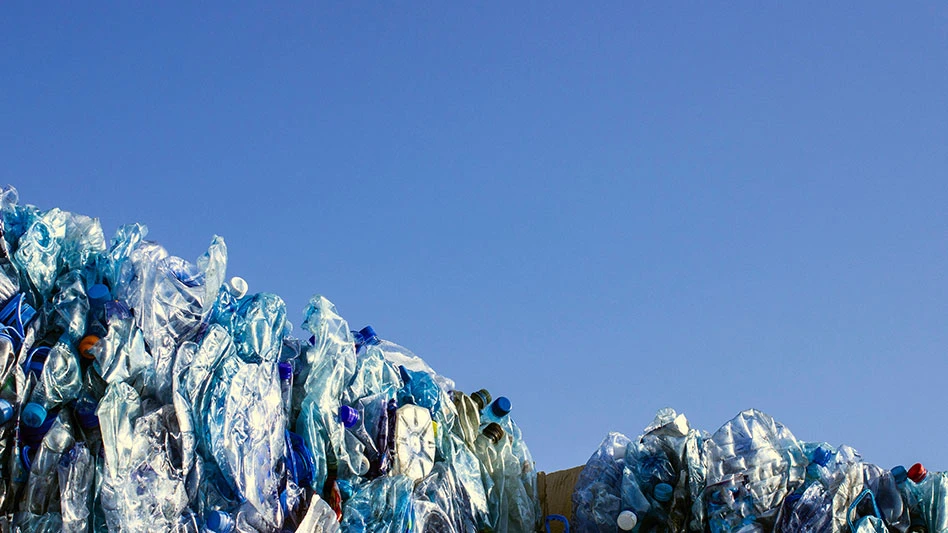
Resource accepts trimmings, off-spec parts and other byproducts that might otherwise end up in landfills. It sorts and processes more than a dozen polymers, including acrylonitrile butadiene styrene used in automotive and electronics housings; polyethylene terephthalate and polyethylene terephthalate glycol used in bottles, clamshells and films; polypropylene used in molded parts, totes, bins and automotive components; PS used in consumer goods and protective packaging; and PVC used in pipes, vinyl sheets and building materials.
The sprawling Alsip facility features 20 loading docks for incoming and outgoing shipments and also has rail access. Resource accepts material in bales or gaylord containers, for example, and reserves five of its docks for the various products it manufactures.

“We work with a variety of different materials, and that list keeps growing and growing as additional materials and different additives come on the market,” Papadakis says.
Using proprietary equipment and some hand sorting, each load of scrap is sorted by polymer type before it is sent to industrial granulators and ground into 3/8-inch flakes.
After the plastics are ground, they are compounded into pellets that are either sold to injection molders, extruders or thermoformers or are used in-house to make new products.
Papadakis says the company can blend plastic streams based on customer specifications, conduct melt filtration that removes fine contaminants such as paper or wood, perform toll grinding or toll compounding services for customers and has several dedicated areas throughout its facility where testing, quality control (QC) and material analysis take place.
“We have a lot of customers who will send us their sheet or their regrind that they can’t feed back into their system because it’s not in pelletized form,” Papadakis says. “That’s where we’ve found some success in that niche market of being able to toll it, and they trust us because of our quality, and we take the time to do things properly.
“Even though they’re sending the material in, we still QC it on the way in and QC it on the way out to assure we provide a high-quality pellet for our customers.”
Doing it all

Vertical integration through RPI has made a major difference for Resource, according to Papadakis.
With its in-house extrusion lines, the company can take the recycled pellets it produces and turn them into 100 percent-recycled products, such as landscape edging and strips for lawns, gardens, driveways and walkways; profiles for rooftop gardens and greenhouses that provide durability in outdoor environments; and protective packaging components such as edge guards and corner protectors.
The company markets its products through various partners in the landscaping, contracting, greenhouse and packaging sectors.
Papadakis believes the company’s ability to make an end product is a way to remain viable into the future.
“It’s hard to make money just buying and selling plastic,” she continues. “You need to take additional steps to really provide that value and make a customized pellet or end product.”
Kyle Leary, who is a business development manager at Resource, adds that vertical integration is huge for the business, which also supplies recycled resins to other companies under the PFA umbrella.
“I think it goes hand in hand with our relationship with Plastic Family Americas,” he says. “We can supply feedstock to the manufacturers, distribute the product, recycle it and close the loop. If you’re not doing that, you’re missing out on big parts of it.”
A look at the landscape

When looking at the broader recycled plastics market, Papadakis says the biggest current challenge is pricing, which she notes has been very low for the last few years, depending on resin type.
She strikes a more optimistic tone, however, when discussing the future.
“I think that, overall, things will even out,” she says. “Plastic prices will eventually go back up. What we’re focusing on is higher margin opportunities, trying to stay away from the commodities and focus more on specialized products to allow for increased growth and not just competing on price. Anyone can sell plastic, but it’s the value you bring that really sets you apart.”
Papadakis and Leary both say the company is looking to increase its toll processing and add to its in-house product portfolio in the near- and long term.
“We want to grow through our toll processing,” Papadakis says. “That’s been the biggest difference this year versus years prior. We used to only grind and pelletize our own materials. Now, growing in that space has allowed us to have additional consistent business. We’ve been dedicating a good portion of our time to helping our customers by pelletizing materials for them.”
She adds that the more material Resource can extrude, the better.
“We’re trying to add value and just make sure that we’re always staying ahead of the game and learning about products on the market.”
Explore the January 2026 Issue
Check out more from this issue and find your next story to read.
Latest from Recycling Today
- International Paper to close South Carolina container plant
- A look inside WM’s new $90M South Florida MRF
- Waste to Resource Ontario announces new co-chairs
- WIH Resource Group adds senior associate
- BlueScope rejects recent SGH, SDI bid and notes terms for additional engagement
- Picvisa, Girbau to launch textile sorting plant in Europe
- Kaiser lifts net income figure in 2025
- Sims’ Houston contract confirmed by Enstructure